Fresher intake plummeted from approximately 380,000 in 2021-22 to just 120,000 in 2024-25—a staggering 68% reduction. The share of entry-level hiring in the sector fell from 28% in 2024 to 15% in 2025. This isn't merely cyclical; it's structural.
Tata Consultancy Services exemplifies this shift. The company reduced annual fresher offers from 45,000-50,000 to approximately 25,000 for FY27—a 43% cut. CEO K Krithivasan stated that future hiring will depend on demand visibility, signaling a move from proactive campus recruitment to demand-driven hiring. The primary driver isn't AI-led layoffs but evolving delivery models that require fewer layers of middle management. TCS laid off around 12,000 employees in FY26, mostly at senior levels, as project execution styles became leaner.
This reduction impacts operating leverage significantly. Freshers require 6-9 months of training before becoming billable, whereas lateral hires contribute immediately. Lower fresher intake reduces training infrastructure costs but increases average employee costs, pressuring margins. However, TCS maintains that campus hiring remains a strategic long-term investment, not just short-term demand fulfillment. The company has doubled its intake of "AI-native" freshers who naturally treat AI as a teammate, and enhanced its Initial Learning Program to include GenAI as core curriculum. Transcripts +2
The Compensation Revolution
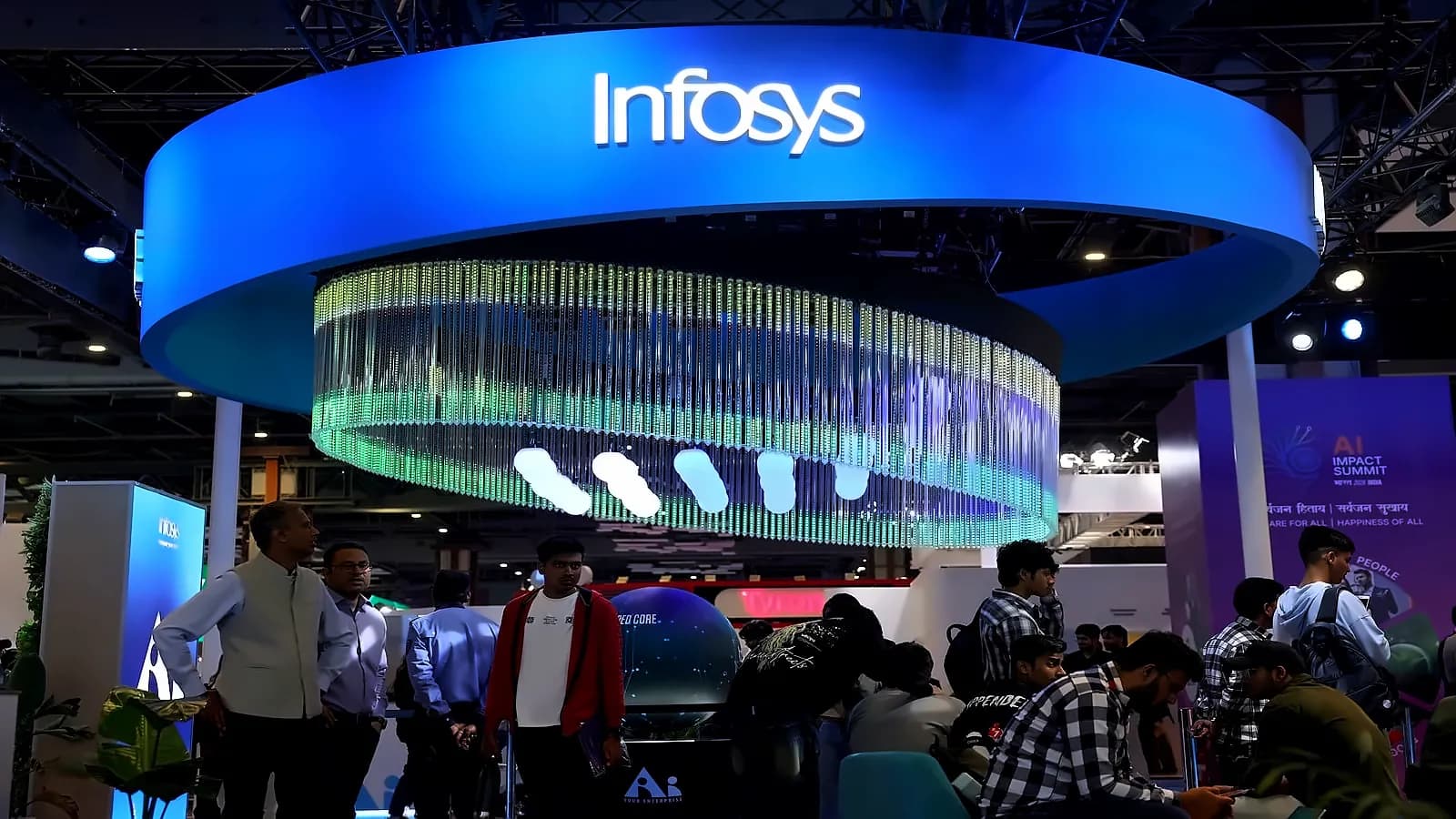
While overall fresher hiring is collapsing, compensation for specialized AI talent is skyrocketing. Infosys Limited introduced a specialist programmer role offering up to Rs 21 lakh annually for freshers in AI and digital areas—a dramatic increase from traditional fresher packages of Rs 3.5-5.5 lakh. The role structure includes Specialist Programmer L3 at Rs 21 lakh, L2 at Rs 16 lakh, L1 at Rs 11 lakh, and Digital Specialist Engineer at Rs 7 lakh.
This premium compensation targets top engineering talent from IITs and NITs, positioning Infosys to compete with Global Capability Centres and startups. However, it significantly increases entry-level compensation costs. Infosys acknowledges that AI projects come with higher costs due to premium talent but command better pricing and margins. The company has absorbed these investments within its 20-22% operating margin guidance. Transcripts +1
The skill mix is transforming fundamentally. Infosys reports 217,000+ employees with higher-order AI skills—a 3X increase year-over-year. Approximately 90% of employees are AI-aware and equipped to collaborate with AI tools, while 10% of top technology talent engage in innovative AI projects. New roles emerging include AI engineers, forward deployment engineers, AI leads, forensic analysts, and data analysts—replacing traditional QA testing and development positions. Transcripts +3
Revenue Without Headcount Growth
Leading IT services firms are achieving a remarkable feat: maintaining stable revenues despite flat or lower headcount. Infosys delivered 2.6% revenue growth with flat headcount in Q1 FY26, driven primarily by pricing increases and productivity improvements. TCS reduced its employee base from 613,069 in Q1 FY26 to 584,519 in Q4 FY26 while growing AI services revenue to $2.3 billion annualized. Transcripts +2
The secret lies in rising utilization levels. Infosys operates at 85% utilization, Wipro reached 86.4% net utilization, and companies across the sector target the 84-87% range. Wipro improved utilization by 470 basis points over four quarters through bench reduction, pyramid optimization, and onshore/offshore rationalization. Higher utilization means more productive deployment of existing talent without proportional headcount increases. Transcripts +2
Revenue-per-employee metrics are improving significantly. TCS reports AI revenue productivity is "definitely much better than the TCS average or the traditional business". Infosys achieved 2.6% growth with flat headcount, with AI revenue reaching 5.5% of total revenue at premium pricing. HCL Technologies noted that while headcount declined slightly, the wage bill increased due to pyramid shifting toward higher-skilled roles—indicating revenue-per-employee improvement through skill upgrading. Transcripts +2
The Small Team Revolution
The industry is shifting from large, pyramid-shaped delivery teams to smaller, AI-skilled, multi-functional teams. TCS emphasizes that AI is creating new roles like "rapid-build engineers and leads," aligning their role framework with AI as the centerpiece. Infosys has created an "ambidextrous organization" model with dual architecture: AI-first services requiring deep engineering skills alongside AI-augmented services where everybody uses AI tools. Transcripts +1
Productivity gains are substantial. Infosys reports 20-25% productivity benefits in their Finacle product through AI tools, with over 20x gains for specific compliance activities. HCL Technologies projects 10-30% productivity improvement in Application Development and Maintenance through GitHub Copilot adoption, with 50% savings potential in DPO and testing. TCS achieved 20-30% productivity improvements in development portfolios and 40% reduction in deployment cycle times. Transcripts +3
These improvements enable smaller teams to deliver greater value. Tech Mahindra reports that 95% of peak and prime accounts have GenAI offerings implemented, with 7% AI-led productivity improvement measured. The shift toward AI-skilled teams allows the same revenue to be delivered with fewer people, though at higher average costs. Transcripts
Client Pricing Pressure
Enterprises are systematically using AI productivity expectations to renegotiate contracts and seek lower pricing. HCL Technologies provided the most stark assessment: a $100 million deal would be "much lesser today—maybe 80 million" due to AI expectations, requiring 25-30% more effort to achieve the same revenue numbers. This represents 20% compression in deal value purely from AI productivity expectations. Transcripts
TCS approaches this by proactively engaging customers with AI opportunities before renewal cycles, embedding AI productivity into renewed contracts while simultaneously expanding scope of work. Management emphasizes that total contract value "doesn't change or reduce much" despite AI productivity expectations, as increased scope offsets pricing pressure. Infosys acknowledges that productivity gains are typically split between clients and vendors, with AI projects commanding better pricing and margins despite higher talent costs. Transcripts +3
Wipro reports no significant revenue or margin impact from AI productivity pass-backs currently, as customer budget offsets are being reinvested in business innovation leveraging AI. However, HCL Tech notes that competitive intensity, rather than client-driven AI expectations, is the primary challenge, with 3-5% deflation in renewal deals similar to pre-AI levels. Transcripts +1
Project Pauses and Budget Shifts
Clients are increasingly pausing traditional projects to rethink execution using AI. HCL Technologies confirmed that "a couple of SAP programs got discontinued" due to client budgets and de-prioritization of modernization. Management noted there's "a general understanding that the timelines for some of this is also going to be extended from SAP," indicating clients are taking more time to plan modernization initiatives that properly incorporate AI capabilities. Transcripts +1
Wipro CEO Srini Pallia mentioned instances where "clients come back because there was some directional change, and they wanted to pause before they had the clarity around that". The company also observed that "many of our clients are asking us to come back and help them in terms of AI advisory and consulting in terms of how to navigate in the AI world," suggesting clients seek guidance before proceeding with initiatives. Transcripts
Gartner projects worldwide AI spending will total $2.52 trillion in 2026, representing a 44% increase year-over-year. Generative AI models specifically are forecast to grow 80.8%. Enterprise budgets are shifting "from traditional software categories into GenAI equivalents across customer service platforms, marketing automation, software development environments, and research tools". AI infrastructure now accounts for 84.1% of total AI spend, representing a dramatic shift from traditional IT budgeting where applications and services dominated.
The Margin Transformation
The dramatic reduction in fresher hiring creates complex margin dynamics. While lower fresher intake reduces training infrastructure costs and improves time-to-billability, it increases average employee costs and loses low-cost labor arbitrage. HCL Technologies explicitly stated that "while the headcount itself has declined a little bit, if you see the wage bill, that has definitely gone up" due to pyramid shifting toward specialized skills. Transcripts
The transition from lower-cost repetitive coding and manual testing roles to higher-paid AI and cybersecurity specialists represents a fundamental cost structure shift. Traditional junior developers cost Rs 3.5-5.5 lakh annually, while AI engineers command Rs 15-40 lakh and cybersecurity specialists Rs 12-35 lakh. However, these higher costs are offset by substantial productivity gains: 20-50% across various functions. Transcripts +1
Companies are balancing these competing forces through strategic pyramid optimization, AI-driven productivity investments, and value-based pricing models. Infosys achieved 50 basis points margin expansion in FY25 despite salary increases and higher variable pay, offset through value-based selling, lean automation, and improved utilization. Wipro expanded margins despite absorbing wage hikes through improved execution rigor, utilization, offshoring, and fixed-price productivity. Transcripts +2
The industry is experiencing a U-shaped margin transformation: current margin compression from higher AI talent costs and investment, transitioning to margin stabilization as productivity gains materialize, and eventually margin expansion as scale economies and value-based pricing take hold. Winners will be characterized by AI capability depth, productivity measurement, pricing power, operational efficiency, and value creation. Losers will face insufficient AI investment, commoditized pricing, fake productivity, talent attrition, and margin erosion.