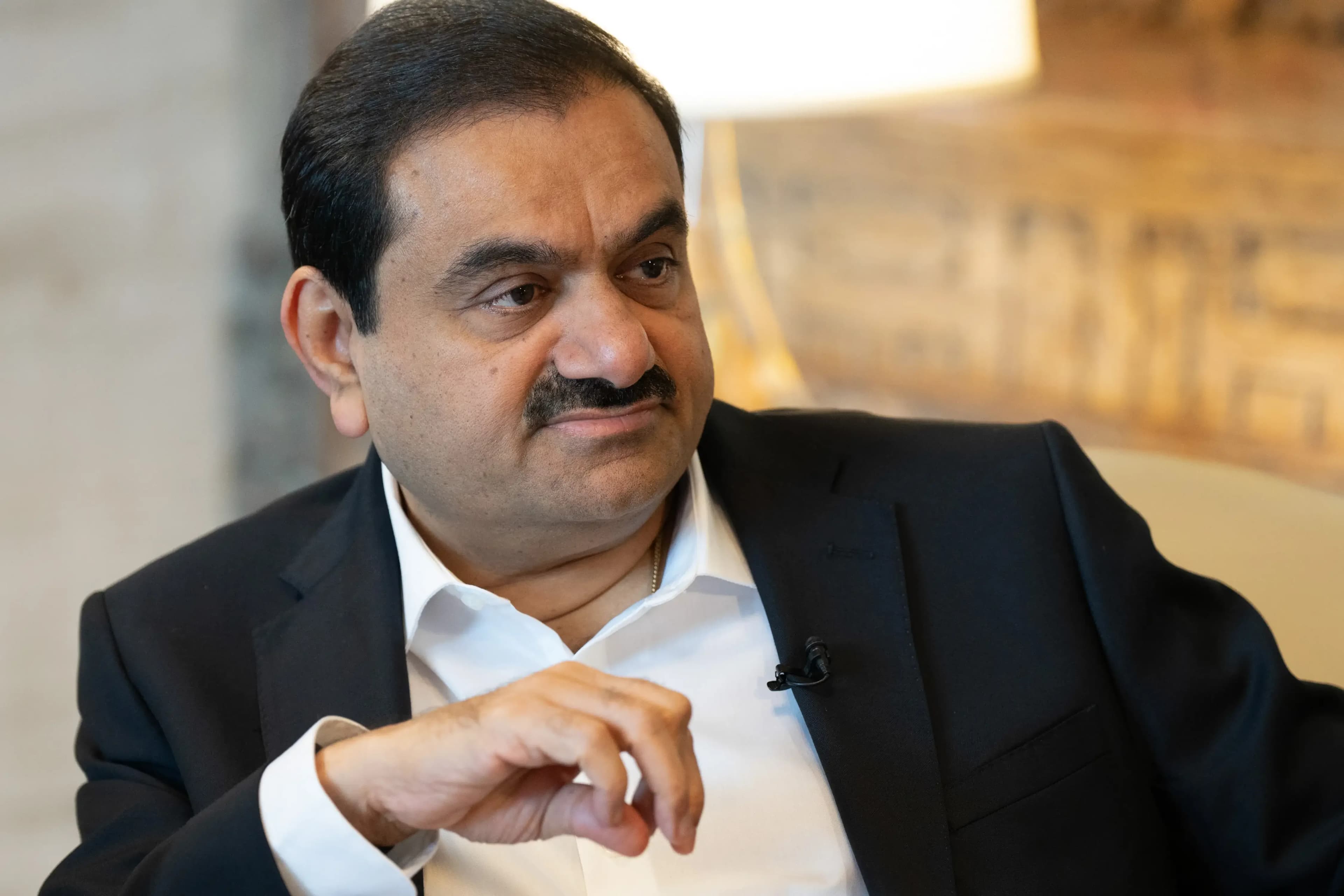
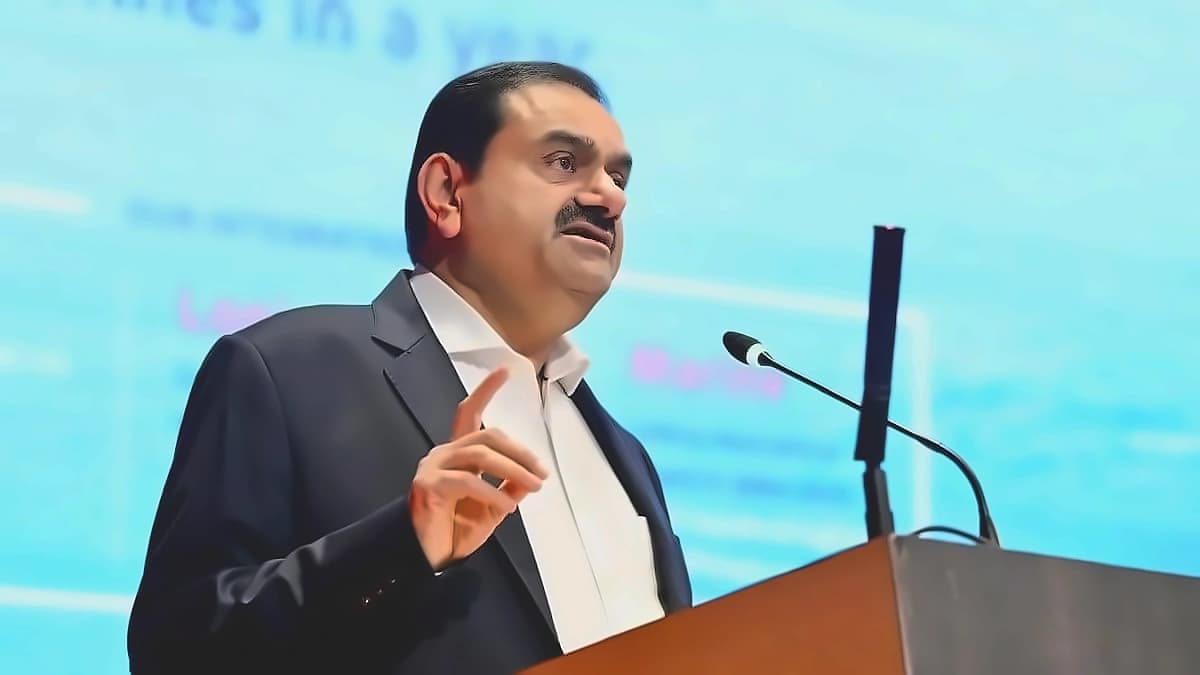
Adani Enterprises has staged a remarkable comeback in 2026, emerging as Nifty’s hottest stock with a 41% year-to-date rally that added approximately Rs 1.4 lakh crore in market value. This dramatic recovery signals the return of investor confidence following three challenging years marked by the Hindenburg controversy and US legal proceedings. At the heart of this renaissance lies a unique business model that has consistently delivered exceptional shareholder returns.
The Incubation-to-Demerger Playbook
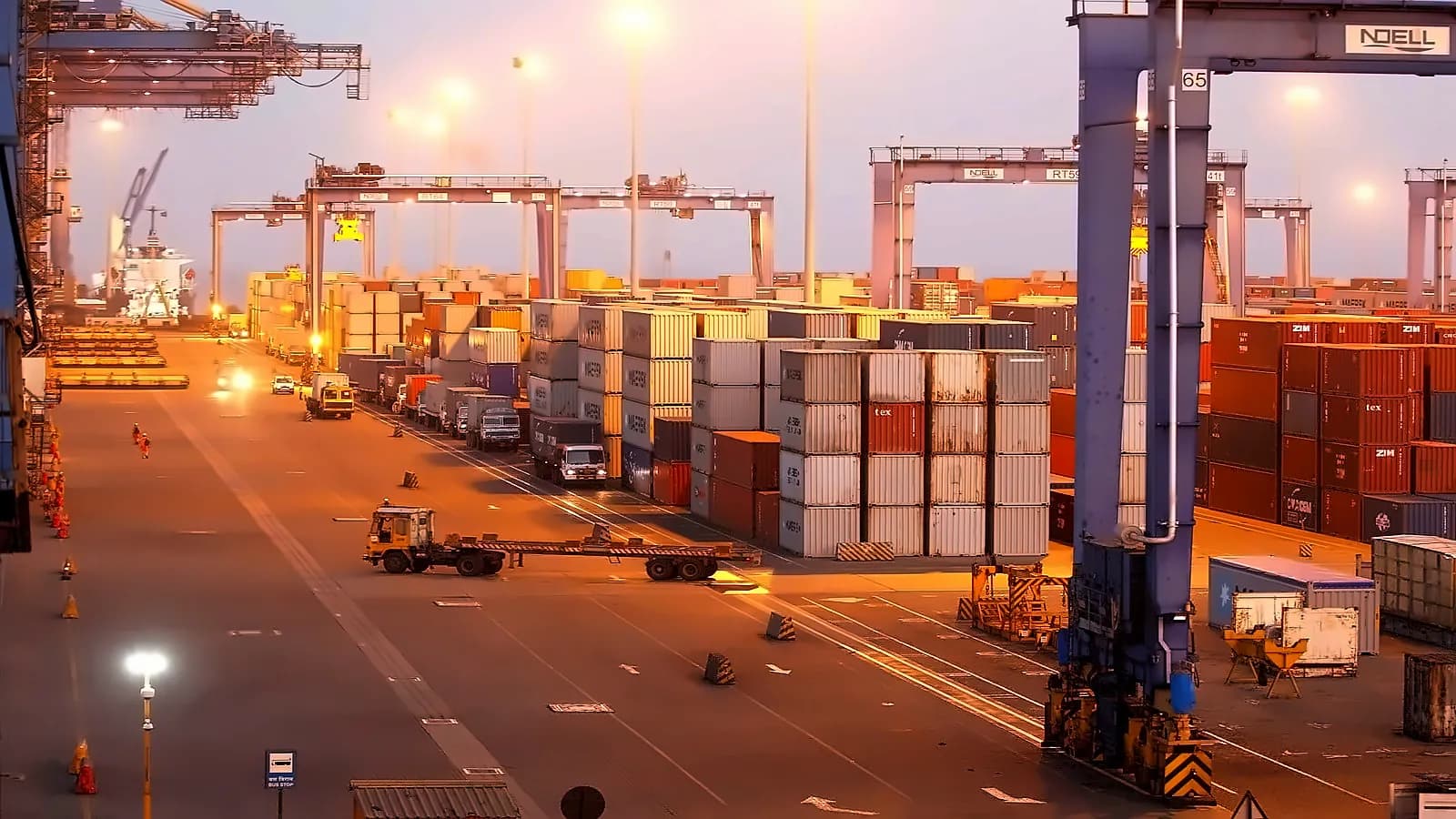
This approach has generated a 30% market-cap CAGR over three decades, significantly outperforming the Nifty’s 9% CAGR. The company has successfully demerged six major businesses—Adani Ports, Adani Power, Adani Transmission, Adani Green Energy, Adani Total Gas, and Adani Wilmar—which now command a combined market capitalization of $94.3 billion as of March 2026. InvestorPresentations +1
The causal mechanisms behind this success are clear. Adani Enterprises provides growth capital to infrastructure businesses critical for national development, leveraging policy support and strategic partnerships to build them into market leaders. Once a business matures and becomes self-sustaining, value is unlocked through demergers, creating independent entities with focused capital structures while the parent recycles capital into the next set of opportunities. InvestorPresentations +1
Capital Structure Dynamics and QIP Success
Global heavyweights including Capital Group, Goldman Sachs, BlackRock, and Blackstone participated, alongside domestic mutual funds like HDFC MF, ICICI Prudential MF, and SBI MF. This strong institutional confidence came despite ongoing monitoring of US legal proceedings involving Chairman Gautam Adani.
The QIP proceeds are strategically allocated to optimize capital structure.
Primary allocations include debt reduction, airport funding requirements over the subsequent 12 months, and smaller requirements in roads and other projects. This capital injection supports the company’s aggressive capex plans of Rs 36,000 crore in FY26 and Rs 40,000-45,000 crore in FY27. Transcripts +1
Adani Enterprises faces a classic infrastructure growth dilemma: maintaining aggressive capex momentum while managing leverage metrics. Current net debt-to-EBITDA stands at 3.9x, up from 2.9x in FY25, reflecting significant capex deployment ahead of EBITDA realization. However, management expects this ratio to remain flat or slightly decrease despite continued capex, driven by imminent EBITDA contributions from commissioned assets. InvestorPresentations +3
Earnings Quality Transformation
A fundamental shift is underway in Adani Enterprises’ earnings mix.
This transformation from commodity-linked volatility to infrastructure stability significantly improves earnings quality and predictability. InvestorPresentations
The infrastructure platform delivers superior characteristics: target EBITDA margins exceeding 40%, sustainable ROCE above 20%, and long-term contracted revenue under regulatory frameworks. The regulatory asset base model for airports provides predictable returns of 12-14%, while mining development operations offer stable cash flows through long-term contracts. InvestorPresentations +3
Morgan Stanley projects exceptional growth, forecasting 32% EBITDA CAGR between FY26 and FY30, with EBITDA nearly tripling from Rs 14,000 crore to Rs 42,300 crore. This growth is driven by airports (29% EBITDA CAGR), new energy (18% CAGR), and primary industries (45% CAGR). The brokerage identifies FY27 as a critical earnings inflection point.
FY27 Earnings Inflection Catalysts
The commissioning of transformational assets marks the beginning of a new growth phase. Navi Mumbai International Airport, operational since December 25, 2025, is expected to add approximately Rs 2,000 crores of regulatory aero-side EBITDA on a normalized run-rate basis—representing a 40% uplift to current annualized airport EBITDA of around Rs 5,200 crores. The airport operates as a regulatory asset with a provisional asset base of nearly Rs 20,000 crores and expected returns of 12-14%. Transcripts +2
The Ganga Expressway, inaugurated in April 2026, represents India’s largest greenfield road project. Completed in a record 3.5 years with an investment of over Rs 15,000 crores, this 464.2 km expressway is expected to contribute significantly to the Rs 3,000 crores of incremental EBITDA expected from three major new assets. Morgan Stanley projects Ganga Expressway will generate Rs 850 crore EBITDA in FY27, while increased copper smelting utilization will drive Rs 2,200 crore EBITDA. Transcripts +1
Airport Business Growth Potential
Adani Airports is positioned for strong growth, handling 95.3 million passengers in FY26 and representing approximately 23% of India’s total passenger traffic. Morgan Stanley forecasts the portfolio will scale from 95 million to 143 million passengers by FY30, supporting a 29% airport EBITDA CAGR. InvestorPresentations
Non-aeronautical revenue excellence drives this growth. In FY26, non-aero revenue grew 31% year-on-year to reach 49% of total airport revenue. Non-aero revenue per passenger reached Rs 672 (~$8.00), exceeding the global average of $7.57. Morgan Stanley notes this represents just 39-44% of global peers, indicating significant monetization runway. Duty-free revenues reached Rs 21 billion (+32% YoY), while food and beverage climbed 52% to Rs 9.55 billion. InvestorPresentations
Green Energy Ecosystem and Policy Alignment
Adani New Industries has developed a comprehensive integrated green-energy ecosystem aligned with India’s energy transition policies. The company has established 10 GW solar manufacturing capacity, ranking 8th globally among elite solar manufacturers. Current operational capacity includes 2 GW each of MonoPerc and TopCon cell and module manufacturing, plus 2 GW of ingot and wafer manufacturing. A 6 GW TopCon expansion is under construction with financial closure achieved.
In wind manufacturing, Adani operates 2.25 GW capacity and is the only Indian company featured in Bloomberg NEF’s Global Top 15 wind turbine manufacturers. The green hydrogen platform at Mundra leverages existing Adani infrastructure to target production costs significantly lower than domestic peers.
This ecosystem aligns perfectly with India’s 500 GW non-fossil fuel target by 2030, the National Green Hydrogen Mission, and production-linked incentive schemes. The company targets 1 MMTPA green hydrogen production by 2030, with fully integrated manufacturing from ingots to electrolysers enabling significant cost advantages.
Competitive Advantages and Industry Leadership
Jefferies expects Adani Enterprises’ new businesses in Green Hydrogen, Data Centers, Roads, and Copper to emerge as industry leaders. The brokerage sees the company benefiting from the government’s green-energy push, India’s underpenetrated aviation market, expansion of the digital economy, and import-substitution opportunities in copper and PVC.
Competitive advantages include the proven incubator model with repeatable value realization, strong regulatory and land-acquisition capabilities reducing execution risk, and strategic partnerships importing global technology and best practices. The company’s pit-to-plug model and relentless project execution have driven milestone wins across ports, logistics, and green manufacturing.
Investor Confidence Recovery and Market Performance
The recovery in investor confidence is evident in the market’s response.
Domestic mutual funds played a crucial role in the successful QIP, with HDFC MF, ICICI Prudential MF, and SBI MF providing validation of the business model and governance standards.
Adani Enterprises currently trades at a P/E ratio of 43.2x, indicating market expectations for strong future growth . The premium valuation reflects confidence in the multi-vertical compounding platform model, with investors betting that the current portfolio can replicate the success of previous demergers. The stock has delivered exceptional returns, gaining 132.41% over five years compared to Nifty’s 51.92% .
As Adani Enterprises enters another potential value-unlocking phase with planned demergers of airports, roads, and Adani New Industries platforms, the market is positioning for sustained long-term value creation through the proven incubate-scale-demerger playbook. The transformation from commodity-linked businesses to regulated infrastructure and digital platforms, combined with massive capex deployment reaching commercial scale, creates a multi-year growth trajectory supported by favorable policy frameworks and strong competitive positioning.