Zoho CEO Sridhar Vembu has challenged the corporate obsession with metrics and dashboards, arguing that such structured approaches might be quietly killing organizational drive. According to reports from Mint, Vembu noted that highly structured organizations offer comfortable predictability but often breed a passive culture where employees wait for instructions from the top. He emphasized that an organization's survival depends on the C-suite never making a wrong turn, warning that metric-driven companies can march efficiently into dead ends if top executives fail to set the right course. As reported by The Economic Times, Vembu has drawn attention to a fundamental trade-off in workplace culture, arguing that companies can either create a predictable environment where employees follow clear instructions or encourage people to take initiative and make decisions on their own. In his latest viral X post, Vembu contrasted two common organizational styles, noting that "highly metric driven orgs tend to produce the 'wait for instructions from the top' culture and there is more predictability and certainty in that culture. Unless the top always..."
Conversely, Vembu described initiative-driven cultures as inherently chaotic, characterized by frequent internal disagreements and persistent feelings of being 'not good enough.' Using programmers as an example, he noted that "every smart programmer looks at another programmer's code and thinks 'it sucks, I can do better'" - reflecting the competitive and questioning mindset that can help improve work, even if it sometimes creates friction within teams. According to Mint, he illustrated this dynamic using the tech industry example where every smart programmer thinks another's code could be improved. In these high-initiative environments, internal corporate structures don't dictate boundaries, with the external market environment providing necessary discipline when needed. As reported by The Economic Times, Vembu acknowledged that this culture can create more disagreements, with employees having strong ideas challenging each other and teams constantly questioning whether they have found the best solution. However, he sees this discomfort as part of the advantage, as employees who take initiative can respond to changing circumstances without waiting for senior management to give them new instructions. Vembu's latest observations suggest that "these tensions are a natural consequence of having highly motivated people who are eager to improve things" - viewing internal debates as signs of energy and initiative rather than dysfunction. He wrote that "Seize the initiative culture often feels chaotic, with lots of internal disagreements. There is always the gnawing feeling of 'not good enough'"
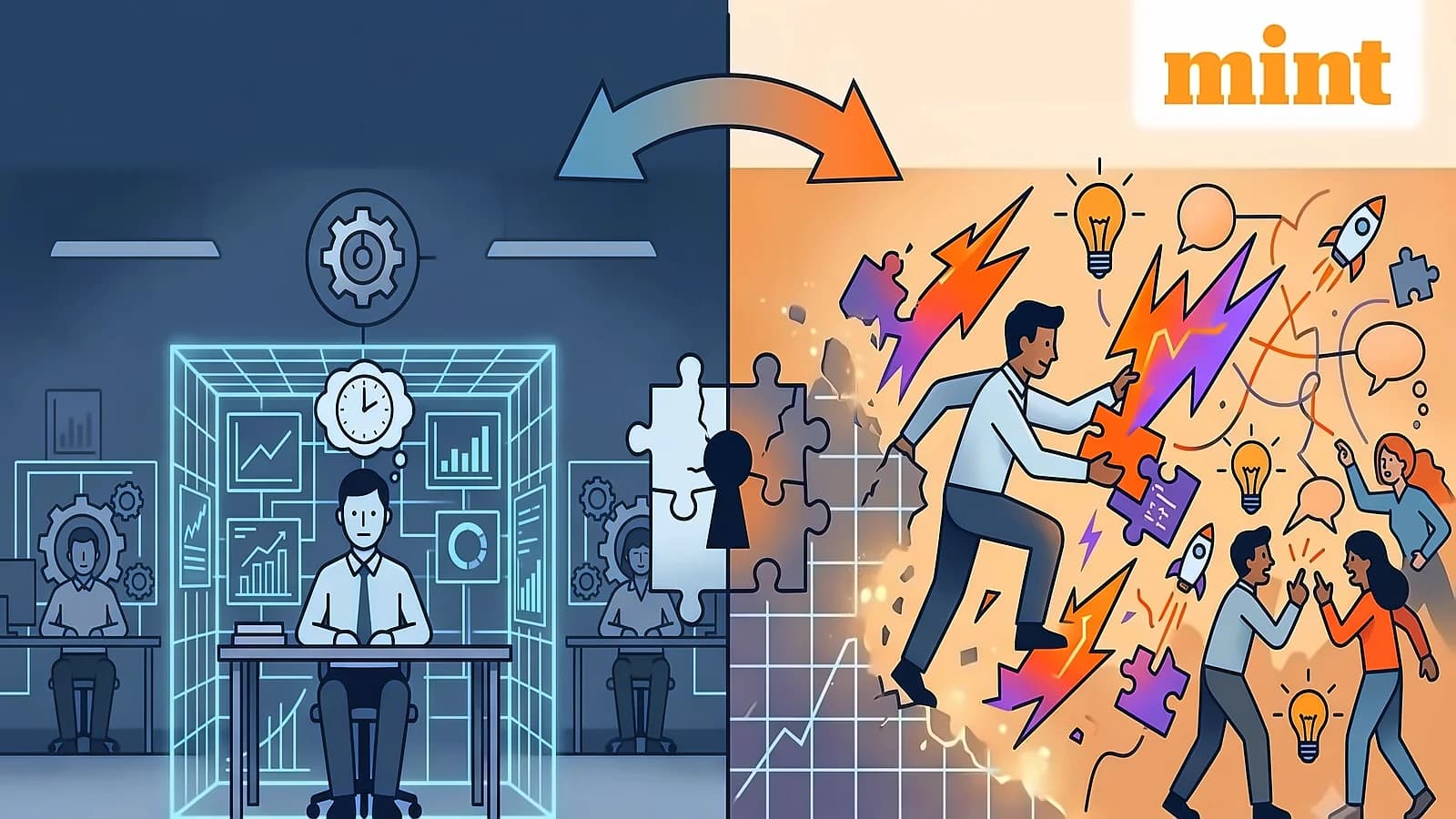
Vembu warned against corporate attempts to engineer hybrid models combining both disciplined and initiative-driven approaches. According to his social media post, trying to mandate a 'highly disciplined culture of seizing the initiative' produces the worst of both worlds. As reported by The Economic Times, he stated that businesses must choose between providing comfortable certainty while losing initiative, or seizing initiative while feeling somewhat uncomfortable. He noted that attempting to square this circle inevitably strips away the comforting predictability of top-down systems while crushing organic innovation energy. According to Vembu's latest observations, companies must recognize the trade-off between certainty and initiative - a structured culture may offer comfort and clarity, but it can weaken people's willingness to take ownership, while a more independent culture can bring stronger ideas and accountability, though it may also involve disagreement and discomfort. Vembu described the choice as a trade-off between 'comfortable certainty' and the discomfort that comes with innovation and independent thinking, emphasizing that organizations can either offer employees certainty and comfort but risk initiative, or encourage people to take charge while accepting disagreements and uncertainty. The entrepreneur's viral X post has sparked a lively debate among professionals and business leaders, with some suggesting a balanced approach through "clearly defined delegation of authority" where employees are empowered to act independently within established boundaries while regularly aligning with the broader organization through discussion rather than top-down directives.
The cultural debate comes as Zoho confronts unprecedented operational challenges from the memory crisis. Sharing a report that claimed memory prices had risen 500 percent over 12 months, Vembu said the increase was making it harder for businesses to absorb expenses without passing them on to customers. "Memory prices, along with AI token prices, have made business very difficult. We have held back from raising prices but it is becoming hard," he wrote. Data from Tom's Hardware cited in the report shows how steep the increase has been, with average prices for some DDR5 memory kits rising from around $90 in August 2025 to $425 in August 2026. A 128GB DDR5-6400 kit has climbed to $3,399, compared with its previous low of $329. Vembu believes the shortage could also reshape software development fundamentally, noting that "for a long time, programming languages were designed with the assumption that memory is 'free.' That era has now ended." He has called for memory-efficient programming languages and smarter compilers, including those used for AI systems, arguing that better code safety and developer productivity should not require excessive memory consumption.