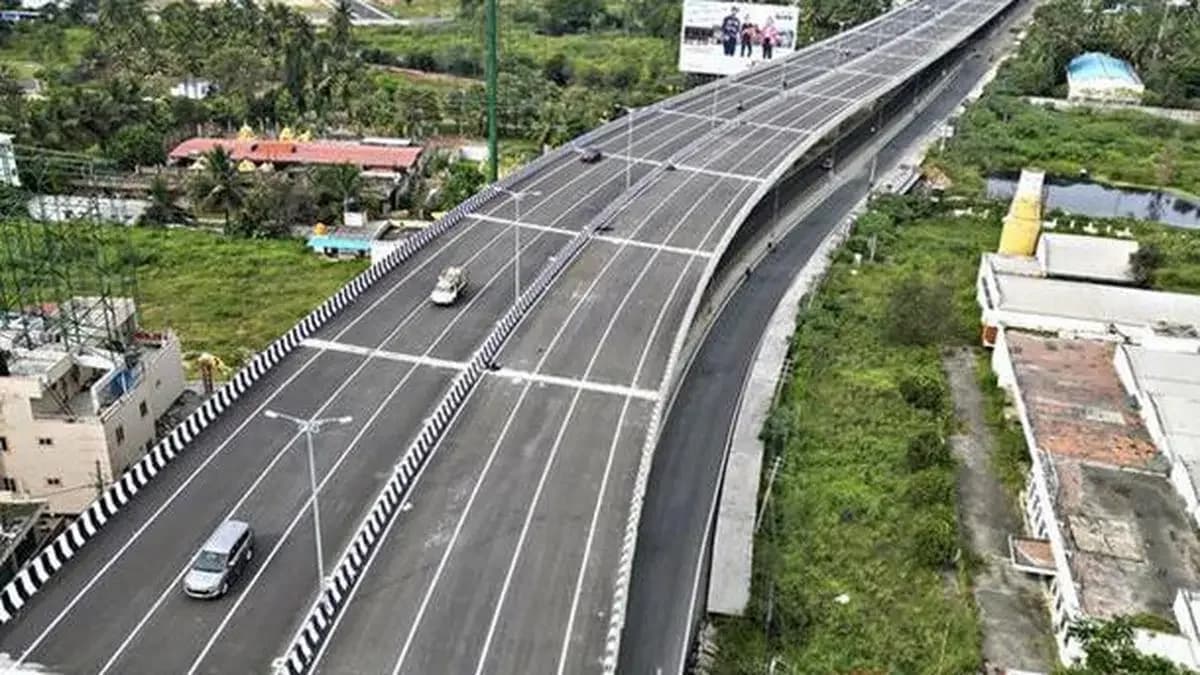
Welspun Enterprises Ltd (WEL) has secured a significant infrastructure contract from Maharashtra State Infrastructure Development Corporation Ltd (MSIDC) for constructing a six-lane partially elevated highway corridor on NH-753F covering the Pune–Shirur section in Maharashtra. According to reports from The Hindu BusinessLine, the Letter of Award dated April 29, 2026, was issued by MSIDC under a government-to-government arrangement between the Ministry of Road Transport and Highways (MoRTH) and the Maharashtra Public Works Department. The project spans from Km 10+600 to Km 64+000, covering a minimum design length of 53.40 km and will be executed on a DBFOT (Design, Build, Finance, Operate and Transfer) toll basis with a sub-concession period of 29 years.
The contract award significantly expands WEL's order book, which now stands at approximately ₹18,755 crore — up from ₹13,341 crore as of December 31, 2025 — after adjusting for Q4 FY26 execution. As reported by The Hindu BusinessLine, the order book is distributed across three verticals: Water (₹10,813 crore, including ₹5,393 crore from O&M and asset replacement), Tunnelling (₹1,791 crore), and Transportation (₹6,152 crore, inclusive of this project). The corridor is expected to ease congestion and improve freight movement across key nodes such as Wagholi, Kharadi, Lonikand, Ranjangaon and Shikrapur.
Managing Director Sandeep Garg indicated that the project reflects a key milestone in the company's expansion strategy within transportation infrastructure. As reported by The Hindu BusinessLine, he emphasized that the company aims to maintain high execution standards and financial discipline while leveraging its technical strengths. The leadership views the award as validation of Welspun's ability to deliver complex infrastructure projects and strengthen stakeholder value through consistent performance. The structured 29-year sub-concession period, including four years of construction, aligns with broader government-led infrastructure development initiatives and is expected to support industrial growth and generate employment during both construction and operational phases.