Prabhudas Lilladher has issued a buy rating on Voltamp Transformers with a target price of ₹11,858 in its research report dated October 31, 2026. The brokerage values the stock at a P/E of 26x Sep'28E, maintaining its previous target price of ₹11,524. The stock is currently trading at a P/E of 24.6x/20.8x on FY28E/29E earnings. As per Moneycontrol, the recommendation reflects confidence in the company's execution capabilities and growth prospects despite margin pressures from higher input costs and supply chain disruptions.
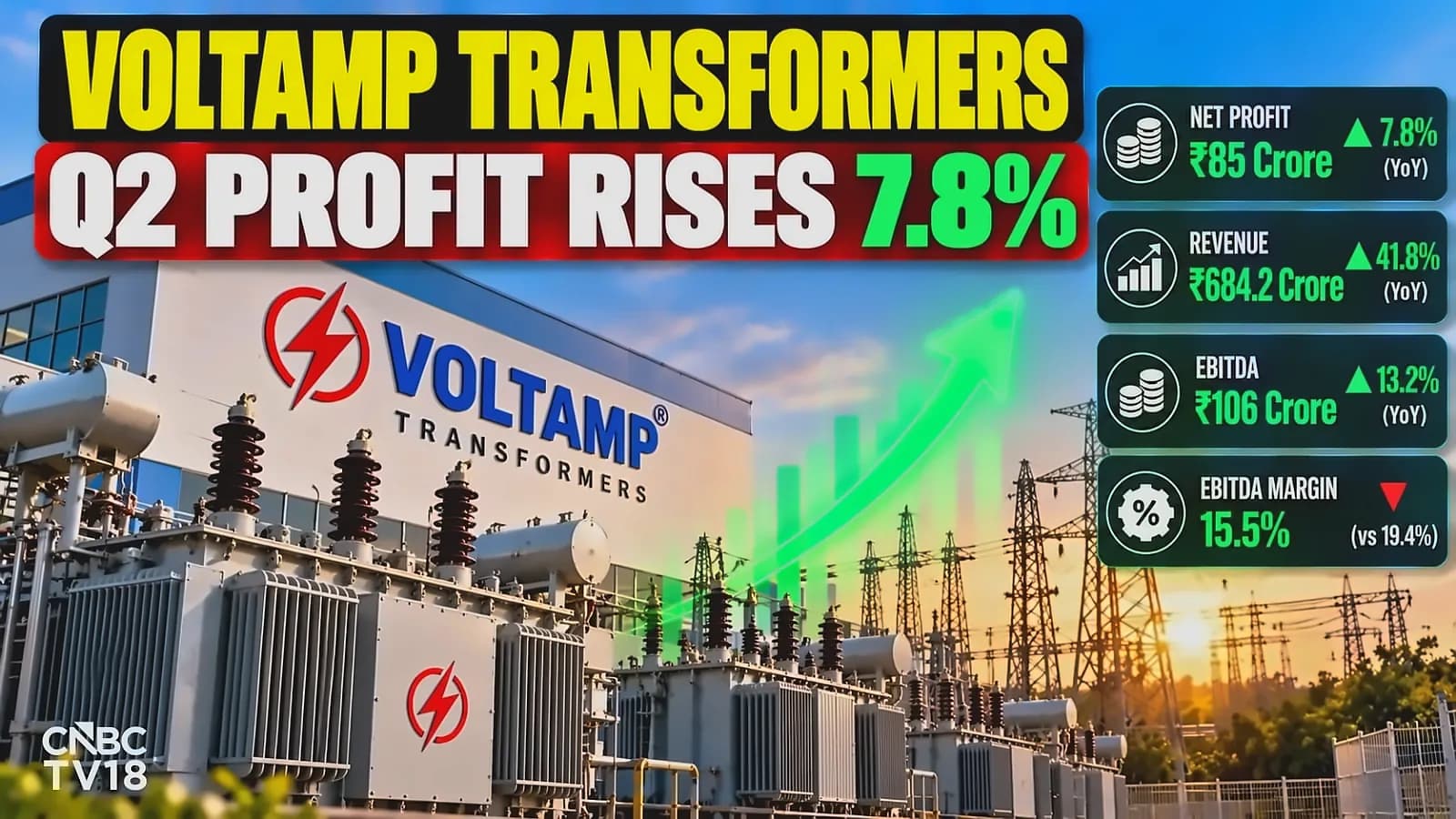
The transformer manufacturer reported mixed financial results for the September quarter. As reported by CNBC TV18, net profit increased 7.8% year-on-year to ₹85 crore from ₹78.85 crore in the corresponding quarter last year. Revenue from operations showed strong growth, rising 41.8% YoY to ₹684.2 crore compared to ₹482.6 crore in the year-ago period. However, the company's other income declined significantly, falling 46.3% YoY to ₹7.9 crore from ₹14.7 crore in the previous year. According to CNBC TV18, EBITDA rose 13.2% to ₹106 crore from ₹93.6 crore in the year-ago period, but the EBITDA margin contracted to 15.5% from 19.4%, representing a decline of 390 basis points. The contrasting performance, with strong revenue growth but a contraction in operating margins, remained a key factor in the market's reaction to the quarterly results.
The company's order book position remains robust with ₹19 billion providing healthy execution visibility. As reported by Prabhudas Lilladher, order inflows increased 27% YoY to approximately ₹8 billion, supported by demand across cement, steel, oil & gas, data centres and other segments. The order book comprises ₹15.5 billion in legacy orders expected to be largely executed in Q3FY27, with the company prioritising executable orders and shorter delivery cycles. Voltamp Transformers began FY27 with an order backlog of ₹1,200 crore (10,270 MVA) and has booked fresh orders worth ₹1,941 crore (13,350 MVA) till date from April this year. The company is witnessing healthy enquiry pipeline and is aiming for healthy growth in its top line in the current year.
The company commenced operations at its new Extra High Voltage (EHV) Transformer manufacturing facility at Jarod from October 7, 2026, marking a significant expansion in its manufacturing capabilities. According to Prabhudas Lilladher, the facility's contribution is likely to ramp up in FY28 as operations scale up, supporting volume growth over the medium term. The facility's initial focus is on 220kV transformers, followed by plans to enter the 400kV transformer segment over the next few years. The balance sheet reflects aggressive capacity expansion, with capital work-in-progress rising sharply to ₹171.6 crore as of September 30, 2026, up from ₹108.4 crore in March 2026. Inventory levels also increased substantially to ₹545.4 crore, contributing to a net outflow of cash from operating activities despite healthy profits before tax.
Despite revenue growth, profitability metrics showed mixed signals with significant margin compression. According to CNBC TV18, the EBITDA margin contracted to 15.5% from 19.4%, representing a decline of 390 basis points despite healthy growth in revenue and an improvement in profitability. However, the margin showed sequential improvement from 12.8% in the June quarter. For the first half of FY27, revenue from operations increased to ₹1,227.98 crore from ₹906.14 crore in the corresponding period last year, while net profit rose to ₹176.31 crore from ₹158.40 crore. As per CNBC TV18, the margin in the last 6 months was impacted with elevated energy costs, intensifying competition, rise in commodity price, currency depreciation and persistent inflationary pressure. The company attributed this margin compression to elevated energy costs, intensifying competition, rising commodity prices, and currency depreciation, with the Indian Rupee depreciating by 7.5% over the past year. Looking ahead, geopolitical uncertainties, elevated commodity and logistics costs remain key factors to watch, though demand across industrial segments remains broadly stable with data centres witnessing healthy traction.