According to reports from The Financial Express, Uniparts India Ltd has demonstrated remarkable financial recovery after navigating one of the sharpest downturns in global agricultural equipment. The company's net profit surged nearly 80% to ₹158 crore in FY26, while operating margins expanded from 15% in FY25 to over 21% in FY26. The company's return on capital employed (ROCE) improved to 22% in FY26 from 12% in FY25, with return on equity reaching 18.3%. Despite this strong performance, the stock continues to trade at around 18 times earnings, suggesting investors remain cautious about the durability of the recovery. The recovery became more visible as the year progressed, with revenue rising 34% year-on-year to ₹339 crore in Q4 FY26, while operating profit more than doubled and operating margins expanded to nearly 24%.
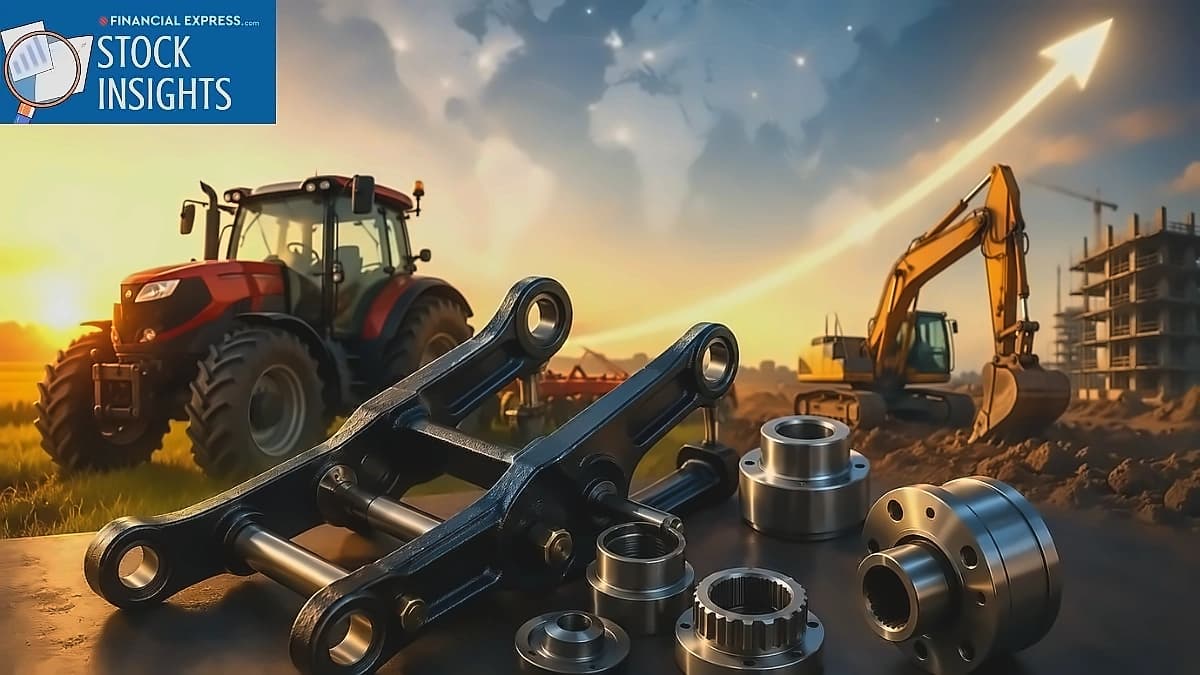
As reported by The Financial Express, Uniparts India has evolved from a company primarily known for three-point linkage systems to one where precision-machined parts now contribute more than half of revenue, overtaking the traditional linkage business. The company manufactures critical components used in tractors, agricultural machinery and construction equipment, with more than three-fourths of revenue coming from overseas markets, particularly North America and Europe. This global exposure means the company's fortunes are tied more closely to global tractor production and construction equipment demand than to the Indian economy. The business has evolved significantly over recent years, with the company now supplying components across a much wider range of agricultural and construction equipment, giving it more avenues for growth. Management believes this segment offers a significant growth runway, as the company still captures only a relatively small portion of total component spending from its largest equipment manufacturers.
According to The Financial Express, the company maintains a robust financial position with net cash of around ₹160 crore as of March 2026. The debt-to-equity ratio stands at 0.18 times, indicating a conservative capital structure. During FY26, the company distributed approximately ₹170 crore through dividends, including a special dividend, demonstrating its commitment to returning cash to shareholders. This conservative approach reflects management's focus on preserving returns rather than pursuing growth through acquisitions. The balance sheet never came under meaningful stress during the downturn, with the company maintaining healthy financial metrics throughout the challenging period.
As reported by The Financial Express, management expects FY27 growth to be similar to FY26, with the second half likely to be stronger than the first. The company has secured new business wins worth over ₹225 crore, representing approximately 19% of FY26 revenue, which could generate more than ₹225 crore of annual revenue once fully ramped up. Management believes the recovery still has room to run, with construction equipment demand in North America continuing to improve and Europe appearing to have moved beyond the bottom of the cycle. The large agricultural machinery segment remains weaker, but management believes the industry is approaching the trough. Annual capital expenditure is expected to remain at just 2.5% to 3.5% of revenue, allowing the company to continue generating cash while expanding capacity where required.
According to The Financial Express, despite the strong financial recovery, the stock continues to trade at around 18 times earnings, suggesting investors remain cautious about the durability of the recovery. The market's conservative stance may reflect historical experiences with cyclical recoveries, where the first phase is often driven by inventory replenishment rather than sustained end demand growth. The stock has more than doubled from its lows in early 2025 as earnings recovered and industry conditions improved, but valuation multiples have not yet caught up. What stands out is that profitability recovered much faster than revenue, usually happening when a company has already built the infrastructure required for growth and doesn't need to spend heavily to support higher volumes. The company's manufacturing facilities in India and warehouses close to customers in the United States and Europe provide this advantage during recovery periods.