Unichem Laboratories Ltd delivered exceptional profitability in Q3 FY26, with net profit surging 5x to ₹264.3 crore compared to ₹58 crore in the corresponding quarter last year. However, the pharmaceutical company faced revenue challenges, with revenue declining 2.2% year-on-year to ₹521.2 crore against ₹533 crore in Q3 FY25. According to reports from CNBC TV18, this performance demonstrates the company's ability to maintain profitability despite operational headwinds. The latest analysis reveals that sequential revenue fell 9.98% from ₹578.96 crore in Q2 FY26, marking the lowest quarterly revenue in the current fiscal year and raising questions about market share losses and competitive pressures facing the company.
Despite the headline-grabbing profit figure, the company's underlying operational performance presents a concerning picture. Profit before tax stood at ₹293.43 crore, vastly exceeding the operating profit of ₹44.78 crore, indicating that approximately ₹236.85 crore or 80.7% of PBT stems from exceptional or non-operating items. The operating profit before depreciation, interest, tax and other income (PBDIT excl OI) declined 47.65% year-on-year to ₹44.78 crore from ₹85.52 crore in Q3 FY25. Operating margin excluding other income compressed dramatically to 8.59% in Q3 FY26 from 16.04% in Q3 FY25—a deterioration of 746 basis points that signals severe pressure on the company's core business economics. This margin erosion occurred across multiple quarters, with Q2 FY26 at 11.43% and Q1 FY26 at a mere 4.27%, indicating persistent structural issues rather than temporary headwinds.
The company's board approved the appointment of Dr Swati Patankar as Non-Executive Independent Director for a five-year term from February 5, 2026, subject to shareholder approval. Dr Patankar brings over 35 years of experience and holds a PhD in Molecular Microbiology from Tufts University, Boston. Shares of Unichem Laboratories ended at ₹429.75, up by ₹2.30 or 0.54% on the BSE, reflecting positive market sentiment despite the mixed quarterly results. However, the stock remains 44.15% below its 52-week high of ₹760.00, with shares having underperformed dramatically over the past year, declining 41.57% compared to the Sensex's 6.44% gain—a stark underperformance of 48.01 percentage points that reflects growing investor scepticism about the company's underlying operational health.
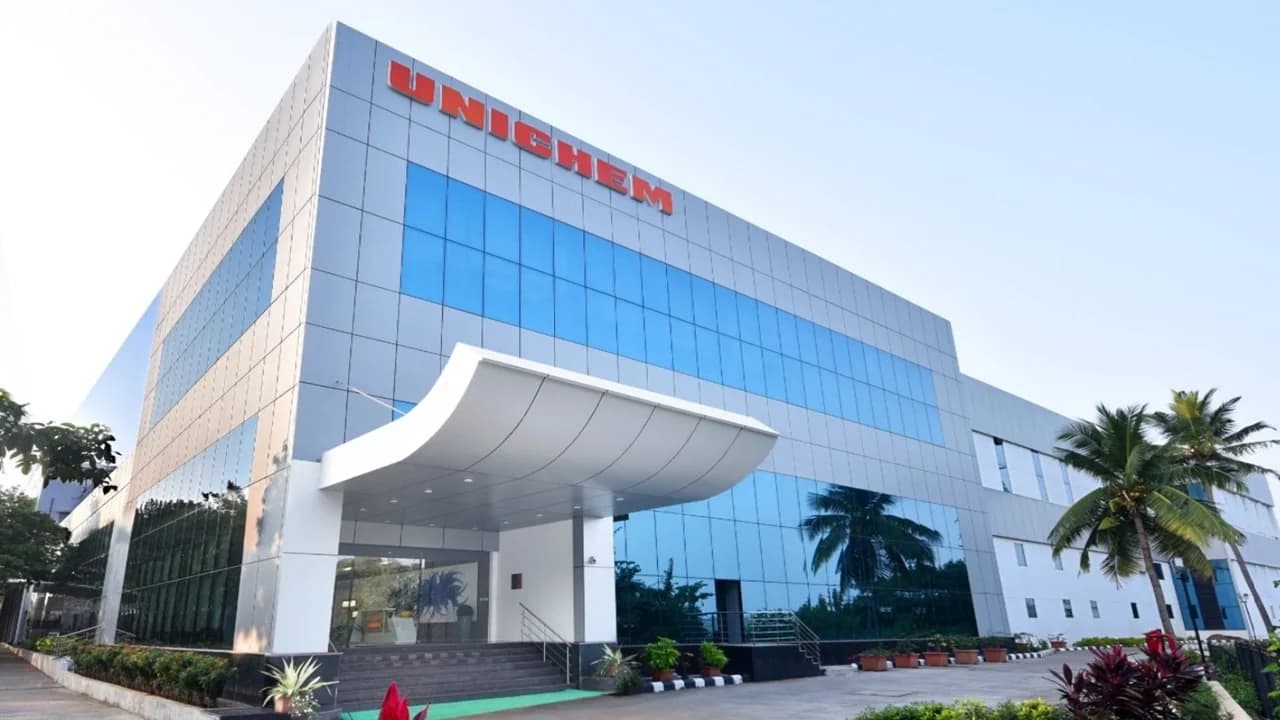
The company's balance sheet reveals mounting pressures with long-term debt increasing to ₹60.81 crore in FY25 from ₹38.22 crore in FY24, pushing the debt-to-equity ratio higher. The debt-to-EBITDA ratio stands at an elevated 4.66 times on average, indicating that the company would require nearly five years of current EBITDA to repay its debt. Interest coverage, measured by EBIT to interest, averaged a weak negative 1.70 times, meaning the company's operating earnings have been insufficient to cover interest obligations. Cash flow from operations turned negative at ₹7.00 crore in FY25 compared to positive ₹14.00 crore in FY24, with the company consuming ₹293.00 crore in working capital changes during FY25, suggesting either aggressive inventory build-up or challenges in collecting receivables. The closing cash position declined to ₹89.00 crore from ₹154.00 crore, further constraining financial flexibility.
The company's performance significantly trails industry peers, with ROE of just 1.44% ranking amongst the lowest in the sector compared to RPG LifeSciences leading at 21.68%. Return on capital employed (ROCE) averaged a negative 0.39% over recent periods, though it improved to 4.90% in the latest calculation. The stock trades at 1.22x price-to-book versus a peer average around 4.0x, offering a valuation discount that appears illusory given the company's weak business quality. With mutual fund holdings declining 103 basis points over the year to 9.17%, indicating institutional investors are exiting positions, and the stock having changed to a bearish trend on January 14, 2026, the probability of sustained upside appears limited. The Mojo score of 31 out of 100 places the stock firmly in "SELL" territory, with the proprietary algorithm recommending that investors "consider selling" and "look for exit opportunities" until operational improvement materialises.