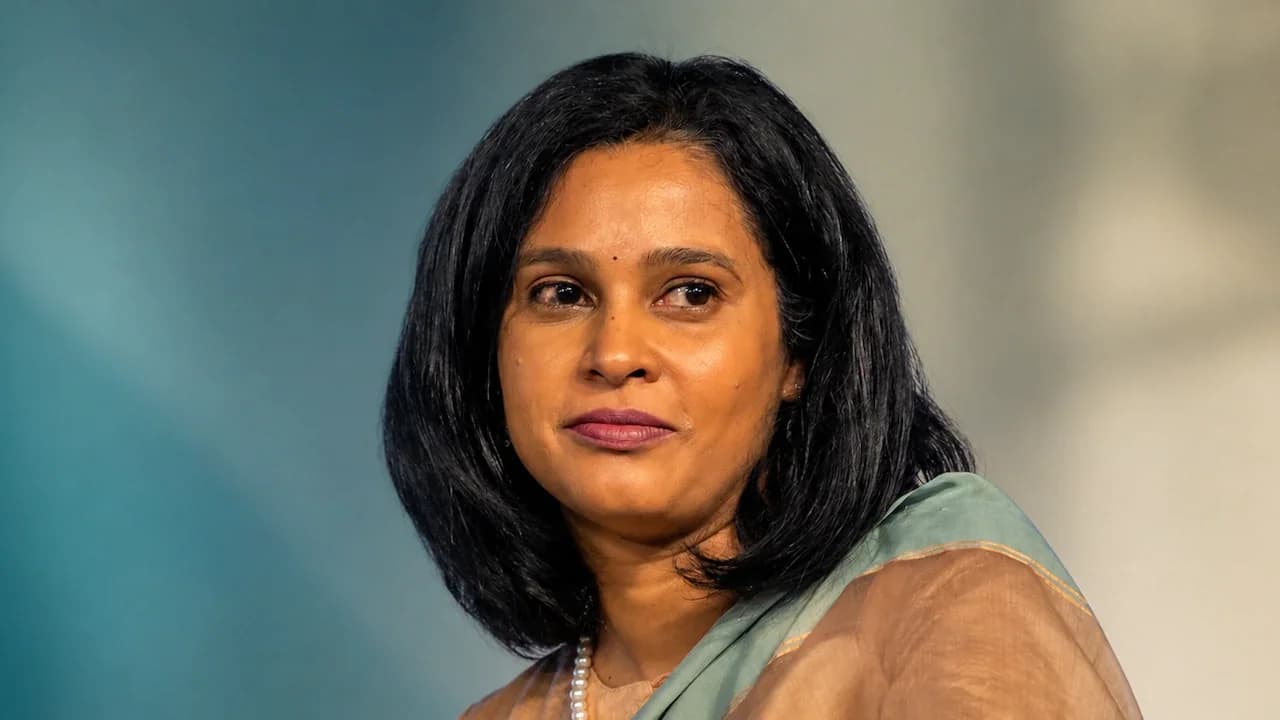
Uber India and South Asia President Prabhjeet Singh has resigned from his role after a nearly 11-year stint with the ride-hailing major, according to company confirmation. Singh joined Uber in August 2015 as general manager and head of strategy, later leading the company's India and South Asia business before becoming president in June 2020. In his resignation email to employees, Singh wrote: "Over the past few weeks, I made the difficult decision to leave Uber to pursue an opportunity in frontier technology. It wasn't a decision to leave Uber as much as it was a decision to run toward something I couldn't ignore." His resignation comes around six years after taking on the president role, marking the end of a decade-long journey during which he oversaw the platform's growth and expansion across the country. Industry sources had suggested Singh could be headed to OpenAI as the artificial intelligence company expands its presence in India, and now reports confirm that Singh will join OpenAI as Managing Director for India. According to Reuters, Singh will join OpenAI in September and report to Kiran Mani, Managing Director for Asia Pacific. Prior to Uber, Singh was an associate partner at McKinsey & Company and worked with investment bank Lehman Brothers. As per The Times of India, an Uber spokesperson confirmed that Singh is leaving the company to pursue another leadership opportunity.
Under Singh's leadership, Uber strengthened its footprint across Indian cities while expanding its offerings beyond traditional cab services. The company has been focusing on technology-led mobility solutions, driver partnerships and improving customer experience as competition in the sector continues to intensify. According to a company spokesperson, India is one of Uber's most important markets globally and serves as an important driver of innovation and long-term growth. Singh noted in his email that "Our business has real momentum. We are growing faster than ever, adding more riders and earners each month than at any point in our history. We have exceptional leadership alignment, an outstanding team, differentiated advantages in the market, and a pipeline of new bets that will shape our next decade." The strength of Uber's business today reflects the incredible team and foundation built over the years during Singh's tenure, with the company remaining deeply committed to its next phase of growth in India. In a statement, Uber thanked Singh for his contribution to the company and reaffirmed its commitment to investing in growth and innovation in the country.
In his new role at OpenAI, Singh will serve as Managing Director for India and will be the company's most senior leader in the region, according to Reuters. His key responsibilities will include the company's performance across consumer growth, enterprise adoption and partnerships, regulatory engagement, and operations. Singh will concentrate on building partnerships across India's AI ecosystem while helping consumers, businesses, institutions and government bodies adopt artificial intelligence. As per an official statement by OpenAI, Singh will report to Kiran Mani, Managing Director for Asia Pacific. This move represents a significant shift from ride-hailing to artificial intelligence leadership, leveraging Singh's decade of experience in India's technology sector to drive OpenAI's expansion in the region. Singh joins OpenAI from Uber where he served as President of India and South Asia, and led its mobility business across India, Sri Lanka and Bangladesh. He is an alumnus of IIT Kharagpur and IIM Ahmedabad, and in 2022, IIM Ahmedabad recognised his professional achievements with its Young Alumni Achiever's Award. Singh's background includes working as a Senior Analyst at Lehman Brothers in London from 2005-2006, where he was part of the Structured Finance and Equities Program Trading teams, then joining McKinsey in 2006 as an Associate Partner, helping over 30 clients across financial services, consumer tech and telecom sectors in South-East Asia and India.
The appointment of Singh is part of OpenAI's continued investment in India, which the company has identified as one of its top-priority markets. According to PTI, Singh will be OpenAI's "most senior leader" in India with responsibility for performance across consumer growth, enterprise adoption and partnerships, regulatory engagement, and operations. His focus will include building partnerships and supporting India's wider AI ecosystem, while helping more consumers, businesses, institutions and government bodies benefit from AI. OpenAI has stepped up its India push, deepening partnerships with businesses and developer community as it lays bold bets on one of the fastest-growing markets for artificial intelligence adoption. Sam Altman-led OpenAI announced its first office in New Delhi in November 2025, signaling a major commitment to the Indian market. Altman has maintained that AI adoption in India has been "amazing" to watch, praising India's current "conviction" to invest across the entire AI stack and indicating that India's tech ecosystem is on the verge of a massive, AI-driven entrepreneurial explosion. Also Read | OpenAI's GPT-5.6 Is Here: What's New And Why Is It Restricted
Singh's departure comes at a time when Uber is facing increased competition in India from homegrown ride-hailing players such as Rapido as well as newer mobility platforms that have entered the market, such as Bharat Taxi. During his tenure, Uber made several efforts to strengthen its presence in India, including deepening its presence in Tier-II cities and other non-metro markets. The company expanded its portfolio through services such as Uber Moto, Uber Auto, intercity travel, and partnerships in adjacent categories, while deepening partnerships with drivers and fleet operators such as Everest Fleet. Uber has also integrated various services, such as metro ticket booking, into its app, with the metro ticketing service currently live across five cities and more than 10 million metro rides booked through the Uber app via the government-backed Open Network for Digital Commerce (ONDC). Last month, Uber announced a strategic investment of ₹60 crore in ONDC. Under Singh's leadership, Uber doubled down on premium and higher-ticket offerings, launching services such as Uber Black, rentals, intercity rides, and business-to-business logistics. To counter competition, Uber launched its electric mobility service Uber Green in 2023 and faced increasing competition from the now-defunct EV ride-hailing startup BluSmart. While Ola ceded market share in the four-wheeler ride-hailing segment to Rapido, Uber has retained 45-50% of the market, according to industry executives.
In fiscal 2025, Uber India reported revenues of ₹3,849 crore, up 2.3% from a year earlier, reflecting a sharp slowdown in growth even as its losses widened significantly. The company faced challenges during Singh's tenure, including the impact of Covid lockdowns which had wiped out nearly 90% of demand at the time. According to ET, India is Uber's third-largest market globally by trip volume, and in a May interview with ET, the company's CEO Dara Khosrowshahi had said it was on track to become the largest. The company also faced increasing competition from rivals such as Rapido and the now-defunct EV ride-hailing startup BluSmart. After the pandemic, Rapido expanded beyond bike taxis into four-wheelers with its zero-commission model for drivers, forcing Uber and Ola to rethink their long-standing commission-based model, prompting both companies to gradually shift towards subscription- and SaaS-based pricing for drivers in several cities. Following the announcement of Singh's exit, Uber thanked him for his contributions over the past decade and wished him success in his new leadership role.