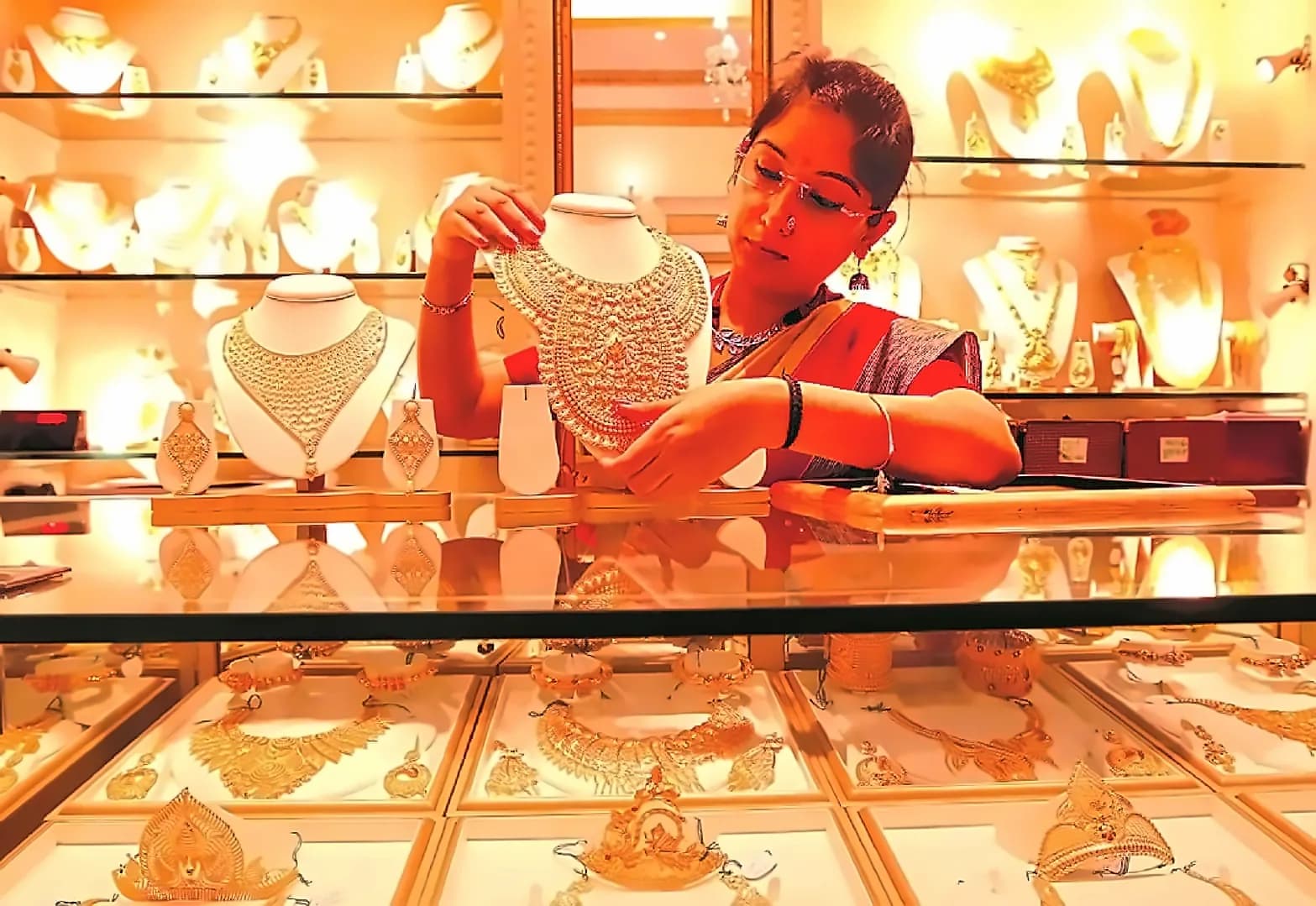
Titan Co. Ltd's stellar quarterly performance was overshadowed by brutal market reactions to macro concerns. According to reports from Company Business News, the company generated ₹20,300 crore in revenue for the quarter ending March 2026, representing a 46% increase over the year-ago quarter. However, between 11 May and 15 May, Titan's stock tanked over 7%, wiping out more than ₹30,000 crore in investor wealth at one point. The market crash occurred despite Managing Director Ajoy Chawla's comment during the earnings call on 8 May that the company had achieved 'perhaps our best ever in the recent past' for top-line growth.
The market reaction was triggered by macro concerns around gold consumption and imports. As reported by Company Business News, on 10 May, Prime Minister Narendra Modi publicly urged Indians to avoid buying gold for a year, followed by the government raising import tariffs on gold and silver on 12 May. This development highlighted the contradiction at the heart of Titan's growth story, as the company has benefited significantly from India's shift towards organised jewellery retail. In 1996, when Titan launched its first jewellery store, its revenue was just above ₹350 crore, transforming into an $8-billion or ₹76,000 crore retail behemoth today.
Despite diversification into other categories, jewellery continues to drive the majority of Titan's business. According to Company Business News, jewellery accounts for 90% of Titan's revenue and 94% of its incremental revenue growth in 2025-26. However, the company has expanded into eyewear, fragrances, women's ethnic wear and handbags over the last two decades, betting that capabilities in trust, branding, retail execution and organising fragmented markets would spill over into adjacent lifestyle categories. Analyst Naveen Trivedi from Motilal Oswal Financial Services noted that while jewellery will eventually become more of a steady-state business, the company needs to create new growth opportunities.
Titan's non-jewellery categories contribute significantly to volume but not necessarily value. As reported by Company Business News, the company served 4 million jewellery customers last fiscal year, including Caratlane and Damas, but catered to 16.5 million watch customers and over 1 million eyewear customers. Fashion and fashion accessories reached more than 3 million customers. Managing Director Ajoy Chawla acknowledged that while jewellery accounts for 90% of value, it doesn't represent 90% of customer interactions, with about 9-10% of Tanishq buyers being first-time customers from the Titan ecosystem. The non-jewellery businesses offer better margins, repeat purchases, and higher profitability.
Titan's watches division demonstrates the successful 'string of pearls' approach that the company wants to replicate across newer categories. According to Company Business News, Titan's watch division generated ₹5,267 crore last fiscal year with Ebit margins of around 15-16%, compared to jewellery's 11% Ebit margin. The company dominates the sub-₹25,000 watches segment with an almost 50% market share and operates over 1,250 stores across formats. CEO Kuruvilla Markose estimates India's watch market at ₹26,000 crore, with the company's strategy focusing on defending core segments, scaling premium offerings, and earning the right to play in luxury segments.