Tata Trusts is expected to move the Supreme Court against Tata Sons' resolution backing a third term for N Chandrasekaran after Noel Tata cast the sole dissenting vote. The trusts, which holds a 66% stake in Tata Sons, is preparing to challenge the September 17 board resolution that cleared Chandrasekaran's reappointment by a 4-1 vote. Noel Tata, Tata Trusts chairman and one of the nominee directors on the Tata Sons board, raised issues regarding the violation of rules related to the Tata Sons articles of association (AoA) on the veto rights of nominee directors and the casting vote on the matter. While Tata Trusts secured the opinion of D Y Chandrachud, former chief justice of India, Tata Sons sought advice from senior lawyers, including Sudipto Sarkar and B N Srikrishna. The interpretations of various clauses of the AoA differ significantly in these opinions, creating the basis for legal challenge.
Both sides have retained some of India's most prominent law firms and advocates as they prepare for a protracted legal battle over control of Tata Group. Cyril Amarchand Mangaldas, one of India's largest law firms, has been advising Noel Tata and Tata Trusts for more than a year, with Managing Partner Cyril Shroff personally handling the matter, assisted by senior partners including Indranil Deshmukh and Bharat Vasani, who served as Tata Sons' group general counsel for more than 17 years before retiring in 2017. Tata Trusts and Noel Tata have also recently retained top litigators Aspi Chinoy, Janak Dwarkadas, Abhishek Manu Singhvi and Mukul Rohatgi. On the opposing side stands Shuva Mandal, another former Tata Sons group general counsel and former partner at AZB & Partners, whose firm Anagram Partners has been representing Tata Sons and Chandra for at least a few months. Senior advocate Harish Salve has also been advising Tata Sons and Chandra, with senior advocate Ravi Kadam retained by Tata Sons.
Tata Trusts has declared that N Chandrasekaran's reappointment as Tata Sons chairman is legally invalid, stating the resolution had no legal effect. In a press release on Sunday, Tata Trusts said the resolution to reappoint Chandrasekaran, considered at the board meeting on September 17, 2026, was not validly passed and has no legal effect. "The resolution to reappoint N. Chandrasekaran as the Chairman of Tata Sons, considered at the Board meeting on Sept. 17, 2026, was not validly passed and has no legal effect. In the eyes of the law, it is void ab initio," Tata Trusts stated. The Trusts emphasized that "majority amongst two is two and not one," noting that one of the two Tata Trusts nominees voted against the resolution, making the affirmative support condition not met. "The condition failed, and so did the resolution," the release added. Tata Trusts also rejected the suggestion that its refusal to support the resolution amounted to a deadlock that could paralyse Tata Sons, stating "There was no paralysis and there was no deadlock," adding that the exercise of protective rights under company constitution should not be treated as a deadlock.
Tata Trusts explained that the chairman's casting vote only applies in cases of a tie at the overall board level, not among Tata Trusts' nominee directors. "The Chairman's casting vote is available only where there is equality of votes at the overall board level. It does not apply amongst Tata Trusts' Nominee Directors," Tata Trusts stated. "Whether the result of the vote was 4:1, or any other figure, is irrelevant. A condition is either met, or it is not. In this case the condition was not met," the trusts added. At Thursday's board meeting, Tata Trusts chair Noel Tata had opposed Chandrasekaran's reappointment, while another trustee and board member, Venu Srinivasan, supported it. Tata Sons' nomination and remuneration committee (NRC) chairman Harish Manwani then voted to help confirm Chandrasekaran's appointment despite Noel opposing the decision. Tata Trusts also rejected the argument that the chairman's casting vote could be used to overcome the absence of the required nominee-director support, maintaining that the overall vote count was irrelevant to the separate AoA condition.
The September 17 board meeting has escalated the ongoing conflict between Tata Trusts and the board over fundamental governance questions. Chandrasekaran had told the board on August 12 that he would not seek another term after his current tenure ends on February 20, 2027. Tata Trusts accepted that decision and had begun the process of finding a successor. However, at Thursday's meeting, the board asked Chandrasekaran to reconsider and he agreed. The resolution passed 4-1, with Noel Tata, chairman of Tata Trusts and a Trust-nominated director, voting against it. At the centre of the latest dispute is Article 121 of Tata Sons' AoA, which requires matters decided by a majority of the board to also have the affirmative vote of a majority of directors nominated by the Tata Trusts under Article 104B. There are currently two such nominee directors on the Tata Sons board — Noel Tata and Venu Srinivasan. Noel Tata opposed Chandrasekaran's reappointment at the September 17 meeting, while Srinivasan supported it. Tata Trusts argued that a majority among two nominees means the support of both directors. Since one nominee voted against the resolution, the affirmative-vote condition was not satisfied. The Trusts also disputed the suggestion that the September 17 board meeting resulted in a deadlock or paralysis at Tata Sons, stating "There was no paralysis and there was no deadlock," adding that the exercise of protective rights under company constitution should not be treated as a deadlock.
Tata Trusts highlighted the Supreme Court's previous ruling in the Cyrus Mistry case as precedent for their current position. "The Company cannot now disown the protection it went to the Supreme Court to preserve," Tata Trusts stated. In the litigation following Mistry's removal in October 2016, the Trusts' nominee directors' affirmative voting rights under Articles 104B and 121 were directly in issue. A company law appellate tribunal found the articles "oppressive," but Tata Sons defended them as "legitimate protection agreed between the shareholders" and argued they were the Trusts' entitlement as a majority shareholder. Subsequently, in March 2021, the Supreme Court agreed with Tata Sons' argument and concluded there was nothing wrong in Mistry's removal. "It is unfortunate that the chairman of Tata Sons, a company renowned for setting high standards of corporate governance, is contending reappointment on such an untenable interpretation of the Articles," Tata Trusts concluded. Tata Trusts also rejected the suggestion that listing Tata Sons would be necessary to strengthen its corporate governance, pointing to governance provisions voluntarily adopted by Tata Sons as an unlisted company, including provisions relating to independent directors, audit and nomination committees, related-party transactions, and insider trading.
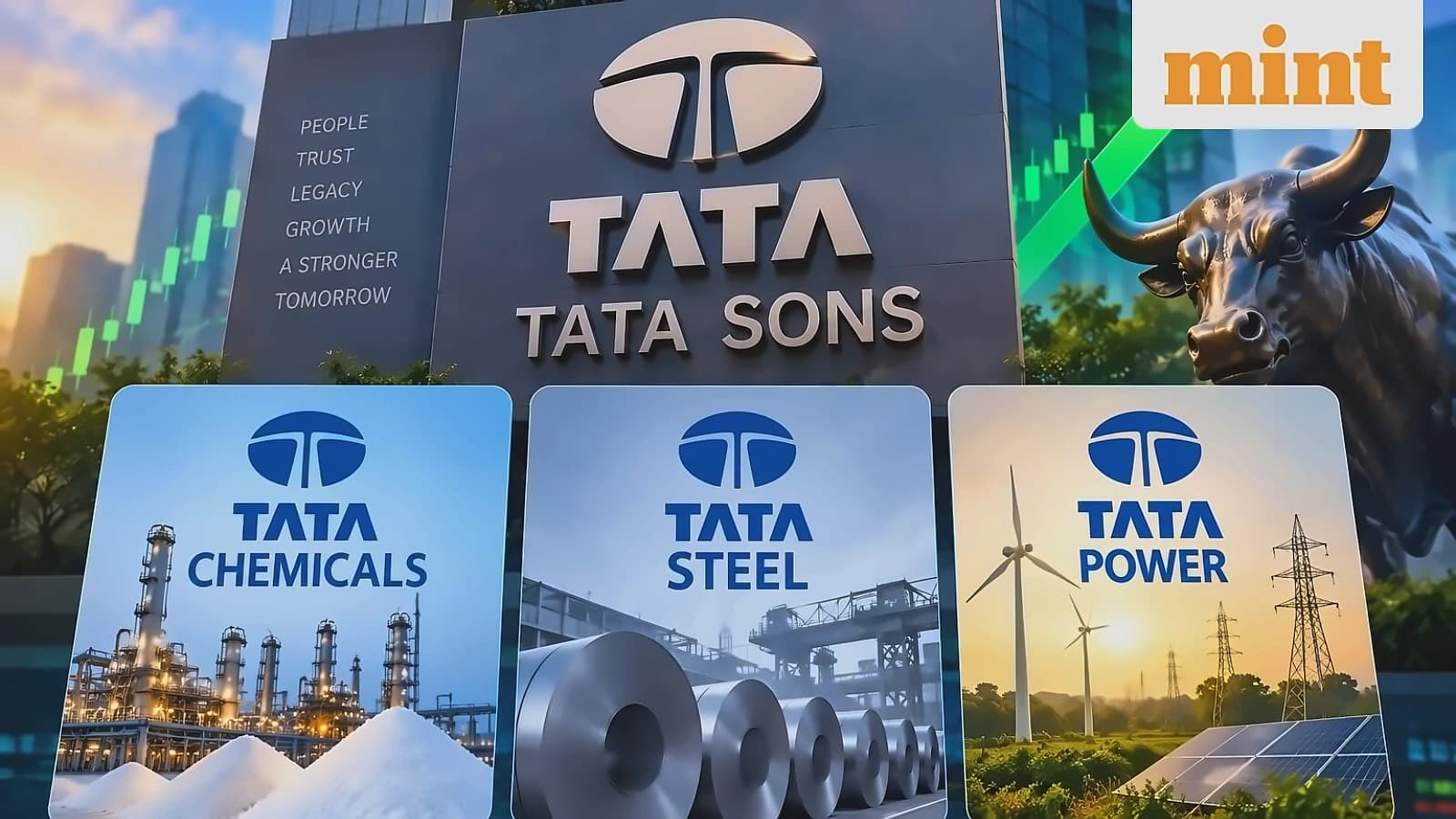
Tata Group stocks declined in Friday morning trade after advancing in the previous session, with Tata Chemicals tumbling nearly 9% amid profit-taking. According to Mint, shares of Tata Chemicals tanked 8.89%, Tata Investment Corporation tumbled 5%, TCS dropped 3.64%, Tata Motors Passenger Vehicles declined 3.35%, Tata Power dipped 2%, Tata Elxsi was down 1.76%, Tata Steel edged lower by 1.30%, Titan 1.29%, Tata Consumer Products 0.98%, Tata Communications dipped 0.72% and Voltas 0.69% on the BSE. The SP Group has also sought to monetise its stake in Tata Sons to reduce debt, raising $2.25 billion in July through a refinancing backed by its Tata Sons shares. On Thursday, Tata Trusts said the SP Group had separately proposed selling part of its stake for at least $2.61 billion. Tata Sons is the promoter of Tata Group, with businesses spanning technology, autos, steel, consumer products, aviation and financial services, making the listing decision particularly significant for the conglomerate's future structure.