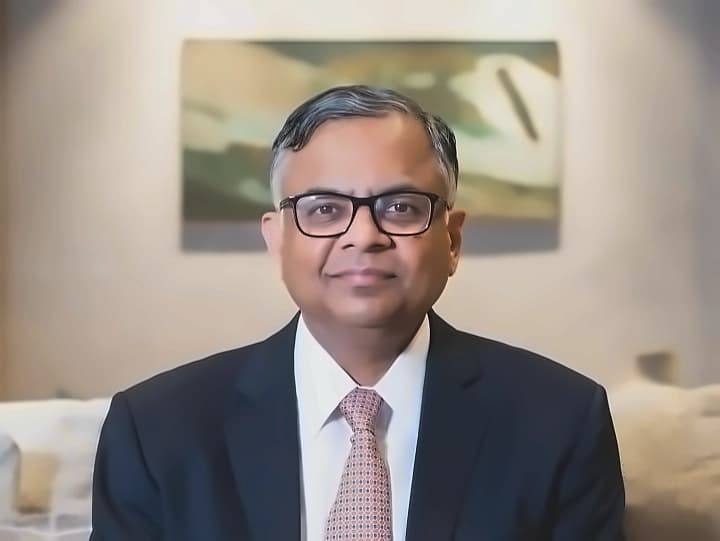
Tata Group stocks fell up to 5% on Wednesday following N Chandrasekaran's announcement that he would not seek reappointment as Tata Sons Chairman after his current tenure ends on February 20, 2027. The decline erased more than ₹60,000 crore from the combined market capitalisation of Tata Group companies during the session. TCS led the decline, falling nearly 5% at around 12:40 PM, making it one of the biggest losers among Tata Group companies. Tata Motors fell around 3.5%, while Tejas Networks declined about 3%. Other major declines included Tata Elxsi and Tata Steel (both down around 2% each), Tata Consumer Products (slipped 1.81%), Tata Communications (declined 1.60%), and Tata Power (down around 1.20%). The selling was visible across several listed Tata companies, with Indian Hotels, Voltas, Tata Investment Corporation, and Trent also trading in the red. The decline came on a weak day for the broader equity market, though the magnitude of the fall in several Tata stocks indicated an additional reaction to the leadership development.
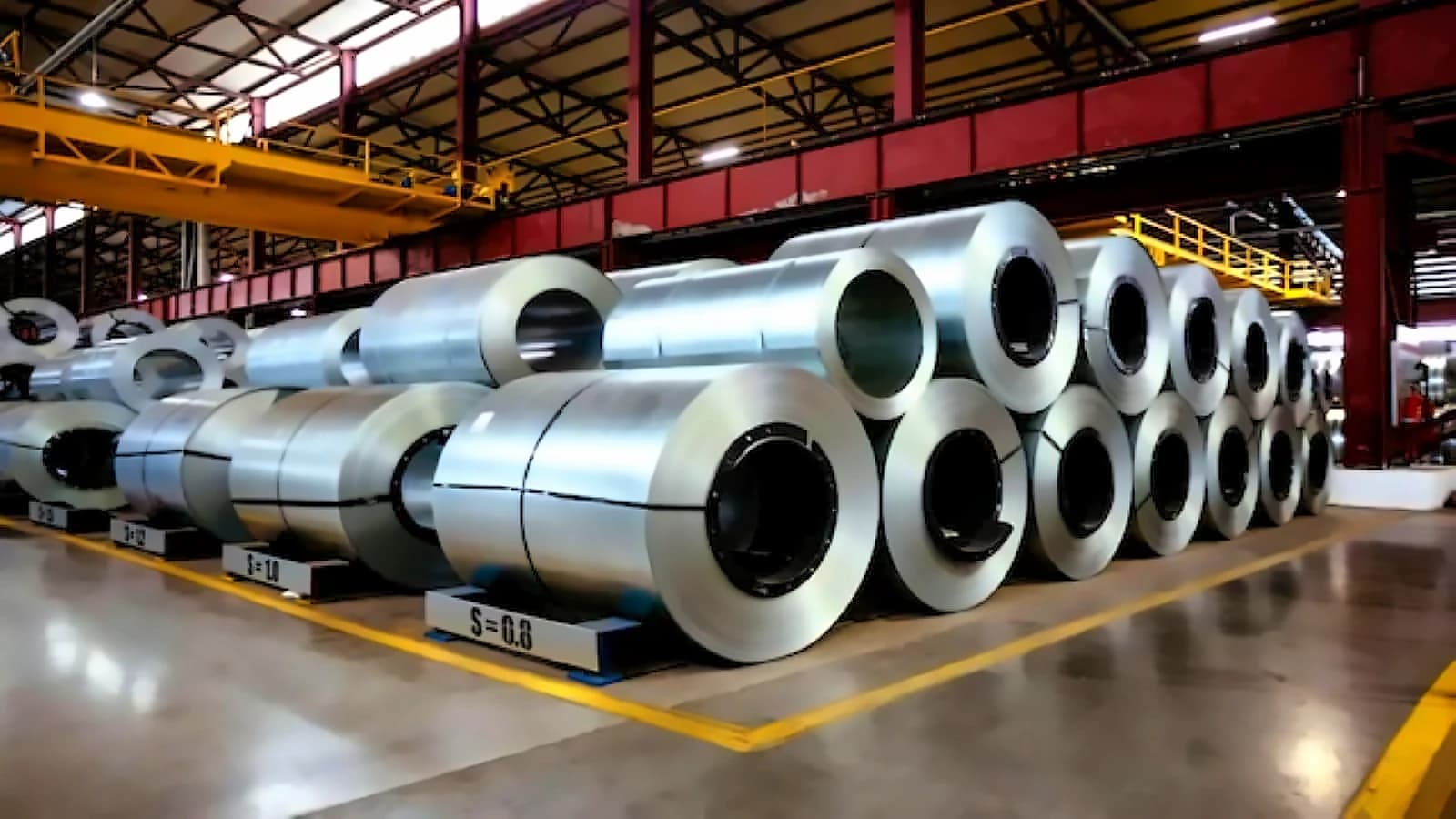
Under N Chandrasekaran's leadership since 2017, Tata Steel has successfully more than doubled its Indian capacity through strategic acquisitions and organic expansion. According to reports from Business Standard, this transformation has made India the group's primary cash engine over the past decade. The company commissioned the second phase of its Kalinganagar expansion in Odisha during FY26, taking the site's capacity from 3 million tonnes to 8 million tonnes. Total India capacity reached 27.4 million tonnes in FY26, representing a significant increase from 13 million tonnes in FY18. This expansion was part of Chandrasekaran's broader '3S strategy' - Simplify, Synergy, Scale - aimed at simplifying operations and achieving debt reduction across the Tata group.
The company pursued an aggressive acquisition strategy to reshape its geographical mix. In 2018, Tata Steel acquired Bhushan Steel for ₹35,200 crore under India's insolvency law, followed by Tata Sponge Iron's acquisition of Usha Martin's steel business for approximately ₹4,500 crore in 2019. The most significant acquisition came in 2022 with Neelachal Ispat Nigam Ltd (NINL) for ₹12,100 crore, an asset owned by central and state public-sector undertakings. These investments have expanded the company's options for pursuing its target of reaching 40 million tonnes of capacity. Under Chandrasekaran's leadership, the Tata group also consolidated its aviation portfolio by merging Vistara, Air India, and AirAsia India in 2023 as part of the 'One Tata' initiative.
The timing of Chandrasekaran's announcement is notable considering the scale of growth recorded by the Tata Group over the past few years. Aggregate revenue of the group increased from ₹7.89 lakh crore in FY20 to ₹16.24 lakh crore in FY26, translating into growth of around 105.8%, meaning the group's revenue more than doubled over the six-year period. Growth in profitability was even stronger, with profit after tax increasing from approximately ₹32,000 crore in FY20 to ₹1.71 lakh crore in FY26, marking an expansion of about 434%. Listed Tata companies also created substantial market value during this period, with their combined market capitalisation rising from ₹9.31 lakh crore in FY20 to ₹24.39 lakh crore in FY26, an increase of roughly 162%. The group's listed market value had been even higher at ₹27.85 lakh crore in FY25, showing the scale of expansion witnessed across Tata businesses during Chandrasekaran's leadership, spanning IT services, automobiles, power, consumer businesses, hospitality and newer growth areas.
Chandrasekaran's resignation as Tata Sons chairman in 2025 marked the end of a 40-year career that began in 1987 when he joined Tata Consultancy Services as a fresher. His tenure was marked by successful reforms including the '3S strategy' and major acquisitions like Air India, but also faced challenges with the new leadership following Ratan Tata's death. The Tata Sons board unanimously reappointed Chandrasekaran for a second five-year term as chairman, but the proposal failed to pass at a board meeting in February due to opposition from one member. Chandrasekaran cited this unresolved issue as the reason for his resignation, stating he decided to step down because the matter could not be resolved over the past six months. The Tata Sons board will now have several months to work out the next leadership arrangement, with Chandrasekaran continuing in his present role until the end of his term. The Tata group launched the 'Tata Neu' super app during his second term, signalling a high-tech pivot, while continuing to pursue initiatives in semiconductors, EV manufacturing, and green steel production.