Tata Consumer Products Ltd (TCPL) is targeting volume and price-led growth in FY27 with an increased capital expenditure of over 15% to ₹700 crore from ₹600 crore in FY26. As reported by The Times of India, the additional ₹100 crore will be utilized in setting a new tea extraction unit in FY27, demonstrating the company's commitment to expanding its manufacturing capabilities to meet growing market demand. Capital expenditure typically runs at 2.4-2.5% of turnover, and combined with R&D amounts, it amounts to around 3% of revenues. The company has built its newer "growth" businesses — packaged foods, pantry staples and ready-to-drink beverages — through a mix of organic expansion and acquisitions, and they now account for more than 30% of its India portfolio.
In FY26, Tata Consumer crossed the ₹20,000 crore revenue milestone with a 15% year-on-year topline growth and 20% on-year growth in net profit to ₹1,547 crore. According to the AGM proceedings reported by The Times of India, growth was broad-based across India, international and non-branded businesses. The company has completed its evolution from a tea-and-salt business into a multi-category fast-moving consumer goods (FMCG) company, with new channels now contributing more than 35 per cent of its India business through rapid expansion of quick commerce. Chairman N Chandrasekaran told shareholders he expects recent acquisitions — Capital Foods, Soulfull and Organic India — to grow at 25% a year. The three acquired companies operate at gross margins of 48%, compared with 35-36% for the rest of the portfolio.
TCPL launched around 80 products in FY26 and innovation accounts for 4.5% of sales, against a target of 5%. As reported by The Times of India, R&D spending remains modest, around ₹70 crore, or less than 0.5% of revenues, though Chandrasekaran said investment would increase. The company is leveraging AI to accelerate product development cycles, capture emerging consumer trends, improve demand forecasting, optimise supply chains and drive innovation. Changing lifestyles, new retail formats are emerging, digital commerce and particularly quick commerce are changing the way consumers consume, eat, drink and shop, creating significant opportunities for firms that can blend consumer-first thinking, innovation and implementation.
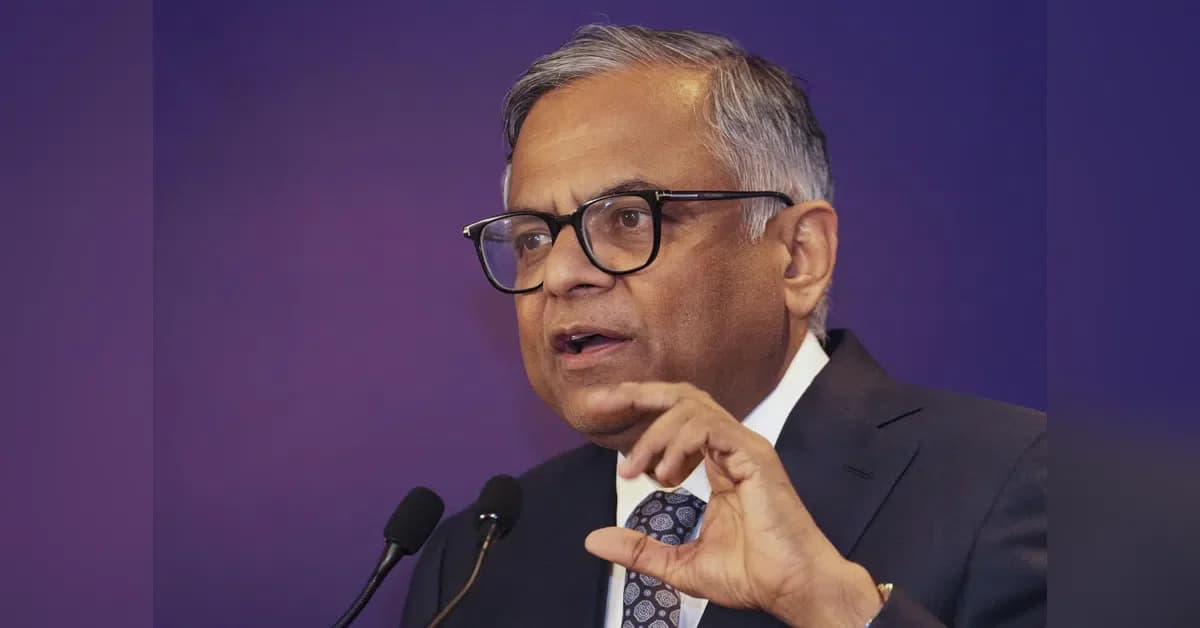
N Chandrasekaran, chairman of Tata Consumer Products Ltd (TCPL), told shareholders at the company's 63rd annual general meeting that the world is being reshaped by geopolitical shifts, supply-chain disruptions, energy transitions, and rapid advancements in artificial intelligence (AI). He noted that while FY26 began with positive developments, including the India-European Union (EU) trade agreement and the interim India-US trade deal, challenges grew with the West Asia conflict in March. "This year started on an optimistic note with key developments such as the landmark trade agreement with the European Union and finalisation of the framework for an interim bilateral trade pact between India and the United States. However, concerns over economic slowdown, weakening output and inflationary pressures resurfaced after the outbreak of the West Asia conflict late February," he said. This environment has prompted businesses to prioritise resilience, business continuity, productivity and trust-based decision-making over pure efficiency.
According to the AGM proceedings reported by The Times of India, TCPL's goal is to expand its portfolio and product mix while balancing premiumisation and volume growth. The company continues looking at both organic and inorganic opportunities as it seeks to tap into the growing potential of the domestic fast-moving consumer goods market. Chandrasekaran emphasized that "Tata Consumer is extremely well-positioned in this scenario" and described India as a "bright spot in the world" that remains among the fastest-growing economies globally, primarily led by demographic strengths and expanding digital and physical infrastructure. He concluded that "India continues to offer a large market and robust growth opportunities" despite global uncertainties, with the company well-positioned to benefit from India's consumption story as digital commerce transforms consumer behavior.