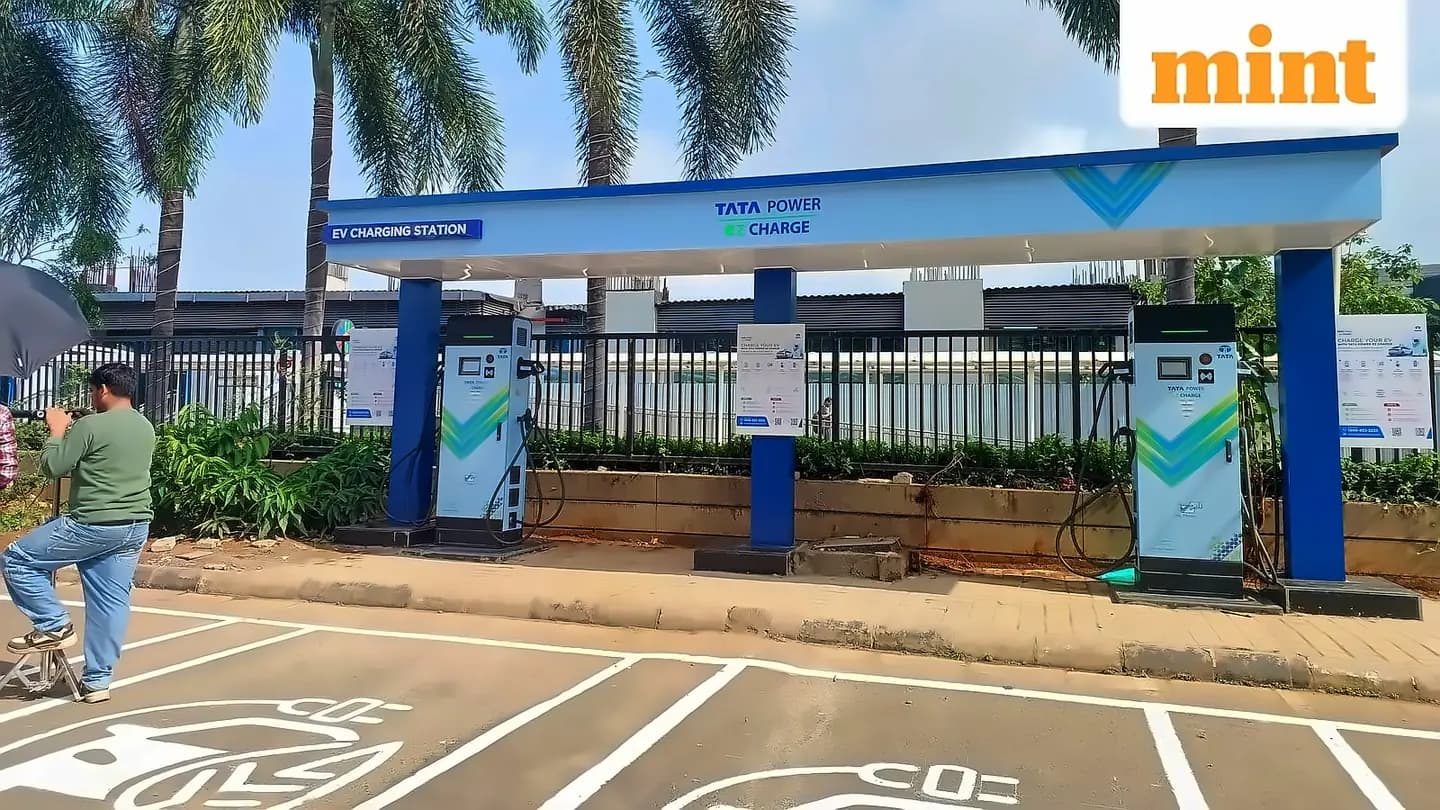
India's largest conglomerates have rapidly expanded their electric vehicle charging networks, with their combined installed charging points more than tripling to 19,000 over the past three years. According to data reviewed by Mint from annual reports of the companies, these conglomerates have accelerated the push over the last few years, with the Tata Group's Tata Power leading with 7,700 charging points across the country, followed by the Reliance Group's 6,200 and the Adani Group's 5,100 charging points at the end of fiscal 2026. As per Mint's analysis, the growth trajectory shows the number of EV charging points installed by these three groups has grown 21% from FY25, when the cumulative was 15,651 and by 67% from FY24, when their total was 11,356.
The number of EV charging points installed by these three groups has grown 21% from FY25, when the cumulative was 15,651 and by 67% from FY24, when their total was 11,356. From the total of 5,438 in FY23, the network has grown 280%. As per industry estimates, state-run firms Hindustan Petroleum Corp Ltd (HPCL), Bharat Petroleum Corp Ltd (BPCL) and Indian Oil Corp Ltd (IOCL) corner more than a third of the market share in the electric charging ecosystem. According to EV charging analytics portal ExpWithEVs, the share of public chargers operated by Adani, Tata and Reliance was stable at 24%, while that of PSUs went up by three percentage points to 37% over the year. The Adani Group has seen the fastest growth over the past two years, with charging points rising from 104 in FY23 to 5,100 in FY26, as per the group's annual reports, largely thanks to a key partnership with JSW MG Motor India to install EV chargers at its dealerships.
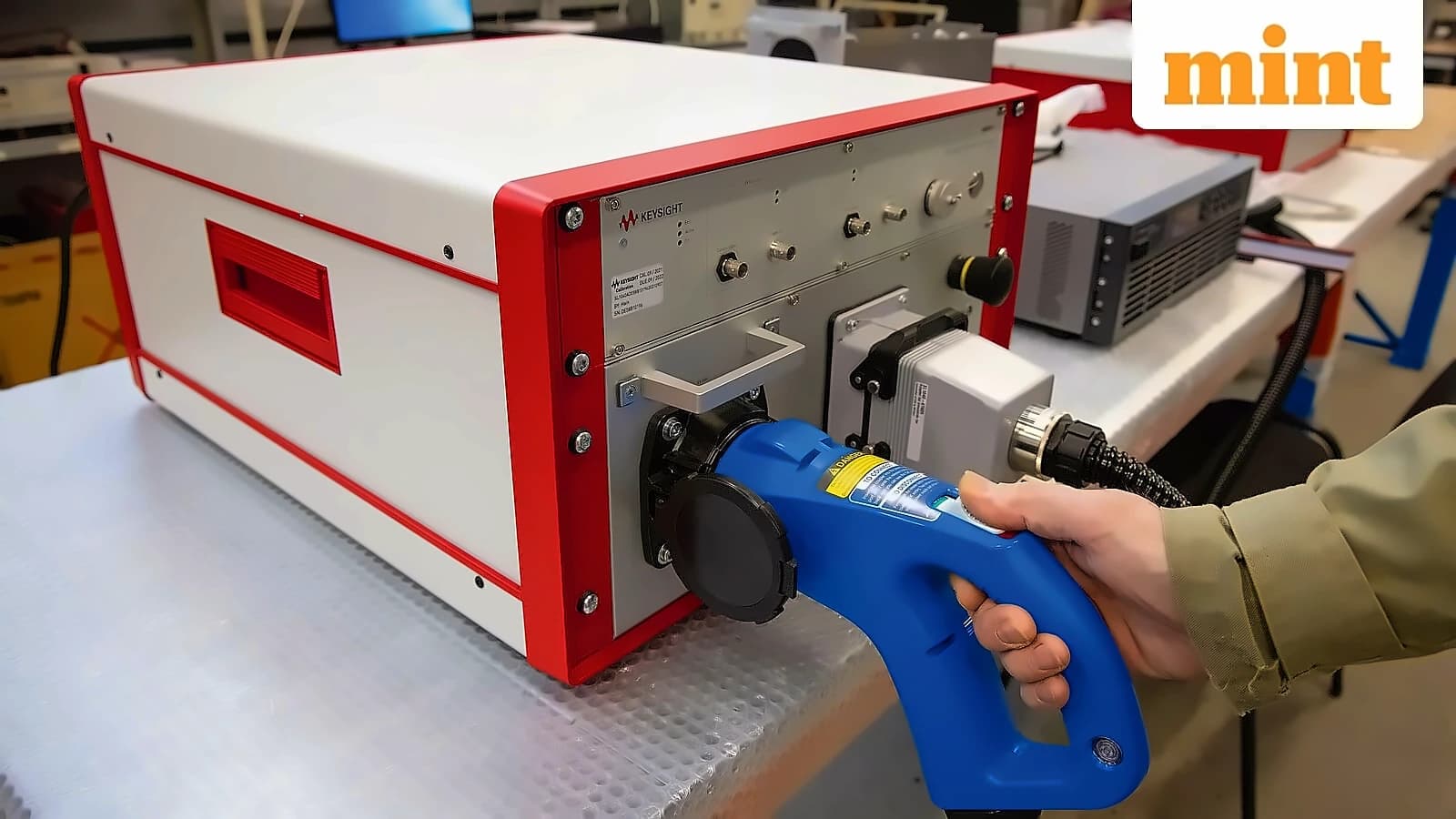
The Adani Group has seen the fastest growth over the past two years, with charging points rising from 104 in FY23 to 5,100 in FY26, as per the group's annual reports. This growth has been spurred by a key partnership: In April 2024, it had signed a pact with JSW MG Motor India to install EV chargers at its dealerships. Tata Power has partnered with sister firm Tata Motors, while Hyundai last month inked a partnership with Jio-bp, a fuel retail joint venture between Reliance Industries Ltd and bp (British Petroleum). The conglomerates' edge comes from their ownership of power infrastructure and land, which is crucial as charging speeds jump from 60kW to 350kW, requiring bigger transformers and grid upgrades. As Mint reports, the battle now is about convenience, with the scale-up in EV charging networks coming as electric passenger vehicle sales have surged over the past year, with sales in financial year 2026 nearly at 200,000 units.
On 25 August, Hyundai and Reliance Group's Jio-bp announced their EV charging network will be integrated to allow their app users access to each other's charging points. According to Mint's review, the scale-up in EV charging networks comes as electric passenger vehicle sales have surged over the past one year, with sales in financial year 2026 nearly at 200,000 units, as per Federation of Automobile Dealers Association (Fada) data. Tata Power is targeting over 7.5 lakh home chargers and 10,000+ public and semi-public charging points by 2030, focusing on deepening presence in Tier 2 and Tier 3 cities and scaling up fast-charging corridors for intercity travel. Experts suggest that the conglomerates have an edge in managing charging points, as they already have experience and reach with their power utility firms, with Ravindra Patki, managing partner at Vector Consulting Group, noting that "A smaller player has to arrange all this land, power approval and equipment upgrade one site at a time, which takes months. Companies like Tata, Adani and Reliance already own the power and the land, so they can make these upgrades much faster and cheaper."
The network of these charging points primarily caters to passenger vehicles, electric buses and trucks, built at public, semi-public and private charging stations covering malls, workplaces, hotels, hospitals, etc. According to Mint's analysis, the conglomerates' ownership of power infrastructure and land is crucial as charging speeds jump from 60kW to 350kW, requiring bigger transformers and grid upgrades. The battle now is about convenience, with digital subscription services like Mint premium available at ₹213 per month showing how the industry is evolving toward integrated, user-friendly solutions. The network primarily caters to passenger vehicles, electric buses and trucks, built at public, semi-public and private charging stations covering malls, workplaces, hotels, hospitals, etc.