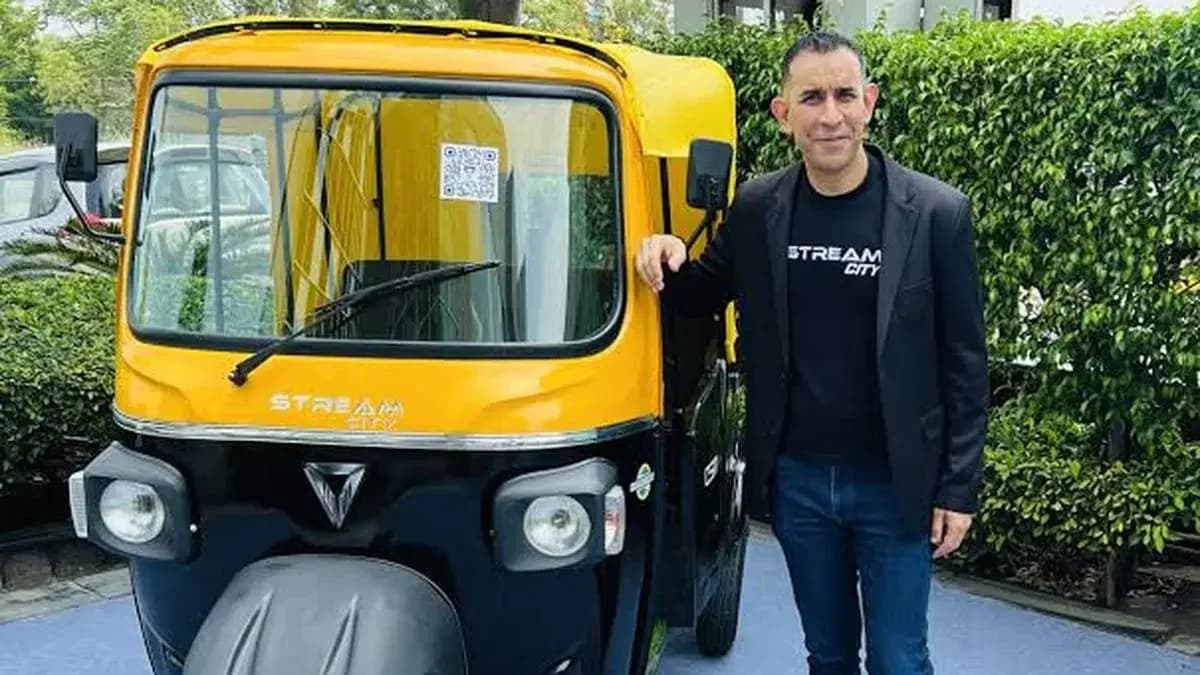
Impact-focused venture capital firm Next Bharat Ventures (NBV), a wholly owned subsidiary of Japan's Suzuki Motor Corp., has launched its second impact fund with a target corpus of ₹2,000 crore. According to reports from Mint, the new fund will enable Next Bharat to expand its support towards impact entrepreneurs, focusing on sectors including agriculture, financial inclusion, healthcare, and AI for social good. As reported by ETAuto, the fund will significantly expand NBV's investment capacity, with the second corpus mostly coming from Suzuki Motor Corporation as the anchor LP but also raising funds from other Japanese corporations. The fund will focus on early and growth stage startups with an average ticket size of $500K to $1 million (₹4.8 crore to ₹9.6 crore), significantly higher than the ₹1 crore to ₹5 crore disbursed from the first fund. Vipul Jindal Nath, Founder and CEO of NBV, explained that the fund will be deployed across sectors where startups can help improve quality of life for local communities, including agriculture, agritech, healthcare, health-tech, and livelihood sectors, targeting rural India, tier two-three towns, and even informal and gig economy workers in big cities.
As reported by Mint, over 90% of NBV's portfolio companies are heading towards profitability in their early years, with the company's first fund demonstrating that commercial success and social impact can go hand in hand. Through its first ₹340 crore fund, NBV invested in around 20 early-stage startups focused on improving livelihoods across rural India, with cheque sizes ranging from ₹1 crore to ₹8 crore. The company has supported more than 50 impact startups to date, investing in over 20 of them through capital, mentorship, and ecosystem support. According to Inc42, 80% of the startups from the firm's first fund are already EBITDA positive, with many of them piloting their offerings in Japan through the fund's mentorship programmes. NBV has invested in several rural startups including MeMeraki, an authentic Indian folk art marketplace, E-Bik, a rural mobility brand providing affordable e-mobility kits for cycles and rickshaws, SGB Agro, offering affordable mechanisation for small-holding farmers, and Atypical Advantage, India's largest PwD livelihood platform. Some of these startups are even teaming up with Japanese companies to expand their reach.
According to Mint, Toshihiro Suzuki, representative director & president of Suzuki Motor, stated that through NBV, Suzuki will establish connections with the next billion people beyond the mobility sector. He noted that while Suzuki has provided mobility solutions to customers since commencing production in India in 1983, out of India's population of approximately 1.4 billion people, Suzuki is currently connected with only about 400 million. As reported by ETAuto, Suzuki emphasized that Japan's investment in India has always been rooted in a shared belief in India's potential, with their four-decade partnership creating an estimated 3,000-plus entrepreneurs across India, each a homegrown engine of local jobs and income. The fund will contribute to 'Viksit Bharat 2047 (Developed India)', the government's vision to drive the mission of making India a developed nation by 2047. According to Inc42, NBV Founder and CEO Vipul Jindal Nath explained that the fund will back ventures in sectors ranging from rural-focused healthcare, rural mobility, financial services and productivity to agritech, cleantech and retail tech startups, including backing micro-entrepreneurs, impact-focused AI startups and livelihood-creation offerings. Nath noted that the fund will be deployed in the next three to four years, with the company targeting 10-12 deals per year over the next four years.
According to Inc42, the ₹2,000 crore will be deployed over the next three to four years, with the fund expected to start making investments in the next month and target 10-12 deals per year over the next four years. Unlike typical VC funds, NBV operates on a 15-year fund cycle compared to the standard 12 years due to the nature of impact investments requiring more time for results. Notably, half of the fund's corpus will be allocated to a fund-of-funds strategy, investing as a limited partner in high-performing VC firms to hedge the risks associated with its impact investments. The fund will be deployed across sectors where startups can help improve quality of life for local communities, including agriculture, agritech, healthcare, health-tech, and livelihood sectors. NBV focuses on supporting startups across rural India, tier two-three towns, and even informal and gig economy workers in big cities, looking to invest in startups that have an established product-market fit and are revenue generating. Nath explained that the reason for raising almost the entire corpus from Japan is because Japanese institutions are much more patient in terms of investment, allowing for the longer fund cycle required for impact investments.