SpaceX delivered its first quarterly earnings report as a public company, beating Wall Street estimates with $7.81 billion in revenue, representing a 92% increase from $4.1 billion a year earlier. The company posted a net loss of $541 million attributable to shareholders for the three months ended June 30, with second-quarter revenue beating expectations of $6.81 billion according to Bloomberg data. Despite the revenue beat, the stock has declined 14% in Wednesday's session following the earnings announcement, with investors focusing on the company's decision to build AI infrastructure exclusively on Nvidia chips. The stock has now declined 52% from its post-listing peak and is trading nearly 20% below the IPO price of $135. The company invested $18.37 billion in AI infrastructure, Starship and Starlink expansion during the quarter, with the AI segment absorbing $15.83 billion of that figure.
Starlink's financial performance continued to show strong momentum, with connectivity revenue reaching $4.291 billion, up 66% from a year earlier, and operating income climbing 79% to $1.656 billion. The satellite internet service gained 12 million subscribers over 12 months, slightly below analysts' estimate of 12.19 million, with average revenue per user holding at $66 per month, unchanged from the first quarter. However, this growth has come with tradeoffs as average revenue per user (ARPU) has dropped as SpaceX has entered more international markets and rolled out lower-priced plans. The satellite-internet unit has continued to expand its global subscriber base through additional satellite launches and growing range of consumer, enterprise, aviation, maritime and government services, though investors are watching whether SpaceX can maintain growth while improving network economics.
The single word "exclusively" used by CEO Elon Musk during SpaceX's first earnings call as a public company sent shockwaves through the chip market, with Nvidia shares rising 3.4% while Advanced Micro Devices fell 6% despite AMD reporting a record quarter. Musk announced that SpaceX would build its artificial intelligence systems only on Nvidia chips going forward, citing the Vera Rubin architecture as the best architecture for the company's needs. This exclusivity deal makes SpaceX one of Nvidia's biggest customers and locks out competitors like AMD, which had previously counted SpaceX among its AI chip customers. The decision gives Nvidia pricing power and takes business away from AMD, with the Vera Rubin platform planned to run both on ground systems and through Starmind, a plan to fly data-center computers on satellites from next year.
The artificial intelligence segment brought in $2.6 billion, a 247% annual increase, with new cloud services agreements worth $14.1 billion in contracted sales driving much of that gain. Despite the revenue growth, the segment reported an operating loss of $1.26 billion, an improvement from the $2.39 billion loss analysts had expected. The segment reached its first positive adjusted EBITDA at $1.1 billion, but this swing to positive is explained almost entirely by roughly $1.9 billion of depreciation added back. Chief Financial Officer Bret Johnsen announced that the economics of AI investments have translated into less than one-year payback on new capital deployments for compute, with SpaceX signing another $6.7 billion in cloud computing contracts since the end of the second quarter. The AI business, which includes xAI, Grok, and social-media platform X, and a rapidly expanding data center operation, is generating revenue from compute contracts with Anthropic, Alphabet's Google and Reflection AI, though a portion of its recurring revenue has yet to be recognized.
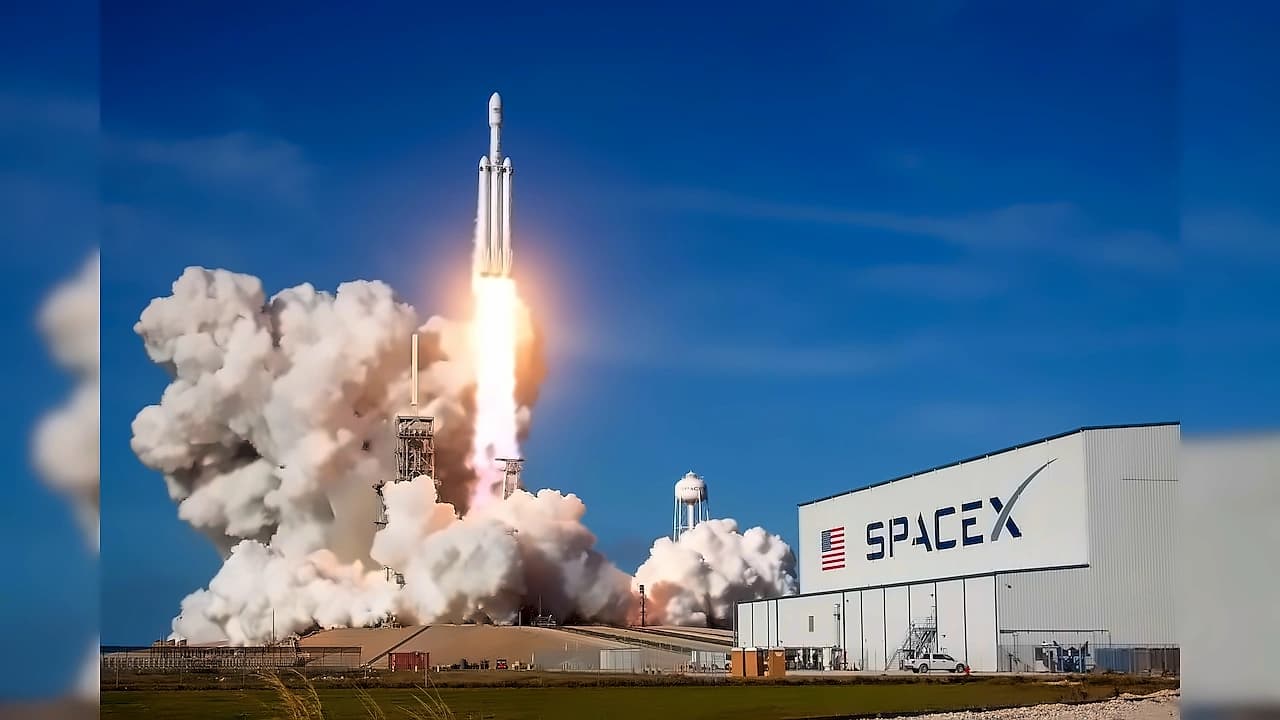
The bigger story is that SPCX was falling long before the earnings call, with the stock hitting bottom in late July about a week before a major share unlock, then climbing more than 15% into the call before Wednesday's drop mostly gave back that bounce. About 911.5 million insider shares became free to trade on Thursday, the first batch from the lock-up period after the IPO, lifting shares available to the public from under 5% to about 12%. Finance chief Bret Johnsen indicated that capital spending over the next several quarters is expected to remain near current levels as SpaceX continues to expand AI computing capacity, accelerate Starship production, and develop next-generation Starlink satellites. Wall Street cannot agree on what the exclusive Nvidia bet is worth, with targets for SpaceX running from $75 at Phillip Securities to $800 at Raymond James, while JPMorgan raised its target to $240 and Piper Sandler cut its own to $140.