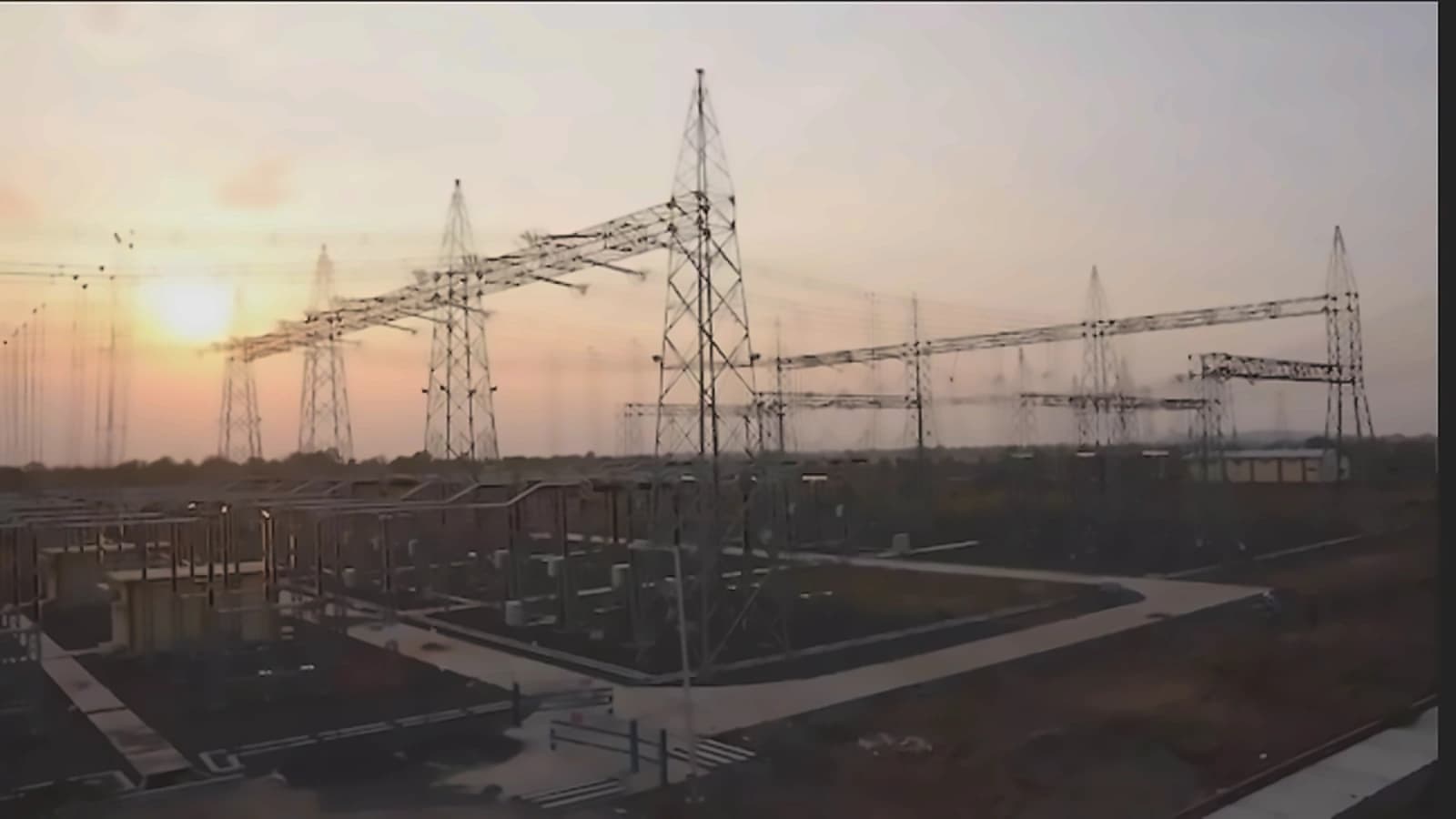
The Sustainable Harnessing and Advancement of Nuclear Energy for Transforming India (SHANTI) Act, 2025, came into force on 20 December 2025 after receiving presidential assent, marking a major shift in India's nuclear policy by opening the civil nuclear power generation sector to private players. According to reports, the draft SHANTI Rules, 2026, introduce a single composite licence that allows access to approved domestic and international technologies, while expanding nuclear energy use beyond power generation to areas such as captive power, industrial heat and hydrogen production. The framework retains stringent safety and liability requirements, with draft rules now placed in the public domain for consultation. As per the Department of Atomic Energy (DAE), the new rules let eligible private firms build, own, operate and eventually decommission nuclear plants and reactors, significantly expanding the playing field beyond conventional electricity generation. The practical implementation allows companies to apply for a single composite licence covering construction, ownership, operation and decommissioning, eliminating the need to chase multiple approvals at every stage.
With private participation now allowed under the SHANTI Act, the industry is actively seeking a transparent and predictable tariff framework that balances developer returns with competitive prices. Anil V Parab, whole-time director and senior executive vice-president (manufacturing) at Larsen & Toubro (L&T), told Business Standard that "For economic viability, tariff has to be aligned with market rates, with a maximum levelised cost of electricity (LCOE) of ₹8 per kilowatt hour (kWh)." While Nuclear Power Corporation of India Limited (NPCIL)'s indigenous technology has an average tariff of around ₹4 per unit, foreign technology is more expensive. Parab emphasized that "Increasing local content to 100 per cent and apportioning technology fees over 6-10 reactors will make it viable." He also urged the government to guarantee a minimum tariff in case the market rate falls below it over the life of the nuclear power plant, citing Finland's example where electricity demand dropped during the pandemic, resulting in tariffs crashing to zero. The industry has highlighted that nuclear power plants have a design life of 60 years and plant load factor (PLF) of over 80 per cent, which no other energy source can match.
The proposed framework could be particularly relevant for Small Modular Reactors (SMRs), which are smaller nuclear reactors that can potentially be deployed for industrial and captive power requirements. According to Elara Capital, "The SHANTI Rules and Regulations could materially accelerate India's small modular reactor (SMR) opportunity by providing a framework for private participation." The framework's allowance for approved domestic and foreign reactor technologies could facilitate technology partnerships and faster deployment, allowing Indian companies to explore global technology collaborations rather than depending solely on domestically developed designs. This represents a significant shift from the previous government-only club model, where no private company could build, own or run a reactor. The proposed regulations also introduce stage-wise safety approvals covering site selection, construction, commissioning, operations and decommissioning, with periodic safety reviews, emergency preparedness, radiation protection and radioactive waste management remaining part of the framework.
Despite the policy shift, the nuclear opportunity remains a long-term proposition with significant implementation challenges. According to JM Financial Institutional Securities analyst Sudhanshu Bansal, it could take another six to eight months for the rules to be finalized, followed by the release of detailed standard operating procedures, a process that could stretch another 10-12 months. Kalirajan S, managing director of EDF Nuclear Projects India, recently indicated that "Being a French company, I do not want to comment on the Indian tariff structure, but in our discussions with various Indian players, it looks like Indian government is looking at refining the tariff structure for nuclear power plants now, which is a little different from the tariff structures followed for other sources of energy. I believe when that refinement is done, it will be more competitive compared to other sources." The industry expects SHANTI Act rules and regulations to be in force by November 2026 and private players could be operating nuclear plants starting 2035 in India. Key challenges include fuel availability, liabilities, technology adoption and talent availability, with the proposed regulations also introducing stage-wise safety approvals covering site selection, construction, commissioning, operations and decommissioning.
The industry faces significant financing challenges that require innovative solutions. Parab noted that competing technologies have a GST rate of 5 per cent, compared with 18 per cent for nuclear, creating a substantial cost disadvantage. He advocated for viability gap funding for Small Modular Reactors (SMRs), as the technology is new and yet to be proven at scale, with the first few reactors likely to be expensive without assured buyers. The industry has also highlighted that nuclear projects supply power under a single-part tariff as these plants operate as baseload stations, but with greater renewable energy penetration, there will be a need for flexibility in power dispatch. Alok Kumar, director general of All India Discom Association (AIDA), emphasized that discoms need visibility on likely tariffs before signing long-term power purchase agreements, with proper risk allocation mechanisms to protect consumers from sharp cost increases. The government will need to provide strategic support to such plants if there are uncontrollable risks, as high tariffs for new plants will affect electricity costs for consumers.