The Supreme Court has established that a principal employer cannot be held liable to pay gratuity to workers engaged through a contractor where there is no employer-employee relationship between the principal employer and contractual workers. According to LiveLaw reports, a bench of Justices Ahsanuddin Amanullah and Manmohan set aside a Bombay High Court order that had held Oil and Natural Gas Corporation (ONGC) liable to pay gratuity to workers engaged through a contractor, restoring the Appellate Authority's decision in favour of ONGC. The court heard ONGC's appeals "on the short point of the Controlling Authority not being competent to go into the lis," as reported by LiveLaw, setting aside the Bombay High Court order and reviving the Appellate Authority's order that had ruled in ONGC's favour. The court's ruling establishes that the adjudication by the Controlling Authority with regard to the liability was beyond its jurisdiction, noting that the authority's statutory power was limited to computing the amount payable to the concerned employee.
The Supreme Court held that the Controlling Authority under the Payment of Gratuity Act did not have jurisdiction to determine liability for gratuity payments. As reported by LiveLaw, the court stated that "the adjudication by the Controlling Authority with regard to the liability was beyond its jurisdiction," noting that the authority's statutory power was limited to computing the amount payable to the concerned employee. The court therefore held that proceedings before the Controlling Authority were not maintainable insofar as they sought to determine liability and fasten it on ONGC. The respondents had argued that the liability did not rest on the contractor, and whatever amount was payable "ultimately has to come from the principal employer." However, the court clarified that this ruling does not mean a principal employer never owes gratuity to contract staff - it simply determines which forum can decide such disputes.
During the proceedings, Solicitor General Tushar Mehta, appearing for ONGC, argued that Section 4 of the Payment of Gratuity Act provides for gratuity payable to an employee and that the workers concerned were not employees of ONGC. According to LiveLaw, he also relied on Section 21(4) of the Contract Labour (Regulation and Abolition) Act, 1970, arguing that the principal employer's statutory responsibility in relation to contract labour extends to wages and does not make it liable for gratuity. Mehta pointed out Clause 12.4.1 of the contract between ONGC and the contractor, which stated that the agreement is a job contract and does not create an employer-employee relationship between ONGC and the contractor's employees, calling it a contract at arm's length. The Supreme Court accepted these submissions and noted an earlier ruling in Municipal Council, Nandyal Municipality, Kurnool District, AP v K Jayaram & Ors (2025), which established that a person engaged through a contractor cannot claim an employer-employee relationship with the principal employer. The court emphasized that "the question of who is ultimately liable as between ONGC and its contractor was not settled — the judgment does not address it," leaving open the possibility that other High Court decisions may still apply based on factual circumstances.
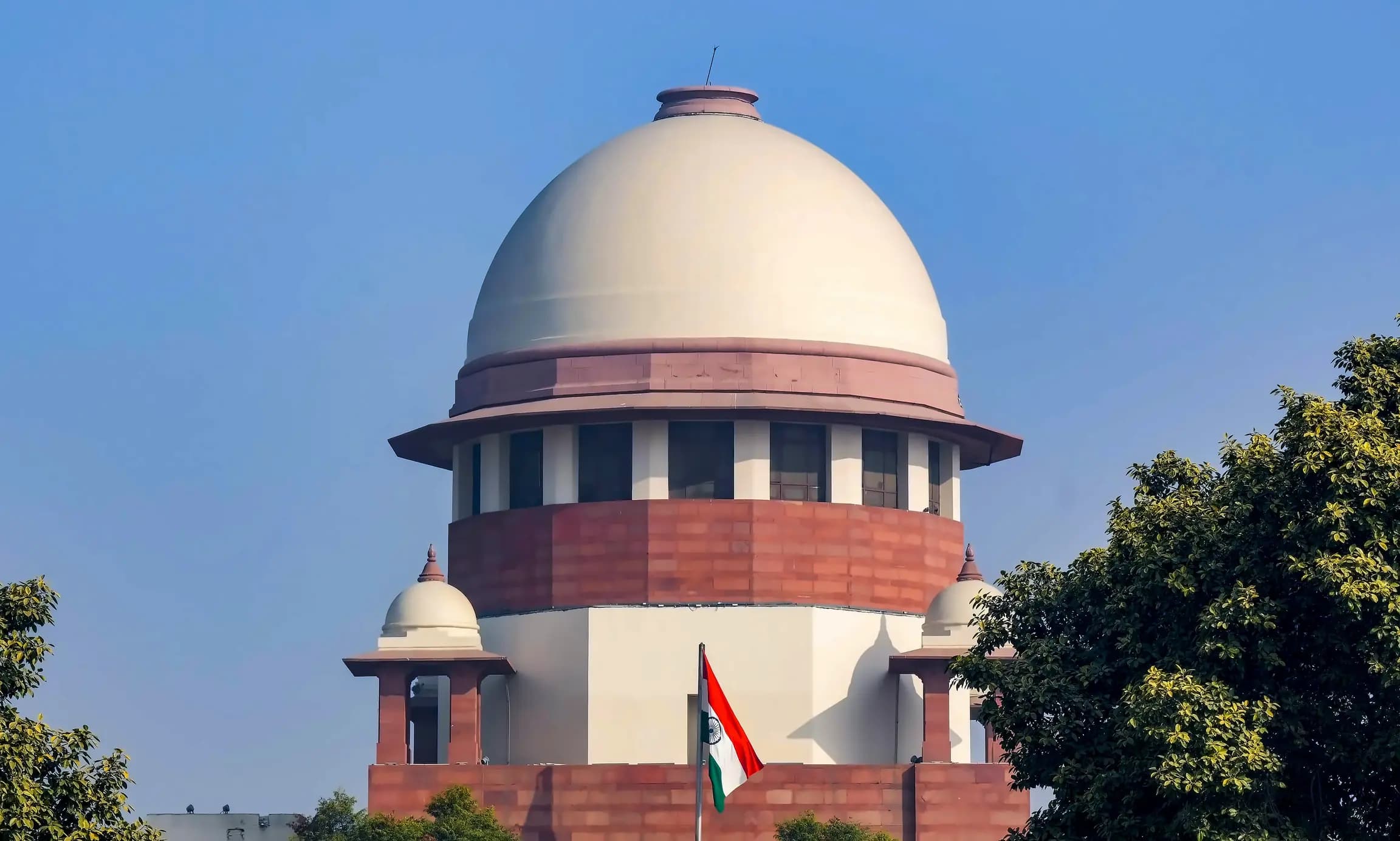
The Supreme Court noted that ONGC had already paid the gratuity claimed by the workers and directed that no recovery be made from them. As reported by LiveLaw, the contractor had argued that gratuity liability did not rest on it and that the amount payable would ultimately have to come from the principal employer. The case was M/s Oil and Natural Gas Corporation Ltd v Suryakand D Lad & Ors, with connected appeals, and was cited as 2026 LiveLaw (SC) 961. The bench noted that other respondents had filed counter affidavits "basically harping on the fact that they had worked for the appellant for a long period," but on the core legal issues, there was nothing to counter the submissions of the learned Solicitor General. The court's ruling means that contract staff cannot expect the Controlling Authority to decide disputed employment relationships - instead, such disputes must be resolved through labour courts, industrial tribunals, or writ petitions. For workers whose appointment letters and records name contractors, gratuity claims against the contractor remain straightforward and unaffected by this judgment.