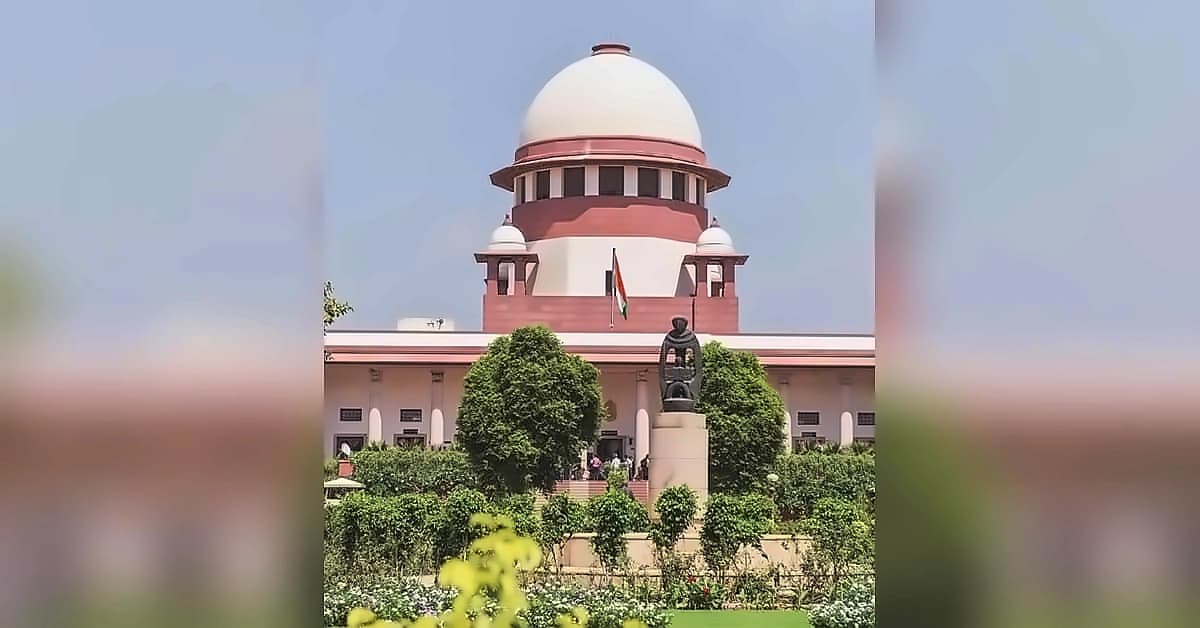
The Supreme Court on Tuesday rejected SpiceJet's plea for extension of time to deposit ₹144.5 crore in its dispute with former promoter Kalanithi Maran and Kal Airways. According to reports from The Economic Times, a bench of Justices P.S. Narasimha and Alok Aradhe observed that it was not inclined to grant time and asked the budget airline to approach the Delhi High Court afresh. The bench remarked that "what happened before the West Asia crisis? Something which has happened on May 5 (Bailout announcement) cannot become a ground for extension of time." The court clarified that it was not expressing any opinion on the merits of the dispute pending before the Delhi High Court under Section 34 of the Arbitration and Conciliation Act.
Senior advocate Mukul Rohatgi, appearing for SpiceJet, submitted before the Justice Narasimha-led Bench that the airline sector had been severely impacted by the ongoing West Asia crisis, including rising fuel prices and operational disruptions. As reported by The Economic Times, SpiceJet contended that the continuing crisis in West Asia was impacting the airline's operations and finances. The airline contended that the outbreak of hostilities in West Asia had caused 'around 35 per cent decrease in operational revenue' due to closure and restriction of airspace in the Middle East, along with sharp increases in aviation turbine fuel costs, longer flying routes, and higher insurance costs. The airline argued that it was the smallest player in the aviation sector and was facing acute financial distress, seeking time to clear the dues. Notably, ₹729 crore out of the total arbitral award amount of approximately ₹873 crore, including interest, meaning nearly 83% of the dues had already been discharged and only ₹144.5 crore remained outstanding. The matter arises out of execution proceedings linked to an arbitral award in favour of Maran and Kal Airways.
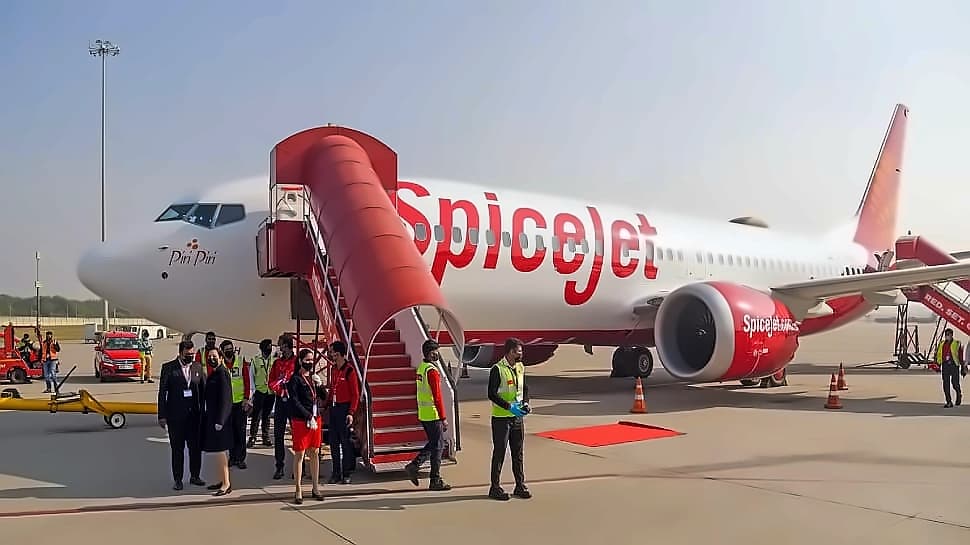
The senior counsel stated that the Centre had introduced a bailout and emergency credit line scheme for airlines, under which funds were expected to be released by November. According to The Economic Times, SpiceJet referred to the Union government's approval of ECLGS 5.0 on May 5, 2026, stating that the scheme was intended to help 'eligible borrowers to tide over any short-term liquidity mismatches in view of the West Asia Crisis'. The airline claimed it had already paid ₹729 crore to the respondents, including ₹579 crore towards principal and ₹150 crore towards interest. During the hearing, SpiceJet submitted that it was seeking relief in the payment schedule of the dues arising from the arbitral award, while also referring to the ECLGS scheme. The airline argued that insisting on immediate cash security of ₹144.51 crore could adversely impact airline operations. The proceedings are being heard alongside the challenge to the arbitral award filed by SpiceJet and its Chairman and Managing Director, Ajay Singh, under Section 34 of the Arbitration and Conciliation Act, 1996.
The dispute arises out of execution proceedings linked to an arbitral award in favour of Maran and Kal Airways. As reported by The Economic Times and ANI, earlier, the Supreme Court had dismissed SpiceJet's challenge to the Delhi High Court's January 19, 2026, order directing the airline to deposit ₹144 crore under the arbitral award. Subsequently, SpiceJet and Ajay Singh moved the High Court seeking permission to substitute the cash deposit with immovable property. The plea was rejected on March 18, 2026, and the review petition was also dismissed on May 4, 2026. The top court was hearing SpiceJet's fresh plea challenging the Delhi High Court order of May 4, which dismissed the airline's review petition seeking relief from the ₹144.5 crore deposit direction and imposed a ₹50,000 cost on the carrier for filing repeated pleas. The court stated that the hostilities that broke out in February-March could not be used to the advantage of SpiceJet and Singh when the Supreme Court made the arbitration award executable "way back" in July 2023. It also noted that the airline's "declining" financial health has not changed since then and the ground of "financial distress" was considered at the time of passing the March 18 direction.