Salesforce CEO Marc Benioff announced that his software company expects to spend $300 million on Anthropic tokens in 2026, primarily for AI-powered software development and coding assistance. Speaking on the All-In podcast, Benioff emphasized that 'AI coding tools are helping engineers work faster and more efficiently rather than replacing them completely.' The CEO described coding agents as 'awesome' and said they are helping reduce software development costs while increasing output. Most of the spending will be directed toward coding-related tasks, reflecting how AI models are increasingly being used to enhance efficiency and support software development at scale. Benioff called AI coding agents and Anthropic 'awesome' and said agents have brought 'unprecedented' levels of efficiency to areas including service, support, distribution, and marketing. He revealed that with the productivity boosts he's seen with coding agents, Salesforce is also working on ways to make coding easier in Slack, the productivity platform Salesforce has owned since 2021.
Benioff's plans, combined with his previous announcement that Salesforce will not hire any more engineers in 2025 due to productivity gains from AI, signal a decisive shift toward automation of writing code. The Salesforce CEO has been a vocal proponent of the theory that AI is not killing entry-level jobs but transforming them. He announced last month that his software firm will be hiring 1,000 fresh graduates 'to ride the AI exponential' and 1,000 to 2,000 salespeople in the short term to explain AI value to corporate clients. According to Benioff, artificial intelligence is still not advanced enough to fully replace software engineers, even as it becomes deeply integrated into day-to-day development work. The company has invested more than $300 million in Anthropic and holds an estimated stake in the company, with Salesforce currently employing around 15,000 engineers who now work alongside AI tools including Anthropic models, OpenAI Codex, and Cursor.
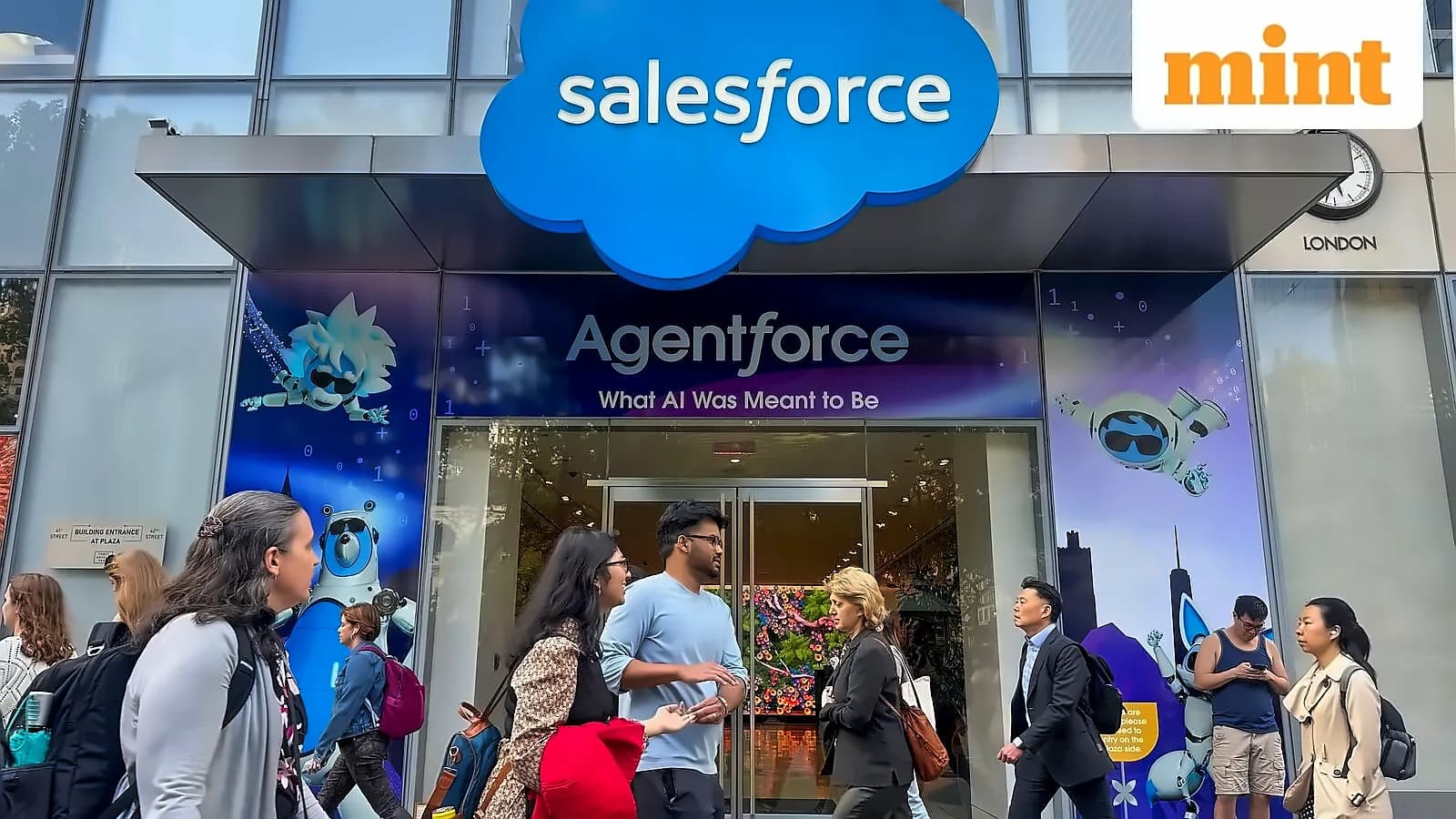
Benioff highlighted that AI adoption has already had a measurable impact inside the company, with Salesforce reporting a productivity increase of over 30% through the use of Agentforce and other AI systems. The company's AI platform, Agentforce, has become a major growth driver, generating around $800 million in annual recurring revenue. In June 2025, Benioff said that AI is already responsible for 30-50% of Salesforce's total workload. A significant portion of Salesforce's AI investment is now focused on coding-related workloads and automation, with the company allocating hundreds of millions of dollars toward AI tokens and tools. The company has also expanded AI capabilities to its Slack platform, which has added AI capabilities powered by Anthropic's Claude. Last August, the CEO announced that AI agents enabled Salesforce to cut its support staff from 9,000 to 5,000 employees, demonstrating the transformative impact of AI on operational efficiency.
Despite the engineering freeze, Benioff has clarified that AI is reshaping, not replacing engineers, but working alongside them. Around 15,000 engineers now use AI tools like Anthropic models, OpenAI Codex and Cursor to improve productivity. Benioff explained that 'When they start to use these models, they're now working not only with the AI, but agents to help them code — and they can even become somewhat supervisory over these agents.' However, he emphasized that 'still, those engineers are needed. The model still cannot operate autonomously.' The emerging pattern shows that AI can handle more routine coding, testing and refactoring, leaving people to set requirements, architect systems and make judgment calls. Benioff called for an 'intermediary layer' in the future that could determine which token inputs should go to Anthropic and which ones may be suitable for smaller models, suggesting a more sophisticated approach to AI resource allocation. This creates enormous pressure across the software industry to reduce costs while increasing output, with companies like Salesforce aggressively integrating AI into engineering operations and productivity systems.
Benioff's comments have triggered intense online debate, with some tech leaders believing AI will unlock enormous productivity and help developers focus on higher-level innovation, while others worry the industry is moving too aggressively toward automation. The global tech industry is once again debating the future of software engineering after Benioff's statements suggest that artificial intelligence is no longer just helping engineers — it may soon reshape how software companies hire, build products, and scale teams entirely. For India's technology industry, this shift could reshape hiring, salaries, education, and engineering careers over the next decade. Software engineering is not disappearing overnight, but the definition of what makes a valuable engineer is evolving faster than ever before. Companies may require fewer junior developers while expecting senior engineers to manage AI-assisted workflows more efficiently. Engineers skilled in AI systems, automation, cloud infrastructure, cybersecurity, and machine learning are likely to remain in strong demand, while traditional coding skills may need to adapt to AI-assisted workflows.