Renault India CEO Stephane Deblaise has revealed an ambitious multifuel strategy, stating that hybrid and CNG technologies could account for half of the company's powertrain mix within 2-3 years. Speaking to PTI, Deblaise explained that while "50 per cent is possible from hybrid and CNG, but we do not have a target," the company is positioning itself as a practical bridge as the electric vehicle ecosystem evolves. Renault is advertising its hybrid strategy with the slogan "Forget diesel, Go Hybrid" and expects the price advantage to be "as good as diesel, with better technology, better fuel economy." The company launched its first strong hybrid offering on the Duster SUV and plans to introduce factory-fitted CNG models in the future.
Renault has launched its Duster Strong Hybrid E-Tech 160 SUV in India, marking the company's biggest powertrain bet on the Indian market. The 1.8-litre powertrain and 1.4-kWh battery deliver a claimed ARAI-certified fuel efficiency of 29 km per litre, positioning the hybrid against diesel SUVs that traditionally attract fuel-efficient buyers. The Duster Hybrid comes with two electric motors and a 1.4 kWh battery, delivering a combined output of 160 PS. The Duster Hybrid is available in three variants—Evolution, Techno and Emotion—with prices starting at ₹16.99 lakh (ex-showroom) and will compete directly with Maruti Victoris, Toyota Hyryder, Maruti Grand Vitara, and the upcoming Kia Seltos Hybrid.
India's electrification landscape shows a significant divide between battery EVs and hybrids. As reported by Mint, EV penetration in passenger vehicles rose to 8.5% in September from 5.7% a year earlier, while strong hybrids remained at around 2%. In fiscal year 2026, EVs accounted for one-fifth of incremental growth in the car market with electric car sales surging 84% to nearly 200,000 units. Strong hybrids, offered by Japanese manufacturers Maruti Suzuki, Toyota Kirloskar and Honda Cars, remain a much smaller segment. Deblaise attributes hybrid sales lag to "not enough models available in the market, and the ones on offer do not deliver strong enough performance."
The Duster Hybrid comes equipped with comprehensive features including a 10.1-inch touchscreen with wireless Android Auto and Apple CarPlay, 10.25-inch digital driver's display, powered tailgate, dual-zone climate control, wireless phone charger, powered and ventilated front seats, and panoramic sunroof. Safety features include 6 airbags, Level-2 ADAS (Advanced Driver Assistance System), 360-degree camera, electronic stability control (ESC), hill hold assist (HHA), tyre pressure monitoring system (TPMS), front and rear parking sensors, and ISOFIX child seat mounts. The Duster has achieved a full 5-star safety rating from BNCAP tests.
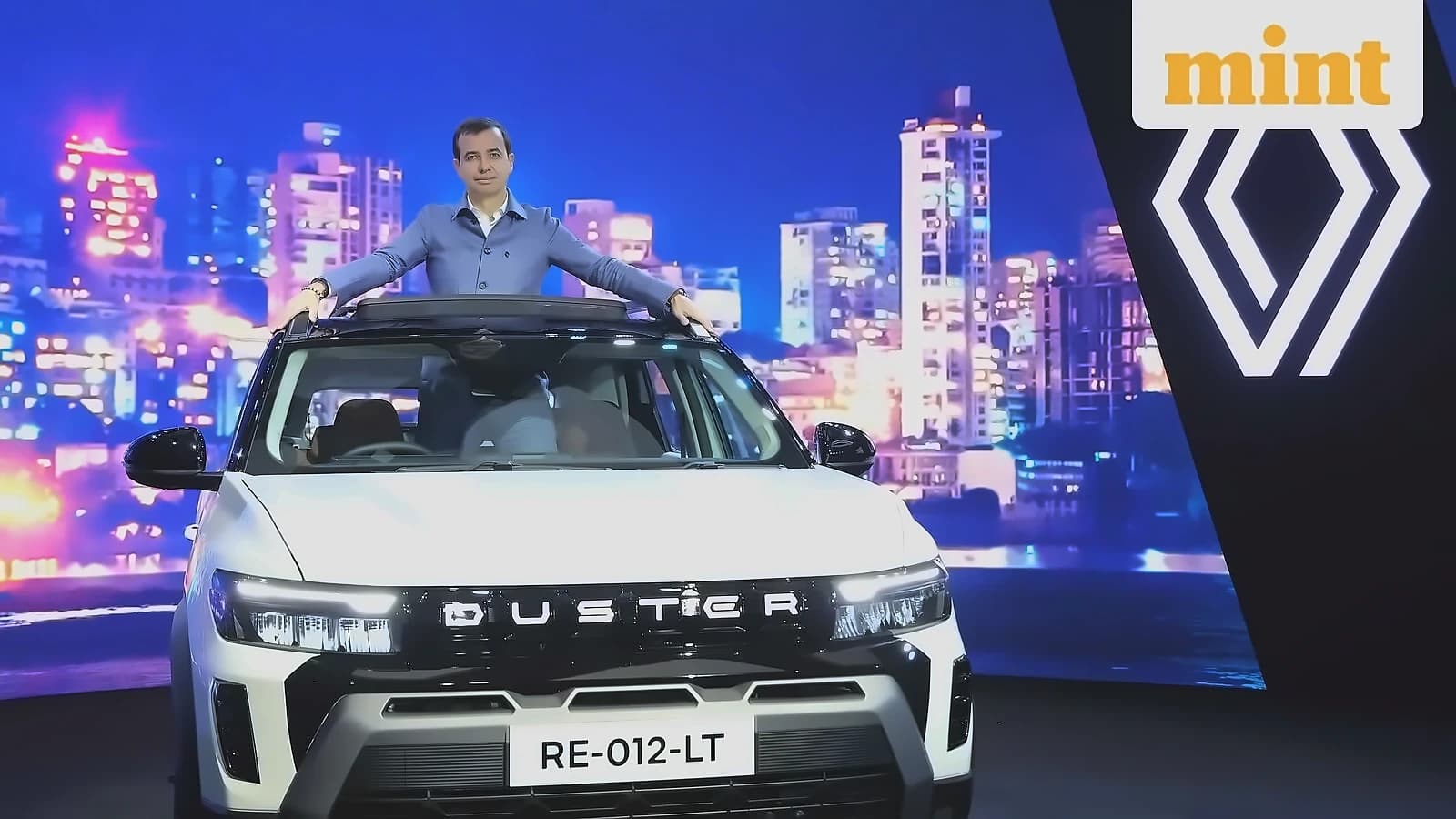
Renault's hybrid strategy comes as the company seeks to revive its Indian operations with ambitious growth targets. Deblaise expects hybrids to account for a larger share of Renault's portfolio in models above four metres, while CNG has greater potential in the sub-four-metre segment, particularly with a CNG version of the Triber compact MPV. Under its futuREady strategy, Renault Group aims to generate 2 billion euros (approximately ₹25,000 crore) in annual exports from India by 2030, including vehicles, components and associated services. The company targets market share of 3-5% by 2030, though Deblaise emphasizes this is "a consequence of our job" rather than a volume target, stating "We are not running after volumes. We are running after doing our job properly."