Reliance Industries delivered impressive first-quarter results for fiscal 2027, with revenue climbing 25% year-over-year and net profit increasing 6% to ₹23,200 crores. According to the latest earnings call transcript, the company's EBITDA topped ₹54,000 crores, up 10% year-over-year on a comparable basis, demonstrating strong operational performance despite challenging market conditions. The results were driven by elevated oil prices, robust telecom growth, and expanding digital commerce, with Jio adding subscribers and lifting digital services revenue 20% while remaining the world's largest standalone 5G operator outside China. As per The Economic Times, the company's consolidated EBITDA rose 11% from a year earlier and 8% sequentially to ₹47,500 crore, while adjusted profit attributable to shareholders increased 16% year-on-year and 23% sequentially to about ₹20,900 crore.
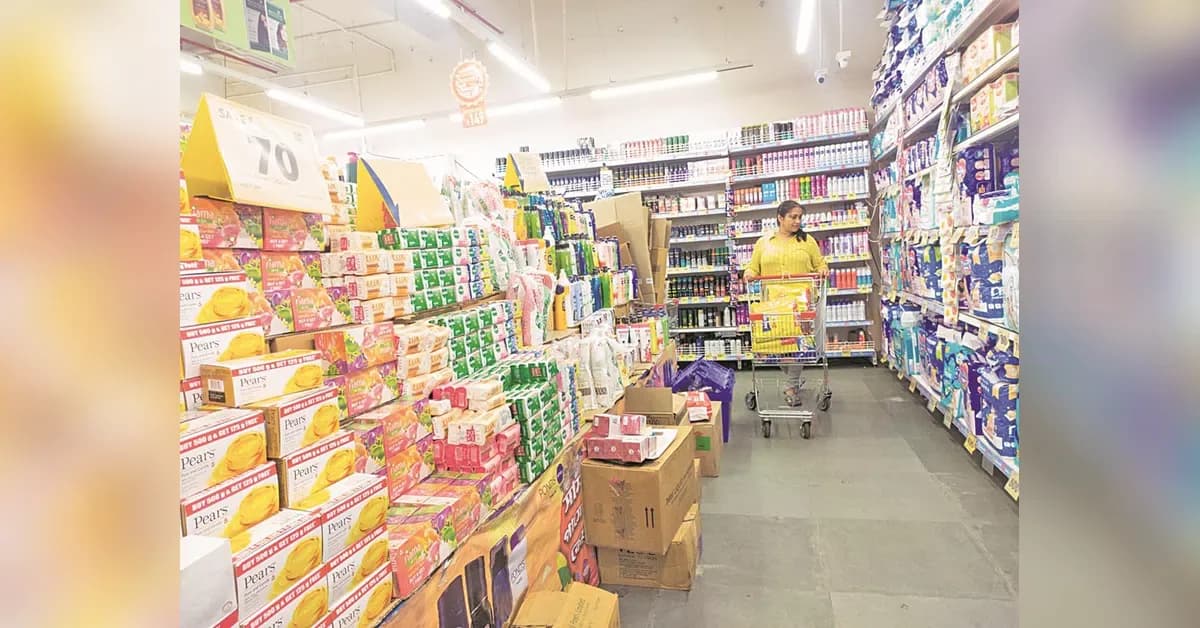
Reliance Retail Ventures Ltd (RRVL) has unveiled an ambitious three-year growth strategy focused on rapidly scaling its online business and omni-channel capabilities. As per the latest earnings call, the company plans to rapidly scale its online businesses, expand dark stores and grow JioMart during this year, with CFO Dinesh Taluja emphasizing that "we are looking at growing our online businesses pretty rapidly during this year. We will expand dark stores. We will grow our omni-channel platforms." The company plans to double its absolute EBITDA number over three years, with growth funded from existing profits rather than chasing volume growth. According to The Economic Times, brokerages expect Reliance's earnings per share to grow at a compound annual rate of 22% over FY26-FY29, compared with just 3% during FY23-FY26. The strategy will invest in infrastructure development for JioMart and expand dark stores while strengthening omni-channel reach across platforms, with focus on order density, repeat purchase rates, and contribution margins in each dark store.
Reliance Retail is witnessing strong traction from its omni-channel strategy, with omni-channel customers spending 2.7 times more than pure offline customers. According to Taluja, omni-channel spending has grown 20-25 per cent year-on-year. The company's fashion quick-commerce offering AJIO Rush has recorded strong momentum with order volumes rising 136 per cent sequentially during the quarter, with the service launched only a few quarters ago and still in early stages of scaling up. AJIO Luxe now offers 1,000+ brands, expanding participation in premium consumption. The retail business is now back to approximately 50% of the overall mix after the RCPL demerger, with the company leveraging its 400 million customers in the loyalty program and presence in over 1,000 markets in grocery.
Average daily digital orders more than doubled, growing 116 per cent year-on-year during the quarter. JioMart operates through a hybrid model of 3,100+ physical stores and 600+ dark stores to service more than 1,200 cities and cover 5,100 pin codes. The company has set internal targets around metrics such as order density at dark stores, repeat purchase rates, fulfilment costs and contribution margins, with investments calibrated based on performance. Digital services growth continues to outpace connectivity growth, with digital services revenue growing 20% year-over-year and the company targeting organic ARPU improvement of 4-5% without tariff increases. The company is also exploring new partnerships, including a 168 MW data center in Jamnagar with Meta, which will involve end-to-end services including network power, connectivity, and managed services.
Reliance Industries could generate nearly ₹90,000 crore in cumulative free cash flow over FY26-FY28 as its heavy investment cycle eases, according to brokerages. As per The Economic Times, JPMorgan's analyst Sanjay Mookim noted that "RIL has operated at materially negative free cash flow for the last three years," but as the investment drag fades, Reliance's annual EBITDA run rate of about $20 billion should enable it to generate positive free cash flow despite elevated spending. The company ended the June quarter with reported net debt of ₹1.23 lakh crore, broadly stable sequentially despite investing ₹38,700 crore during the three-month period. Motilal Oswal estimates that cash generation could help reduce consolidated leverage to 0.7 times by FY28. Jio's performance remains strong with 8.9 million subscribers added during the quarter, taking total base to 533.3 million, while average revenue per user increased to ₹215.6. However, Goldman Sachs expects retail pressure to persist for another three to four quarters as the company invests in expansion and delivery infrastructure.