According to reports from The Financial Express, Rajratan Global Wire delivered impressive financial results in Q1 FY27, with profit after tax (PAT) increasing 70% to ₹22.96 crore compared to the previous year. The company's revenue grew 29% year-on-year while EBITDA rose 35%, with EBITDA margin improving to 13.10% from 12.55% in Q1 FY26. Consolidated sales volume increased 16% year-on-year to 33,300 tonnes, with both India and Thailand operations showing 16% growth. Management attributed the improvement to a richer customer mix, better realisations and higher capacity utilisation. However, The Economic Times notes that operating margin declined from 14% to 12%, highlighting the complexity of the business where revenue growth doesn't automatically translate into proportional profit growth due to factors like steel prices, realisations, customer mix, energy costs and competitive intensity.
As reported by The Financial Express, Rajratan Global Wire currently operates 162,000 tonnes per annum installed capacity across Pithampur, Thailand and Chennai facilities. The company plans to double Chennai's capacity from 30,000 tonnes to 60,000 tonnes, taking overall capacity to 192,000 tonnes. Chennai has crossed break-even in the previous quarter and is expected to produce 34,000 to 35,000 tonnes in FY27, compared with around 17,000 tonnes in the previous year. Management has indicated the company could reach around 155,000 tonnes of total sales in FY27 if global conditions remain normal, representing volume growth of roughly 17% to 18%. The facility's proximity to the large tyre manufacturing cluster in southern India makes it particularly strategic for the company's growth plans.
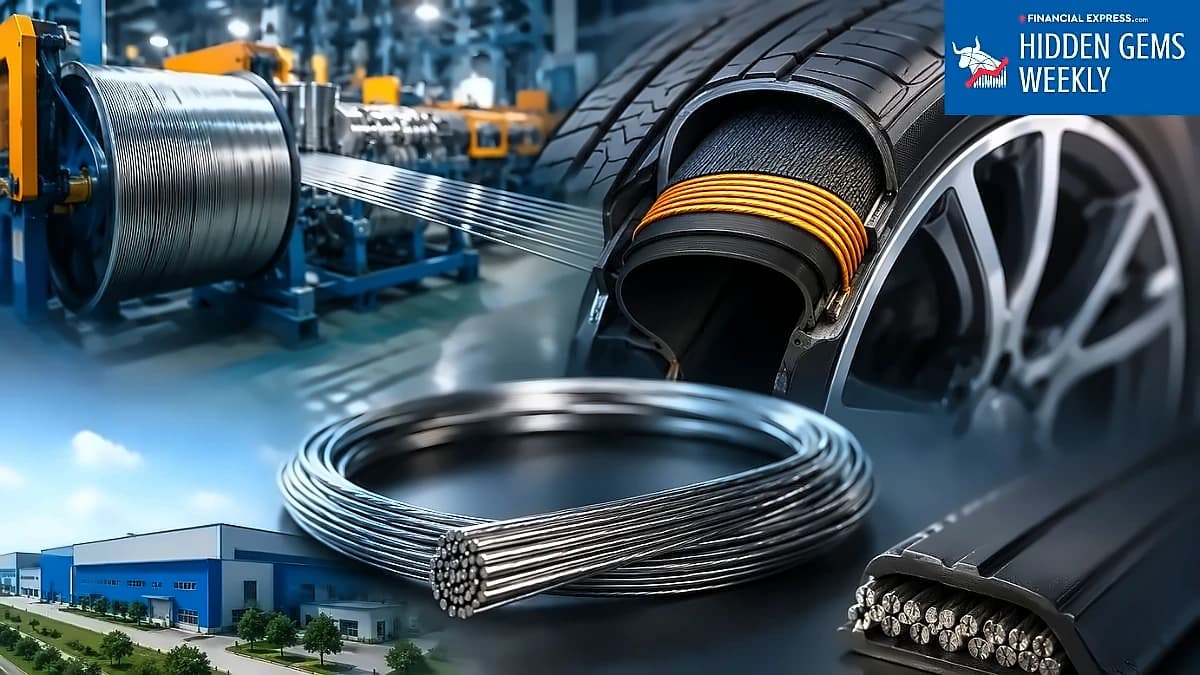
According to The Financial Express, Rajratan Global Wire has established itself as the market leader in India by installed capacity and market share and the only bead wire manufacturer in Thailand. The company supplies bead wire to some of the world's largest tyre makers including Bridgestone, Michelin, Goodyear, Continental, Yokohama, MRF, CEAT, Apollo Tyres and JK Tyre. The company describes this as an 'approval moat' where tyre manufacturers have multi-year qualification cycles and changing suppliers involves requalifying individual tyre products, making customer relationships long-lasting. As The Economic Times reports, this business model is particularly interesting because bead wire is relatively inexpensive compared with the tyre itself, but the cost of failure is high, creating a niche industrial business where customer relationships can last for years.
As reported by The Financial Express, Rajratan Global Wire is expanding its export business with North American volumes expected to grow by around 30%, Europe by around 50% and Southeast Asia by around 10% to 15%. The company is also making its first meaningful attempt at diversification through steel cord for conveyor belts, developed at Pithampur using existing metallurgy capabilities. Management has indicated that volumes from the steel cord project are not included in the 155,000-tonne FY27 sales target, treating it as an option rather than a major part of current earnings. The weaker rupee could further support the export business by improving the competitiveness of its Indian operations, while the company's two-country manufacturing footprint in India and Thailand allows it to offer the same product from multiple locations while remaining inside customers' approved supply chains.
According to The Financial Express, Rajratan Global Wire's borrowings increased from ₹237 crore in FY25 to ₹324 crore in FY26, with a debt-to-equity ratio of around 0.50 and interest coverage of about 4.56 times. The company's Return on Capital Employed (ROCE) stood at 13.5% in FY26, down from 14.7% in FY25 and 34.5% in FY22, while Return on Equity (ROE) stood at around 11.5%. The Economic Times reports that cash generated from operations increased from ₹57 crore in FY25 to ₹75 crore in FY26, but ₹113 crore was spent on investing, resulting in negative free cash flow. The stock trades at approximately 31.5 times earnings at around ₹494, with the valuation already factoring in benefits from Chennai expansion and established customer relationships, leaving less room for disappointment in a small-cap industrial company.