Life Insurance Corporation of India shares declined 1.5% to an intraday low of ₹396.60 on Thursday following Securities and Exchange Board of India's (SEBI) interim order barring Rajesh Exports Ltd and promoter Rajesh Mehta from the securities market. According to reports from Business Standard, the regulatory action stems from alleged large-scale financial misrepresentation and fund diversion issues. The stock slumped 5% to hit the lower circuit at ₹103.92 on Thursday, with trades of around 1.12 lakh shares and pending sell orders for 21.59 lakh shares on the NSE. As per the latest shareholding data, LIC holds a 10.80% stake in the company, making it among the largest institutional investors. The company has delivered negative returns for five consecutive years, with shares declining 10% over the past week and 54% from their 52-week high of ₹239 hit on December 22, 2025. The stock opened lower at ₹400.50 on the NSE and traded in a narrow range during the session, with nearly 2 million shares changing hands as of 1:50 PM.
LIC's investment in Rajesh Exports has come under fresh scrutiny following SEBI's interim order, with the insurer's continued exposure to the jewellery exporter despite the stock's prolonged decline and growing regulatory concerns drawing criticism from governance experts. According to Business Standard, LIC remains the company's largest public shareholder with a 10.8% stake as of March 2026, and the insurer's continued exposure has raised questions about institutional due diligence and corporate governance standards. An email sent to LIC seeking comment went unanswered, while proxy advisory firms said the episode raises broader questions about the investment processes followed by institutions managing public savings. Shriram Subramanian, founder and managing director of InGovern Research Services, stated that LIC owes a huge responsibility to its policyholders and should undertake rigorous forensic accounting and due diligence before making investments. Apart from LIC, Mauritius-based Bridge India Fund held an 8.46% stake in Rajesh Exports as of March 2026.
Rajesh Mehta, chairman of Rajesh Exports, has distanced himself from LIC's investment decisions, arguing that ordinary retail shareholders stand to gain regardless of how the situation plays out. As per The Hindu BusinessLine, Mehta told PTI that "LIC has not purchased the shares yesterday or last year. LIC's purchases are over a period of time, approximately 20 years. These shares have been taken by LIC from the open market, from the stock market." He was categorical that neither he nor other promoters had any role in LIC's accumulation of the stock, stating "No promoter has ever sold his shares to LIC. The company has never made any placement to LIC. By the buying of shares by LIC, the company or the promoters have never benefited in any manner." Mehta emphasized that "We don't even know where LIC's office is. We have no contact, no connection. This decision of buying shares through the secondary market is their own decision in a prudent commercial manner." Despite the sharp erosion in Rajesh Exports' share price, Mehta expressed confidence that LIC has not yet slipped into the red on its position, stating "Even today, at these pathetic rates and lower rates also, according to my understanding, LIC has still not lost money." He argued that even if LIC were to incur losses, retail investors who sold shares to the insurer over the years would have benefited, stating "If somebody loses, and this is the most important statement which I am giving for the first time, who is the counter-gainer? It is the common Indian public."
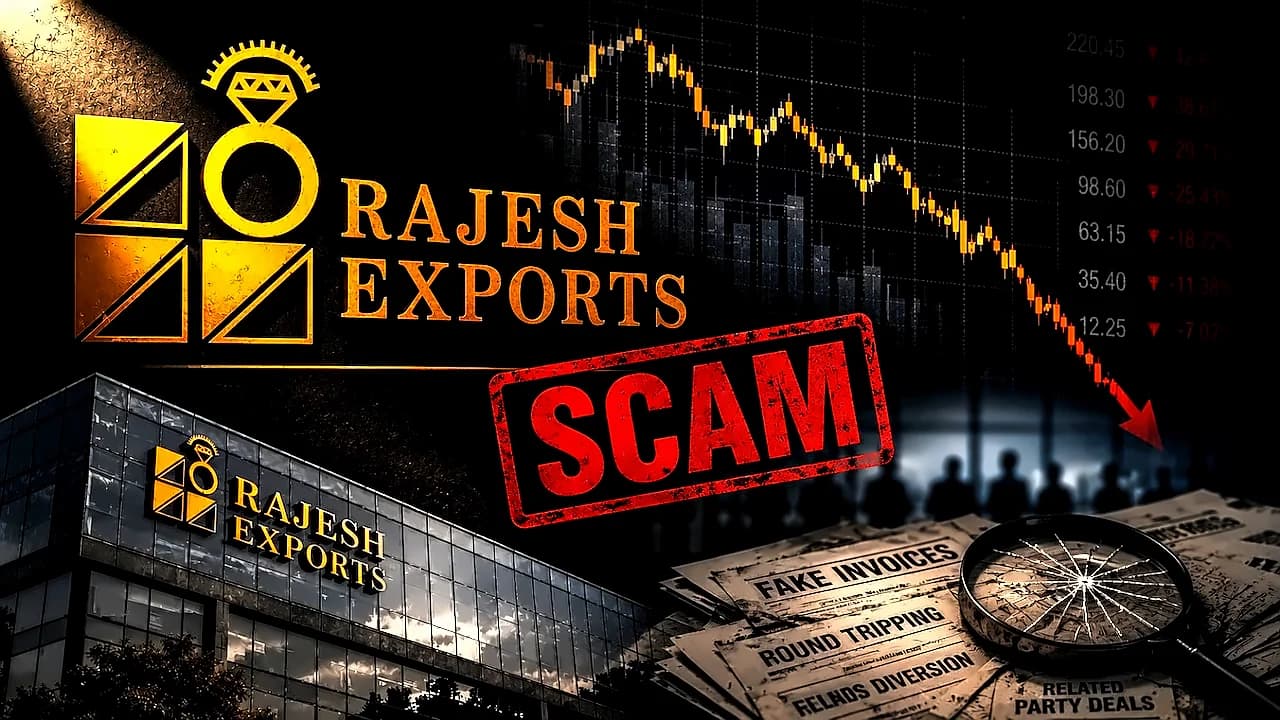
At the heart of SEBI's concerns is the source of Rajesh Exports' reported revenue, with 97% to 99% of consolidated revenue attributed to overseas subsidiaries, particularly its Switzerland-based Valcambi SA. According to The Economic Times, SEBI's 109-page interim order dated June 3 revealed that findings from its investigation and forensic examination revealed prima facie evidence that nearly 97-99% of the company's reported revenue may have been inflated. The resulting mismatch amounts to ₹15.15 trillion across FY21 to FY25, accounting for nearly 99.8% of the company's reported revenue over the period. The matter originated from a shareholder complaint received in March 2024 that flagged concerns over substantial trade receivables reflected in the company's accounts. SEBI noted that the company allegedly failed to disclose subsidiary financial statements in the public domain despite projecting Valcambi as its principal operating entity, with Valcambi reportedly denying carrying out the trades. The regulator observed that Valcambi reported negligible standalone revenue in its audited accounts, amounting to ₹12,557 crore during FY21-FY24. Additionally, SEBI was unable to independently verify a claimed investment of ₹1,035 crore in African gold-mining assets.
SEBI has made additional allegations regarding fund diversion and fraudulent transactions involving ₹926 crore allegedly routed without proper approvals or related-party disclosures. As per The Economic Times, the regulator alleged that company funds amounting to ₹339 crore were routed to Mehta's personal accounts, including for derivative trading activities, without board or audit committee approval. The order also highlighted alleged fictitious transactions involving Affluence Shares and Stocks Private Limited, where Rajesh Exports recorded sales worth ₹11,487 crore and purchases worth ₹11,488 crore, although Affluence reportedly denied carrying out such trades. SEBI alleged these were non-genuine entries linked to Rajesh Mehta's personal derivative positions and were used to artificially inflate turnover. The regulator estimated that the alleged misrepresentation and diversion of funds resulted in shareholder wealth erosion of around ₹12,726 crore, including losses suffered by retail investors. SEBI also noted that the company repeatedly failed to furnish detailed information on consolidated operations, including party-wise data on sales, purchases, debtors, creditors and inventory, citing Swiss data protection laws and confidentiality obligations to justify non-disclosure.
SEBI has separately referred the matter to the National Financial Reporting Authority (NFRA) for examination of the company's statutory auditors, with experts expecting an immediate handover to the Serious Fraud Investigation Office (SFIO) to unravel the complex web of cross-border shell structures. According to Sarvaank Associates, "We can expect an immediate handover to the Serious Fraud Investigation Office (SFIO) to unravel the complex web of cross-border shell structures and initiate criminal prosecution under the Companies Act for corporate fraud." The ED is also bound to step in under the PMLA to trace the proceeds of crime and provisionally attach domestic and international assets, as noted by Sarvaank Associates. Ankita Singh, founder of Sarvaank Associates, added that "This no longer seems to be just a regulatory compliance issue; it is rapidly transitioning into a severe economic offence probe." Questions over the company's accounts first surfaced in 2023 when the National Stock Exchange sought details on certain investments and cash flows, with shareholder complaints subsequently filed with SEBI in 2024.