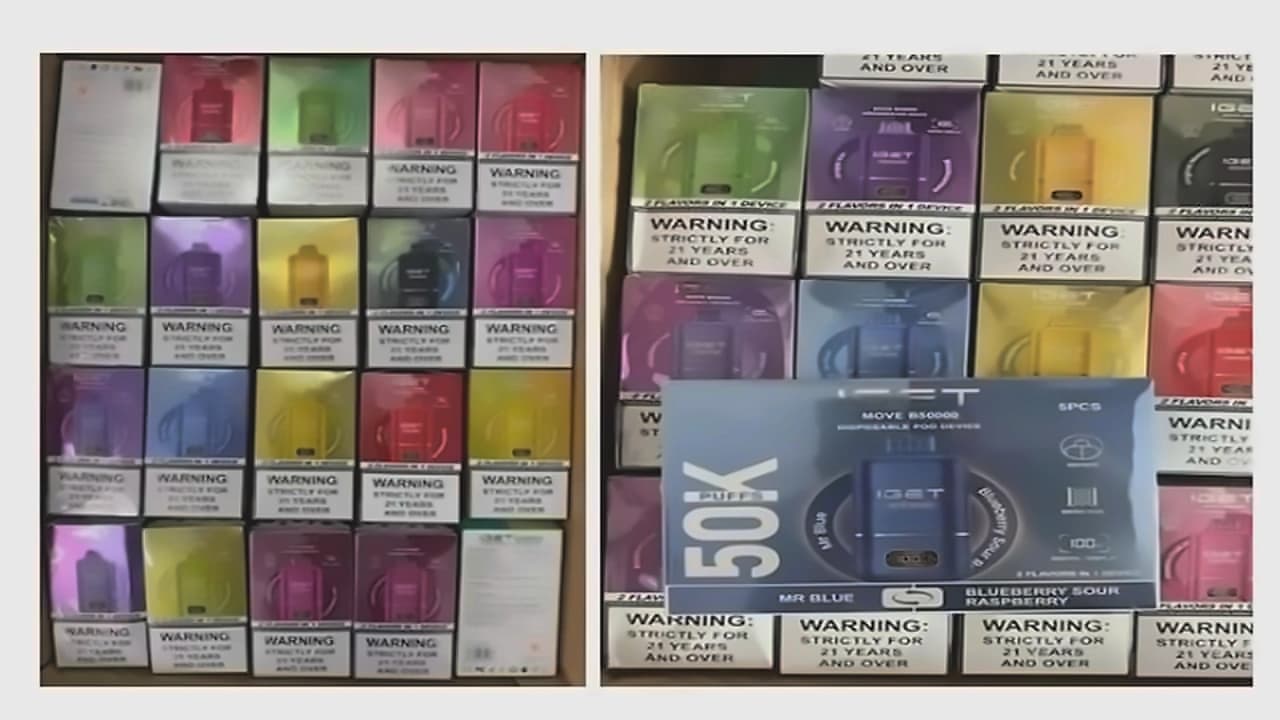
According to the Tobacco Institute of India (TII), illegal cigarettes represent nearly one-fourth of India's domestic market, with estimated losses of ₹23,000 crores per annum. The illicit tobacco trade has expanded beyond traditional cigarettes to include banned and unregulated products like e-cigarettes and vapes, which often bypass regulatory checks. As reported by the EU-ASEAN Business Council (EU-ABC) and Euromonitor International, the illicit tobacco market across the ASEAN-6 generated an estimated US$12.6 billion in revenue over the past two years (2024-2025), with illicit cigarette sales growing by 14% and illicit e-vape sales by 24% in the past year alone. According to ApiraSol, the illicit e-cigarette market was valued at USD 47 billion in 2024, representing over 70% of global spending and roughly three-quarters of total volume, equivalent to 605 billion cigarettes.
Recent enforcement actions demonstrate the widespread nature of the black market across regions. In May 2026, the Directorate of Revenue Intelligence (DRI) seized 3,00,000 electronic cigarettes/vapes worth ₹120 crore in a major crackdown on e-cigarette smuggling racket across Maharashtra, Gujarat, Delhi and West Bengal. According to TII, in 2026, sustained enforcement by agencies has resulted in continued seizures including over 29.3 lakh sticks in Kolkata, 6 lakh sticks in Guwahati, 3.48 lakh sticks in Coimbatore, and 1.3 lakh sticks plus 95 boxes of foreign cigarettes in Chandigarh. These seizures reflect the widespread and persistent nature of the black market across regions, with recent media reports flagging DRI-led several major crackdowns, including a nationwide operation resulting in the seizure of nearly 3 lakh prohibited e-cigarettes and vaping devices.
A report by ApiraSol, an organization specializing in brand protection and supply chain intelligence, highlights that the illicit e-cigarette trade is becoming a significant force reshaping the global nicotine market. The illicit e-cigarette trade is fueled by rapid growth and mounting regulatory complexity, with demand driven by lower prices and growing accessibility of smuggled products. Supply is facilitated by ASEAN's extensive and interconnected trade routes and uneven supply chain controls. These smuggled products are largely produced within the region in Indonesia and Cambodia with additional supply from China, while Malaysia, Singapore and Vietnam serve as key distribution hubs. As the Government of India deepens enforcement and sharpens regulatory capabilities to detect smuggled products, addressing the wider consequences of the illegal tobacco trade remains critical.
Navaneel Kar, Managing Director of PM India, emphasized the need for enhanced anti-counterfeiting regulations alongside closer collaboration. According to reports, he stated that "Illicit tobacco trade continues to evolve in scale and complexity, posing significant risks to government revenues, consumer safety, and regulatory integrity. What was once limited to counterfeit cigarettes has now expanded into a broader ecosystem of smuggled, banned, and unregulated products that evade oversight. Recent enforcement actions underscore both the scale of the challenge and the need for sustained intelligence-led interventions. Addressing this issue effectively requires stronger collaboration between industry and enforcement agencies, supported by robust systems such as track-and-trace to enhance transparency across the supply chain. At PM India, we are committed to leveraging our global experience and local partnerships to support authorities in strengthening compliance, safeguarding legitimate trade, and building a more secure marketplace." As reported, India's fight against smuggled tobacco is increasingly critical given its position as one of the world's largest tobacco markets and home to the second-largest smoking population.