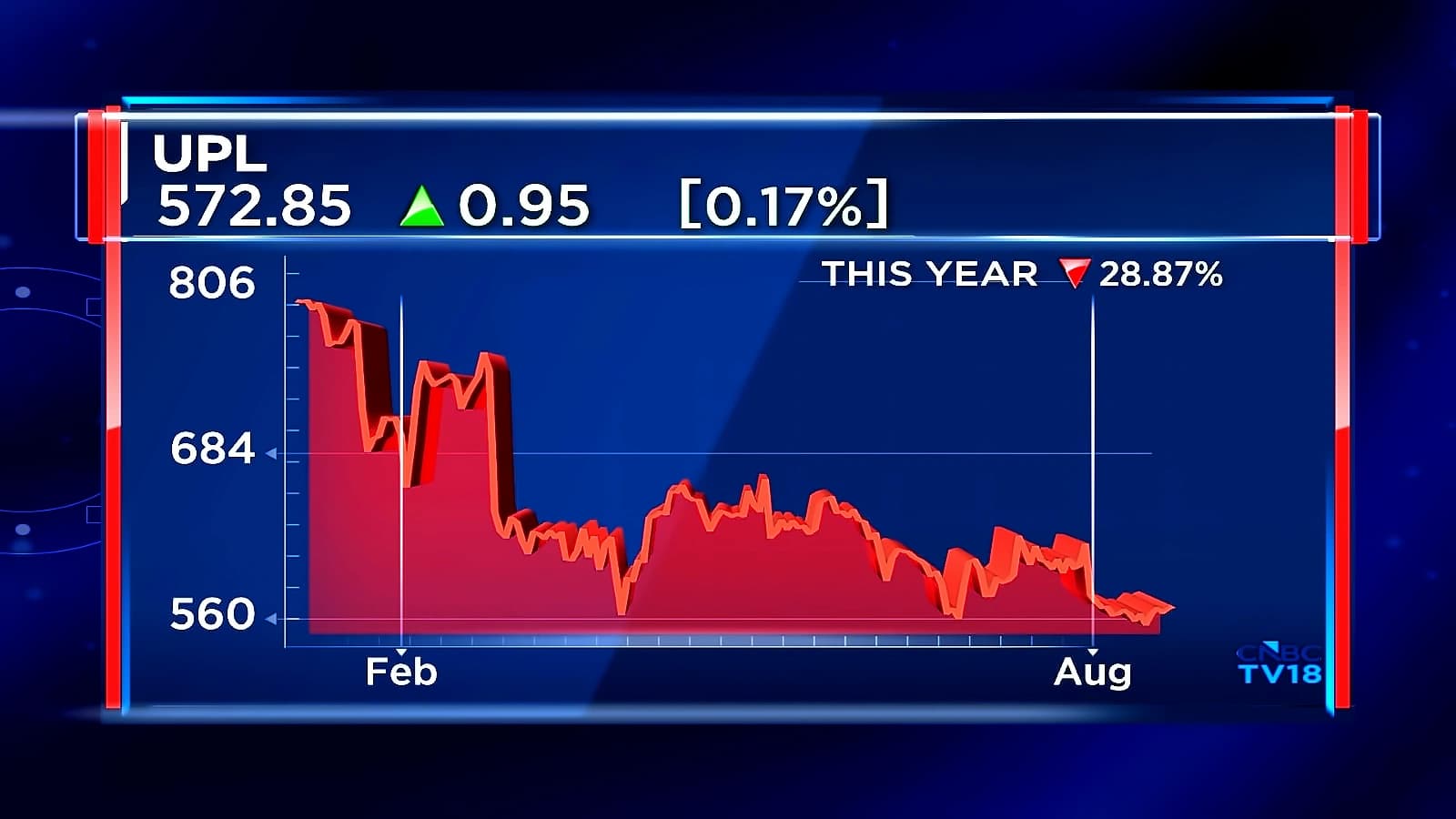
Shares of PI Industries Ltd. declined 3.47% to ₹2,283 on September 11, down ₹82 from the previous close of ₹2,365. According to Business Upturn, the stock is currently trading 5% lower at ₹2,247.2 and has extended its year-to-date losses to 30%. The shares have been trading near a 52-week low and have ranged over the past year between roughly ₹2,353 and ₹3,833. The stock's market capitalisation is now close to ₹34,000 crore, with the trailing P/E sitting at around 26 and dividend yield at about 0.6%. For the second consecutive session, the stock closed lower, slipping to a fresh 52-week low of ₹2,325.75 on September 11, 2026.

Kumiai Chemicals, one of PI Industries' largest clients, cut its profit guidance for its fiscal year ending October 31, 2026. As reported by Business Upturn, Kumiai lowered its operating profit forecast by 62.5% to ¥2.7 billion from ¥7.2 billion earlier, trimmed its ordinary profit guidance by 22% to ¥8.5 billion from ¥10.9 billion, and cut its forecast for profit attributable to owners of the parent to ¥4.0 billion from ¥6.4 billion, a reduction of around 38%. The company attributed the downgrade largely to a loss on valuation of inventories tied to a decline in the market price of its herbicide AXEEV following the entry of generic competition. The depth of the commercial relationship between the two companies makes this guidance cut particularly impactful for PI Industries, as Kumiai is among its most important long-standing partners in the custom synthesis and manufacturing (CSM) export business.
Despite the profit guidance cut, Kumiai Chemical revised its revenue forecast higher to ₹1,75,000 million yen from the previous ₹1,62,000 million yen earlier. According to CNBC TV18, this revision provides some offset to the profit guidance reduction, though the overall impact remains negative for PI Industries given their significant exposure to this client. The concern for PI Industries is the depth of the commercial relationship, as the company runs a large CSM export business supplying patented agrochemical molecules to global innovators, and Kumiai is among its most important long-standing partners.
PI Industries supplies pyroxasulfone to Kumiai Chemicals, which is branded as AXEEV by Kumiai and contributes to 40% of the overall sales for PI Industries. As reported by CNBC TV18, this significant exposure makes the client's profit guidance cut particularly impactful for the company's financial performance. The weakness in Kumiai's outlook is seen as a potential drag on one of PI's core revenue engines, as the company has been contending with a challenging export environment and recent quarterly performance had disappointed the market.
PI Industries reported its first quarter earnings last month, with consolidated profit declining 39% to ₹244.2 crore from ₹400 crore in the previous year. According to CNBC TV18, revenue from operations was down 10.4% at ₹1,702.3 crore from ₹1,900.5 crore, while EBITDA declined 29.2% to ₹367.4 crore from last year's ₹519.1 crore. The company's EBITDA contracted to 21.6% from 27.3% in the year-ago period. Despite its stature as the second-largest company in the pesticides and agrochemicals sector with a market capitalisation of ₹35,802 crores, PI Industries has struggled to translate scale into consistent profitability, reporting negative results for three consecutive quarters with profit after tax declining by 38.98% over the latest six-month period.