State-run energy giant Petronet LNG reported consolidated net profit of ₹848 crore for Q3 FY26, marking a 5% sequential growth from ₹806 crore in Q2 FY26, though declining 3.56% year-on-year from ₹901.70 crore in Q3 FY25. The company's net sales declined 8.69% year-on-year to ₹11,163.83 crore from ₹12,226.86 crore in Q3 FY25, primarily reflecting lower LNG throughput volumes at the company's terminals. However, the sequential improvement of 1.41% from Q2 FY26's ₹11,009.13 crore suggests some stabilisation in demand conditions entering the winter season. The stock declined 3.01% on the day following the results announcement, reflecting investor concerns about sustained volume weakness.
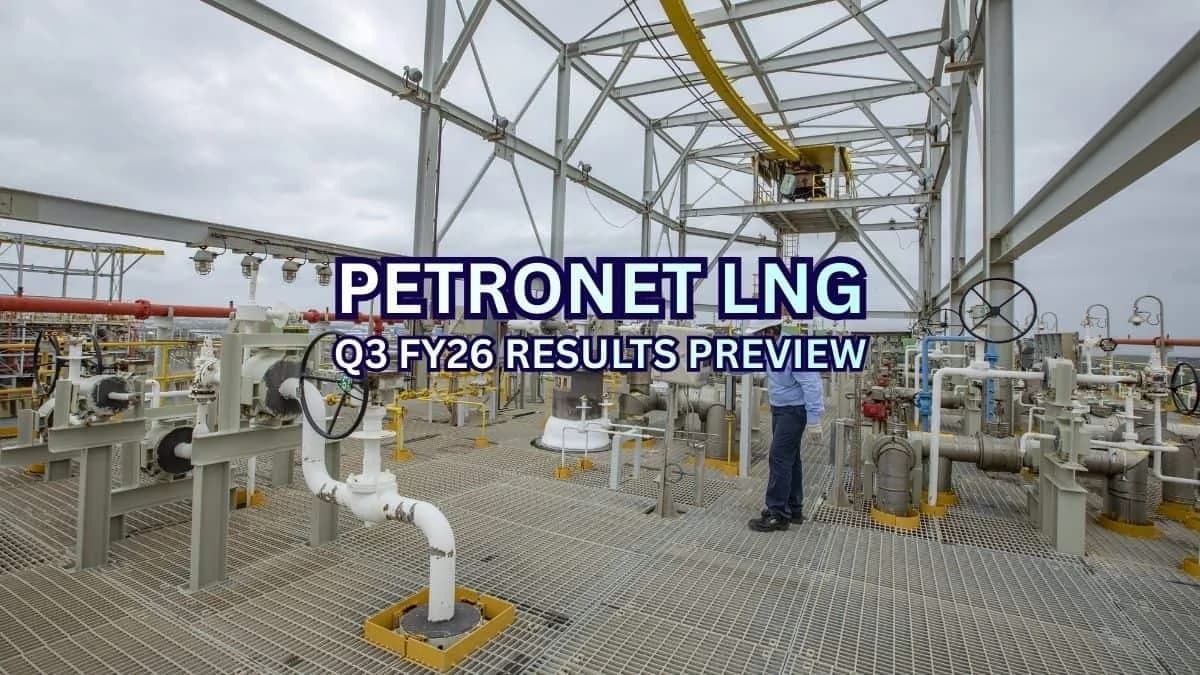
The standout performance came from Petronet LNG's Kochi terminal, which achieved the highest ever capacity utilization of 29% during Q3 FY26, significantly outperforming the previous quarter's 28% utilization. This represents a substantial improvement from the corresponding quarter's 27% utilization and demonstrates the terminal's growing operational efficiency. The overall LNG volume processed by the company stood at 233 TBtu, reflecting a 2% growth over both the previous quarter and the corresponding quarter, where volumes stood at 228 TBtu each. At the Dahej terminal, volume throughput was 214 TBtu compared to 211 TBtu in the previous quarter and 213 TBtu in the corresponding quarter, with capacity utilization improving to 94% from 92% in the previous quarter.
Despite top-line pressures, Petronet LNG demonstrated operational resilience with operating margins (excluding other income) improving to 10.73% from 10.14% in the previous quarter, suggesting effective cost management in a challenging environment. The company's other income contributed ₹213.55 crore in Q3 FY26, slightly lower than ₹233.71 crore in Q2 FY26 but higher than ₹196.21 crore in Q3 FY25. This income stream, derived from treasury operations and investments, provides a stable cushion to overall profitability. The quarter's narrative reflects a company grappling with softer demand conditions in India's gas sector while maintaining respectable profitability metrics through improved realisation and operational efficiency.
Management reaffirmed the mechanical completion of Dahej expansion by March-end and guided for ₹9,000 crore CapEx in FY27, primarily focused on petrochemical and jetty projects. The company's operational profile continues to be characterized by exceptional capital efficiency metrics, with average return on equity (ROE) of 21.37% and average return on capital employed (ROCE) of 37.70%, placing it amongst the most capital-efficient companies in India's energy infrastructure sector. The virtually debt-free status with net debt to equity of -0.44 (indicating a net cash position) provides financial flexibility and reduces business risk, with the debtors turnover ratio reaching 19.01 times in H1 FY26 further underscoring operational excellence.
Petronet LNG operates at the intersection of India's energy transition, handling approximately 74% of India's LNG imports and accounting for around 34% of the country's total gas supplies. The company's Dahej terminal with 17.5 MMTPA capacity and Kochi terminal with 5 MMTPA capacity provide substantial headroom for volume growth without significant additional capital expenditure. India's stated goal of raising natural gas share in the energy mix to 15% by 2030 from the current ~6% provides a structural tailwind, though the path to this target remains uncertain given competing priorities and fiscal constraints. The company's dividend yield of 3.37% provides an attractive income component, with the recent dividend of ₹7 per share underscoring commitment to shareholder returns.