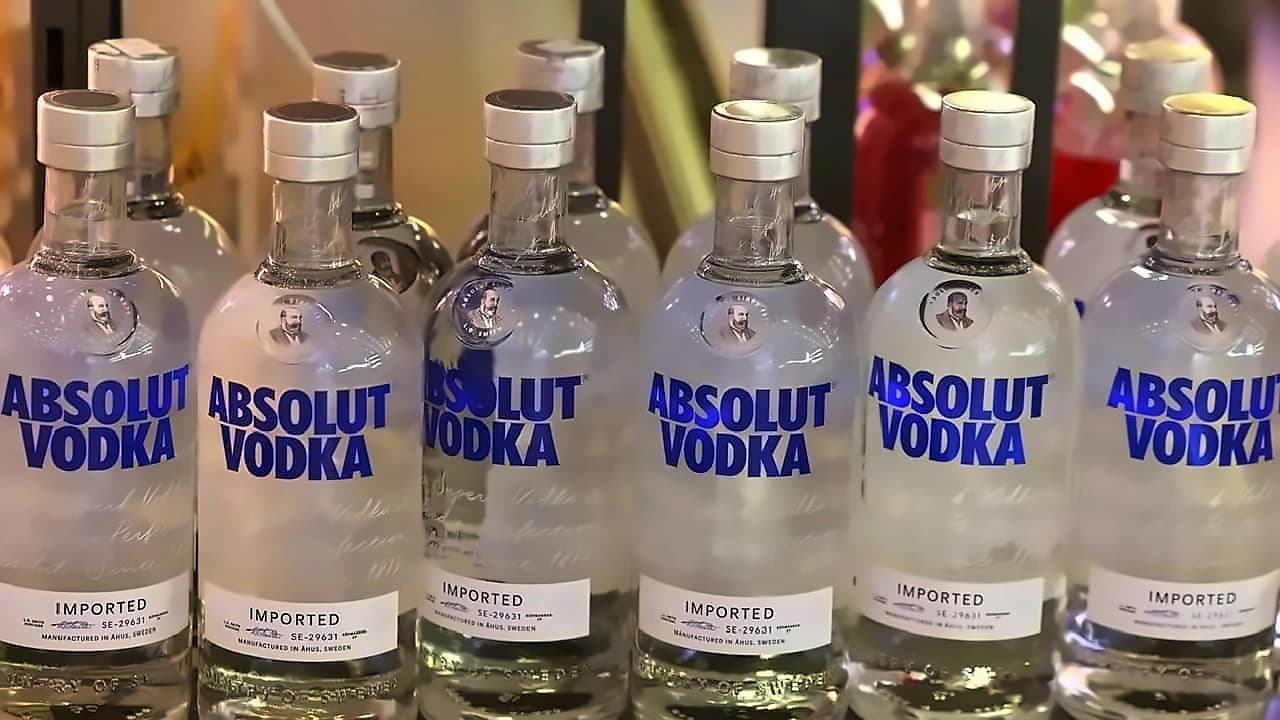
French spirits maker Pernod Ricard reported 19% sales growth in India for the September quarter, marking strong performance in its second-largest global market after the US. According to the company's latest earnings statement, the growth was "driven by strong demand and continuing premiumisation" as "the market continues to enjoy dynamic consumer fundamentals." The growth was broad-based across the portfolio, with imported spirits in very strong double-digit growth including Jameson, Absolut and Ballantine's, and strong double-digit growth from Seagram's whiskies Royal Stag and Blenders Pride. Pernod Ricard is the largest alcoholic beverage player in the Indian market, owning global brands alongside Seagram profile brands including Royal Stag, Blenders Pride, 100 Pipers, Longitude 77 and the new brand Xclamat!on. The quarter also benefited from a favorable comparison against last year's excise policy changes in Maharashtra state and the company's preparatory steps for a potential IPO in India, which led to a "pipe-fill effect" that further benefited first-quarter sales.
Despite strong India performance, Pernod Ricard faced challenges in other key markets, as reported by Business Standard. The company reported organic net sales declined 0.9%, which was above company-compiled consensus of a 1.7% decline and better than forecasts ranging from a 3.8% decline to a 0.2% decline. Reported net sales fell 6.3% to €2.23 billion, hit by a €127 million negative perimeter impact mainly from the disposal of Imperial Blue and Wines, and a €3 million negative currency impact mainly from the Indian rupee and Turkish lira. However, the company showed signs of stabilization with volumes returning to growth, climbing 6% overall, while volumes for its Strategic International Brands advanced 2%. Excluding the U.S. and China, sales across the rest of the world grew 4%, with Asia-Rest of the World sales rising 9%. The company noted that the total U.S. spirits market was down about 2% in value, with bottled spirits off about 4%. On the group level, Pernod Ricard SA net sales declined by 6% to €2.23 billion, down from €2.38 billion in Q1 FY26.
The company's preparatory steps for a potential IPO in India contributed to the favourable sales performance, as reported by Business Standard. Pernod Ricard brought forward some shipments to ensure uninterrupted supplies during the transition following a change in its name, which necessitated relabelling of products. Underlying sales grew in the high single-digit range with additional benefits from the Maharashtra comparison base and pipe-fill effects linked to IPO preparatory steps. According to Pernod Ricard Mauve Croizat, EVP, Finance and Tech, "the board has been asking us to continue on the preparatory steps for a potential IPO. That being said, it's really for us to take on these steps and be prepared would the decision be made in the coming months." However, management emphasized that "the decision to proceed to an IPO remains subject to board approval," with the board continuing to ask the company to take preparatory steps for a potential IPO. Finance chief Croizat told analysts that if approved, the listing would still take a few months to execute, with timing dependent on market conditions.
While India showed strong performance, Pernod Ricard faced significant headwinds in its largest market, the US, and second-largest market, China. The company reported a decline of 10% in its sales in the US, its largest market, and 25% decline in China as both markets were "impacted by inventory adjustments." In China, the company showed signs of recovery despite persistent challenges, with the company's "cautious trade optimism" ahead of the Mid-Autumn Festival" being validated in Martell's off-trade depletions returning to growth after a successful season. However, the Cognac brand's on-trade performance continued to face pressure from regulatory crackdowns, with Cognac subject to anti-dumping duties in China from October 2024, though major producers benefited from minimum price commitments from July 2025.
The company reiterated its forecast for broadly stable organic net sales in the current fiscal year, describing the environment as contrasted and uncertain. It expects declines in the U.S. and China, impacted by inventory adjustments from the first quarter, with underlying trends in China expected to improve. Looking further ahead, Pernod Ricard anticipates organic net sales growth, on average, close to the lower end of its 3% to 6% target range through fiscal 2029, reflecting the prolonged downturn facing global spirits makers. The company plans to strongly defend its organic operating margin through strict cost control, supported by €1 billion in operational efficiencies from fiscal 2026 to 2028, and is targeting a net debt to EBITDA ratio below 3x by fiscal 2029. India remains an important growth market for Pernod Ricard, supported by rising consumer demand and a shift towards premium alcoholic beverages, with the company maintaining its position as the largest alcoholic beverage player in the Indian market.