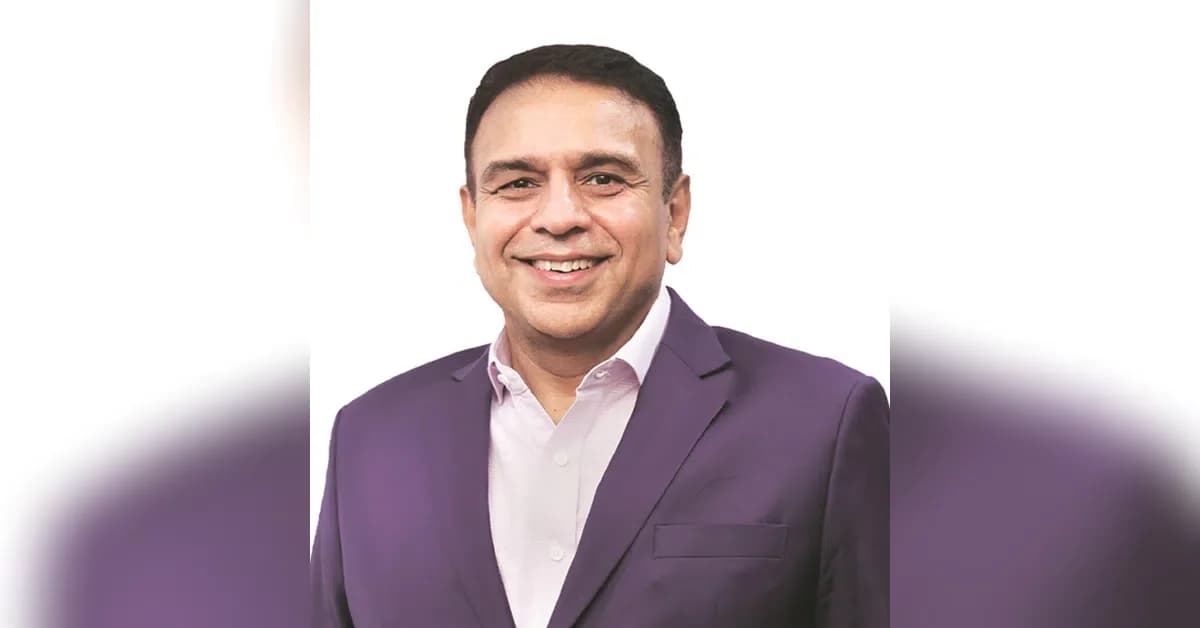
Food and beverages major PepsiCo will invest up to ₹5,700 crore in India by 2030, primarily to ramp up manufacturing capacity of its foods business, according to India and South Asia CEO Jagrut Kotecha. As reported by Business Standard, the company posted a profit after tax of ₹905 crore in the 12 months ended December 2025, with total revenue of ₹9,789 crore. India, being one of the top 13 markets for PepsiCo, continues to commit and invest in the region. "We are committed, and as a result, from 2025 to 2030, we have committed almost ₹5,700 crore of investments," Kotecha said, emphasizing the company's long-term commitment to the Indian market. The company looks at India as a market of potential because there is still a huge opportunity to grow here, citing reasons like growing income and a "stable country which allows investments to come in."

The investment will focus on three manufacturing facilities across Madhya Pradesh, Assam and Tamil Nadu, with the strategy specifically targeting snacks manufacturing and regional distribution networks. According to Business Standard, the investment is primarily for the concentrates plant in Madhya Pradesh and snacks plants in Assam and Tamil Nadu. Some of these facilities are expected to go live in the next few months, including the concentrates plant in Madhya Pradesh and Northeast plant in Assam. The recently completed land purchase in Tamil Nadu will allow the company to open a massive footprint in the South for its snacks business. "The land purchase, which we have just done recently in Tamil Nadu, will allow us to open a massive footprint in the South for our snacks business," Kotecha explained.
For the second year in a row, PepsiCo India achieved strong double-digit growth, with the food business recording stronger growth than several beverage categories during 2025. CFO Savitha Balachandran highlighted that the company witnessed very robust growth in the food segment with about 11% growth in 2025. However, she noted that on the beverages side, the company saw some headwinds as far as weather was concerned, with some softness impact and competition intensity going up "quite a bit." Despite these challenges, she said both segments of the business performed really well and strongly for the company. The company's food portfolio has emerged as a key growth driver amid changing consumer demand patterns, with brands including Lay's, Kurkure, and Quaker Oats continuing to expand across both urban and rural markets.
The beverage market landscape has become more competitive in recent years, with competitive intensity from Reliance Consumer's Campa brand intensifying and shaking up the beverage market dominated by Coca-Cola India and PepsiCo India, as reported by experts. This competitive pressure has particularly impacted the beverages segment, where the company experienced weather-related headwinds and increased competition intensity. Despite these challenges, the company maintains its strong position in the Indian market through its diversified portfolio and strategic investments in manufacturing capabilities.
The company has entered 2026 on the momentum of 2025, with the balance sheet "looking extremely healthy," as reported by Business Standard. The company has over ₹1,600 crore of cash on books, providing a strong foundation for the planned investments. Investment will be an area of focus, keeping the long-term future in mind while maintaining financial discipline to maintain the trajectory and quality of growth. The investment roadmap includes projects across multiple Indian states, with the regional manufacturing strategy designed to shorten supply chains and improve product availability across diverse Indian consumer markets. The company is expected to fund much of the expansion through internal accruals and existing cash reserves rather than relying heavily on external borrowing.