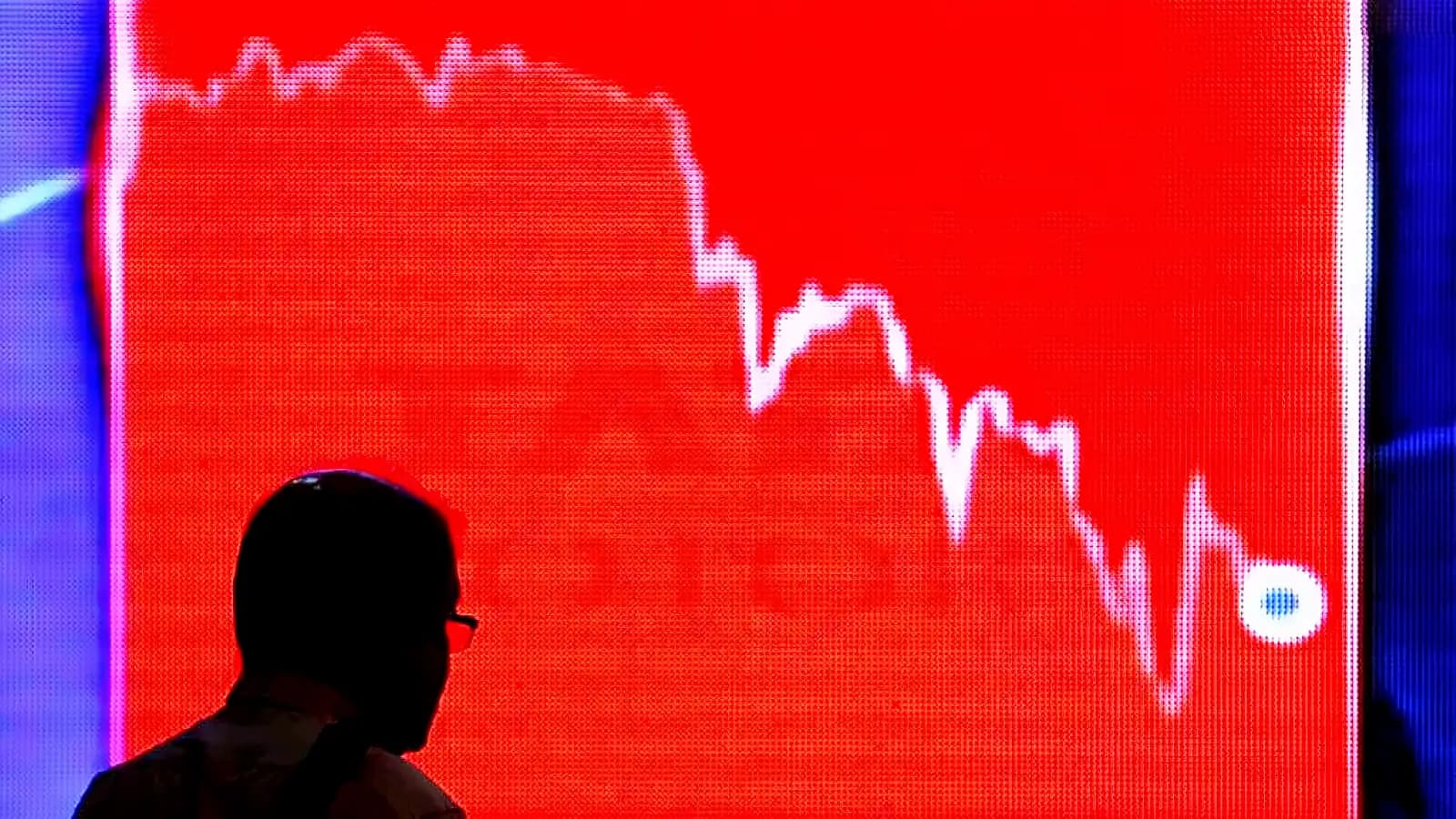
Shares of Page Industries Ltd. crashed over 13% to hit an intraday low of ₹32,059.50 on Thursday, November 12, closing 12.19% lower with a market capitalisation of ₹35,758.76 crore. The stock settled 12.91% lower after coming under heavy selling pressure, falling to its lowest level since April as investors reacted negatively to the company's Q2 FY27 results. The sharp decline came as investors were disappointed with the company's performance weighed down by higher input costs and regulatory compliance issues. The stock had opened flat at ₹36,550 before plunging to the day's lower price band, with the previous session's close at ₹36,570 showing a significant drop. Following Thursday's decline, Page Industries shares were down 7.6% so far in 2026, marking a significant underperformance for the year. The stock has declined 9.68% over one week, 12.61% in one month, and 21.28% over the last one year.
Page Industries reported revenue growth of 11.5% during the September quarter, reaching ₹1,439.6 crore compared to ₹1,290.9 crore in the same quarter last year. As reported by Live Mint and The Economic Times, net profit during the period stood at ₹202.5 crore, representing a 4% year-on-year increase compared to the year-ago period figure of ₹194.8 crore. Earnings Before Interest, Tax, Depreciation and Amortisation (EBITDA) during the quarter stood at ₹300.1 crore, compared to ₹279.5 crore, showing a 7.4% growth from last year. However, the gap between revenue and profit growth highlighted pressure on the company's ability to convert higher sales into earnings. The PAT margin for the quarter stood at 14.1%, while for the first half of FY27, the company reported a PAT of ₹395.4 crore with a margin of 13.8%. The company's total expenses rose nearly 13% to ₹1,131 crore, dragged by an 11.5% rise in raw material costs.
Page Industries announced a second interim dividend of ₹150 per share for FY27, with November 18, 2026 as the record date and payment due by December 11, 2026. According to the BSE filing, the board of directors declared the interim dividend at their meeting held on November 12, 2026. The record date fixed for the payment of interim dividend is November 18, 2026, making Tuesday, November 17, as the last date for investors to qualify for the corporate action. This represents a significant payout for shareholders of the Jockey and Speedo licensee in India, coming alongside the company's Q2 results announcement.
The sharp decline came after Page Industries disclosed that the online sale of imported Jockey and Speedo products without physical stores was not in compliance with FEMA retail trading rules. According to The Economic Times, the Reserve Bank of India (RBI) has asked the company to obtain post-facto government approval before reapplying for compounding. The management expects no material financial impact from the matter, with V.S. Ganesh, Managing Director, commenting that the company delivered double-digit revenue growth of 11.5% in Q2 FY27, supported by healthy volume growth, premiumisation and consumer response to new product launches. The company continues to balance margin protection with value delivery to consumers while absorbing part of cost inflation through price increases initiated in Q1. Ganesh acknowledged that raw material costs remained elevated but said profitability had stayed within the company's planned range.
For the first half of FY27, Page Industries reported a 9.7% year-on-year increase in revenue to ₹2,860.1 crore, while sales volume grew 5.6% to 121.7 million pieces. As reported by Live Mint, EBITDA rose 2.6% to ₹589.1 crore, with a margin of 20.6%, while profit after tax remained broadly flat at ₹395.4 crore, compared with the corresponding period last year, with a PAT margin of 13.8%. The company's revenue growth was driven by a 5.5% rise in sales volume to 59.7 million pieces in Q2 FY27. Despite the modest profit growth, Ganesh expressed optimism about the company's outlook, citing positive demand trends, strong brand momentum, an encouraging pipeline of new product ranges and ongoing operational efficiency initiatives.