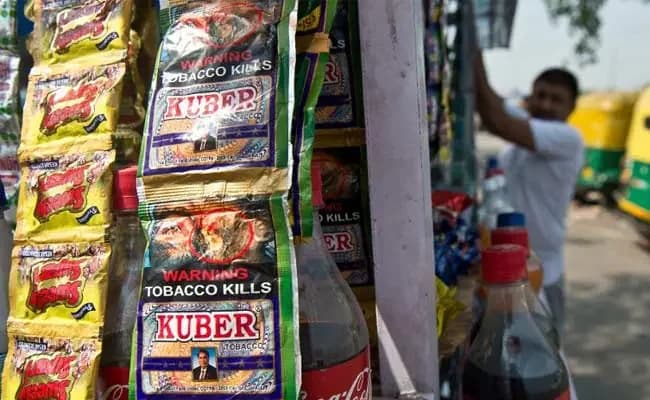
The Orissa High Court has upheld the state government's notification prohibiting the manufacture, processing, packaging, storage, transportation, distribution and sale of products containing tobacco or nicotine, including manufactured chewing tobacco. According to reports from Business Standard, a single-judge Bench of Justice Sanjeeb Kumar Panigrahi dismissed a batch of writ petitions filed by chewing-tobacco manufacturers, including Gopal Aromatic Private Limited. The court clarified that the order cannot be read as a blanket ban on all tobacco products in the state, with Justice Panigrahi stating that the notification "does not warrant interference in exercise of jurisdiction under Article 226 of the Constitution of India."
The Orissa High Court has held that 'chewing tobacco' is a 'food' under the meaning of Section 3(1)(j) of the Food Safety and Standards Act, 2006 (the 'FSS Act'). As reported by LiveLaw, Justice Sanjeeb Kumar Panigrahi observed that the legislature has expressly identified the articles which are to remain outside the definition of "food," but tobacco does not find place among those exclusions. The court further held that "the expression 'as ingredients in any food products' essentially indicates the existence of a food product distinct from tobacco or nicotine, into which tobacco or nicotine is introduced as an ingredient." This legal interpretation provides the crucial foundation for the court's subsequent rulings on the notification's validity. The court noted that "the statutory language employed in Section 3(1)(j) is wider. The controlling words are 'any substance… which is intended for human consumption'." It also relied on the express inclusion of chewing gum within the definition, observing that "chewing gum is ordinarily placed in the mouth, chewed and discarded, yet Parliament specifically included it as food."
The prohibition was issued on January 21 by the Health and Family Welfare Department and applies to all food products containing tobacco or nicotine as ingredients in Odisha. As reported by Business Standard, the notification extends to food products whether chewable or otherwise, which are flavoured or scented or mixed with additives, as well as products going by the name or form of gutkha, pan masala, flavoured or scented food products or chewable food products. The Food Safety and Standards (Prohibition and Restrictions on Sales) Regulations, 2011, also prohibit the use of tobacco and nicotine as ingredients in any food product. The department subsequently clarified on January 29 that pan masala not containing tobacco or nicotine would not be covered by the prohibition. The court clarified that "Notification No.2065/H&F.W. dated 21.01.2026 shall be understood and enforced only as a measure implementing Regulation 2.3.4 of the Food Safety and Standards (Prohibition and Restrictions on Sales) Regulations, 2011 read with the relevant provisions of the FSSA, and not as an independent prohibition on tobacco or tobacco products dehors the statutory requirements under the FSSA and the Regulation."
The state cited the latest Global Adult Tobacco Survey data showing that Odisha's prevalence of current smokeless tobacco use among adults aged 15 and above stood at over 42 per cent, among the highest in the country. According to Business Standard, the order assumes significance against the backdrop of Odisha's exceptionally high prevalence of smokeless tobacco use and the growing burden of tobacco-linked diseases, particularly cancers and cardiovascular and respiratory ailments. The manufacturers contended that Regulation 2.3.4 only prohibited tobacco or nicotine from being used as an ingredient in another food product and did not authorise a ban on chewing tobacco sold independently. The court rejected this contention, observing that "Regulation 2.3.4 must be understood in the light of these provisions. It declares that tobacco and nicotine 'shall not' be used as ingredients in any food products and does not distinguish between a product in which tobacco constitutes the predominant component and one in which tobacco is present in a lesser proportion."
The manufacturers challenged the restriction on their right to carry on business as unreasonable and argued that it adversely affected manufacturers, employees, wholesalers and small retailers. According to Business Standard, the court addressed the industry's argument, stating that the Cigarettes and Other Tobacco Products Act, 2003 (COTPA), and the FSSA can substantially operate together. The court accepted the state's distinction between smoking and smokeless tobacco for the purposes of the FSSA, noting that cigarettes and bidis are intended for combustion and inhalation, whereas manufactured chewing tobacco is intended for oral consumption. The companies argued that regulation of chewing tobacco, rather than an outright prohibition, would be a less restrictive alternative, but the court rejected this contention, observing that "once Regulation 2.3.4 was held applicable, the Regulation itself provides that tobacco and nicotine shall not be used as ingredients in food products." The court noted that "the fact that both fall within COTPA's Schedule did not make them similarly situated for the purposes of FSSA." It distinguished between Section 30(2)(a) and Section 30(2)(d) of the FSSA, holding that "the Notification neither seeks to substitute Regulation 2.3.4 nor seeks to create a prohibition independent of that Regulation. Its operation is founded upon the prohibition already contained therein."