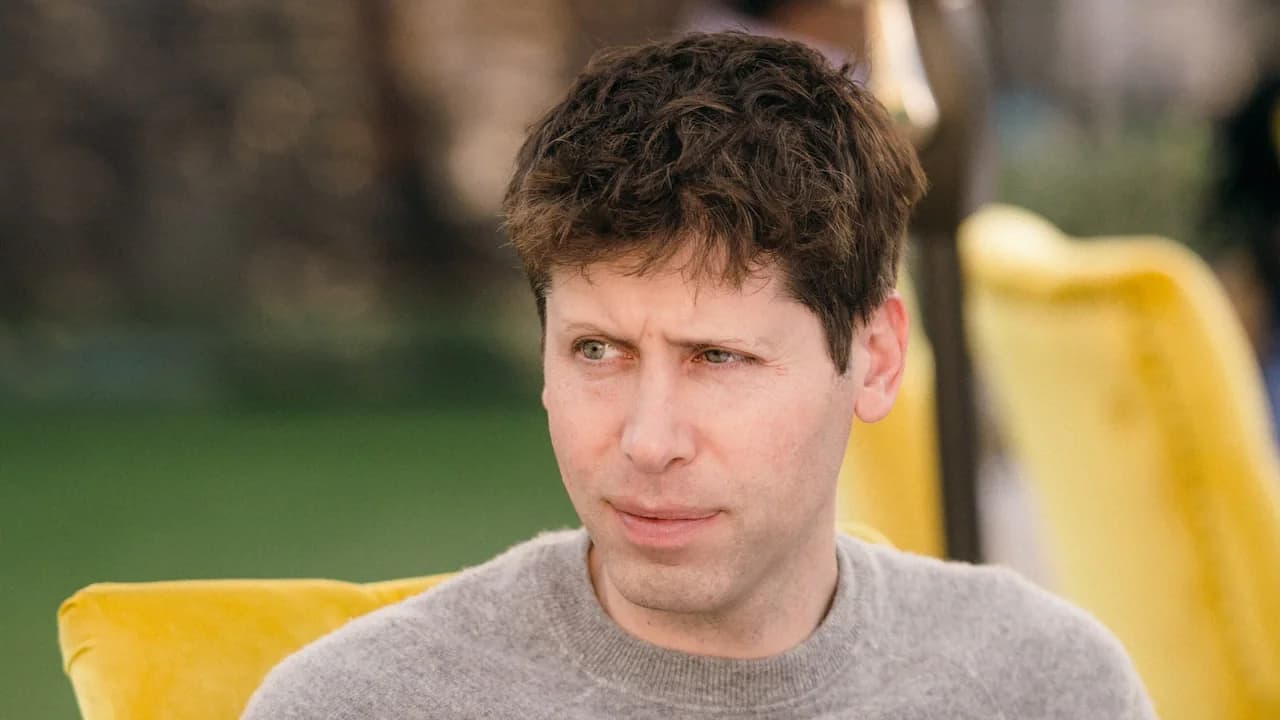
OpenAI Chief Executive Sam Altman on Tuesday rejected Elon Musk's claim that he betrayed the ChatGPT maker's founding mission to serve the public good, and said it was Musk who was interested in seizing control of OpenAI and making money from it. According to reports from KQED, Altman described Musk as 'mercurial' and said that when he left OpenAI in February 2018, after for-profit discussions fell apart, 'people wondered if he'd try to take a vengeance on us' — which both he and his attorney, William Savitt, have alleged is exactly what Musk's lawsuit aims to do. Under questioning from his lawyer in the Oakland, California, federal court, Altman said, 'it feels difficult to even wrap my head around that framing,' and that he hoped that 'as OpenAI continues to do well, the nonprofit will do even better.' During his testimony, Altman also defended his business record, telling Musk's lawyer 'I believe I am an honest and trustworthy businessperson,' as reported by The Times of India.
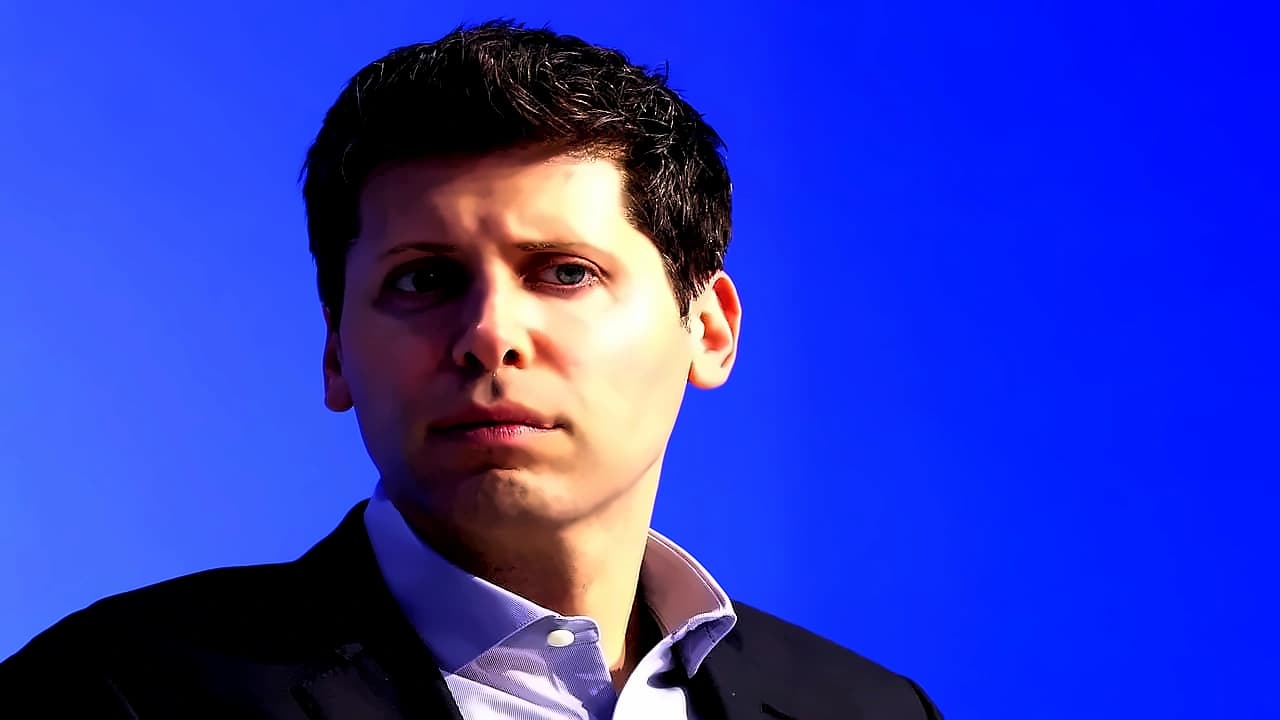
During his testimony, Altman revealed that Musk repeatedly proposed plans that would give him majority control of OpenAI. As reported by KQED, Altman initially asked for 90% equity in a potential for-profit, but other executives, including Greg Brockman and Ilya Sutskever, pushed back on this request. In an email to Musk at the time, Altman wrote: ''''''''''''''''I am worried about control. I don''''''''''''''''t think any one person should have control of the world''''''''''''''''s first AGI — in fact, the whole reason we started OpenAI is so that wouldn't happen.'''''''''''''''' Altman also recalled Musk once demanding a 90% stake in OpenAI, and said he was 'extremely uncomfortable' with ceding majority control even as Musk lessened his demands. 'Mr Musk felt very strongly that if we were going to form a for-profit, he needed total control over it initially,' Altman said, adding that Musk's request made him 'extremely uncomfortable' and that 'I had quite a lot of experience with startups, had seen a lot of control fights.'
The trial, now in its third week, may determine the future of OpenAI and its leadership, as it prepares for a possible initial public offering that could value the business at $852 billion. As reported by The Times of India, Musk is seeking about $150 billion in damages from OpenAI and Microsoft, a major investor, to be paid to an OpenAI nonprofit. He also wants Altman and Brockman removed from their roles. In an August 2024 lawsuit, Musk accused Altman and OpenAI of persuading him into giving $38 million, only to see the nonprofit abandon its mission to benefit humanity and instead become a for-profit corporation. According to KQED, Altman said OpenAI raised $175 billion from private investors across its lifetime. The outcome of the case is hugely important for OpenAI, which is seeking to go public at around a $1tn valuation later this year. Musk wants the judge to order OpenAI to revert to a nonprofit and for Altman and Brockman to lose their board positions, with more than $130 billion going back into OpenAI's nonprofit arm.
During a contentious cross-examination, Musk's lawyer Steven Molo challenged Altman's honesty, citing testimony from a former OpenAI board member that Altman fostered a 'toxic culture of lying,' and from seven former OpenAI officials who said Altman wasn't trustworthy. According to KQED, Molo asked Altman whether he had 'repeatedly been called a liar' by people he has done business with, to which Altman responded 'I have heard people say that.' Molo read out a list of statements from former OpenAI executives and other coworkers who have suggested that Altman fed them falsehoods or misrepresented himself. Molo also tried to portray Altman as the one bent on control, asking 'You had a fixation on this concept of being CEO didn't you?' to which Altman replied 'I don't agree with that characterization.' Molo pressed Altman on his connections to other companies, suggesting potential conflicts of interest, and questioned his dual role on the board of OpenAI's non-profit and as its CEO. At one point, Molo asked Altman if he would ever fire himself, to which Altman largely responded with short, yes-or-no responses and occasional claims that he did not recall exact details related to the case.
Molo also questioned Altman about how board members were selected following his brief firing in 2023. During the five-day ouster, there were long negotiations behind the scenes about whether Altman would return, and who would be on the board if he did. According to KQED, Altman initially proposed to remove OpenAI's board, which fired him, and replace it with four members, including himself. However, Altman was not made a board member at that time, but Molo said that he had proposed the three members who were ultimately selected — Bret Taylor, Larry Summers and Adam D'Angelo — in conversations with Microsoft CEO Satya Nadella. Altman said he had 'no power to appoint new board members,' but that he did say which configurations he would be 'willing' to be rehired into. Earlier in the day, he characterized his return to OpenAI as running 'back into a burning building to try to save it.' Altman described the 2023 events as an 'incredible betrayal' that was 'very public' and 'very painful' in Tuesday's testimony, saying 'If I knew how difficult and painful this was going to be, I never would have tried.'
The trial has carried significant risks for both tech titans, with neither emerging as an overly sympathetic character in the eyes of the jury. As reported by The Times of India, Sarah Kreps, director of Cornell University's Tech Policy Institute, noted that 'This is not looking good for any of them, and I think that that's a little bit unfortunate for the AI industry at a time when the public perception of AI is quite negative and seems to be getting worse.' The lawsuit has invited further scrutiny of Altman's leadership at a crucial time for the company and its competition with Musk's own AI firm and another rival, Anthropic, formed by a group of seven ex-OpenAI leaders. All three firms are moving toward planned initial public offerings that are expected to be some of the largest ever. OpenAI has brushed off Musk's allegations as an unfounded case of sour grapes that's aimed at undercutting its rapid growth and bolstering Musk's own xAI, now part of SpaceX. The repercussions could reverberate widely across the AI industry, particularly as Musk is pursuing an initial public offering this summer for his rocket ship maker, SpaceX, which could make him the world's first trillionaire.