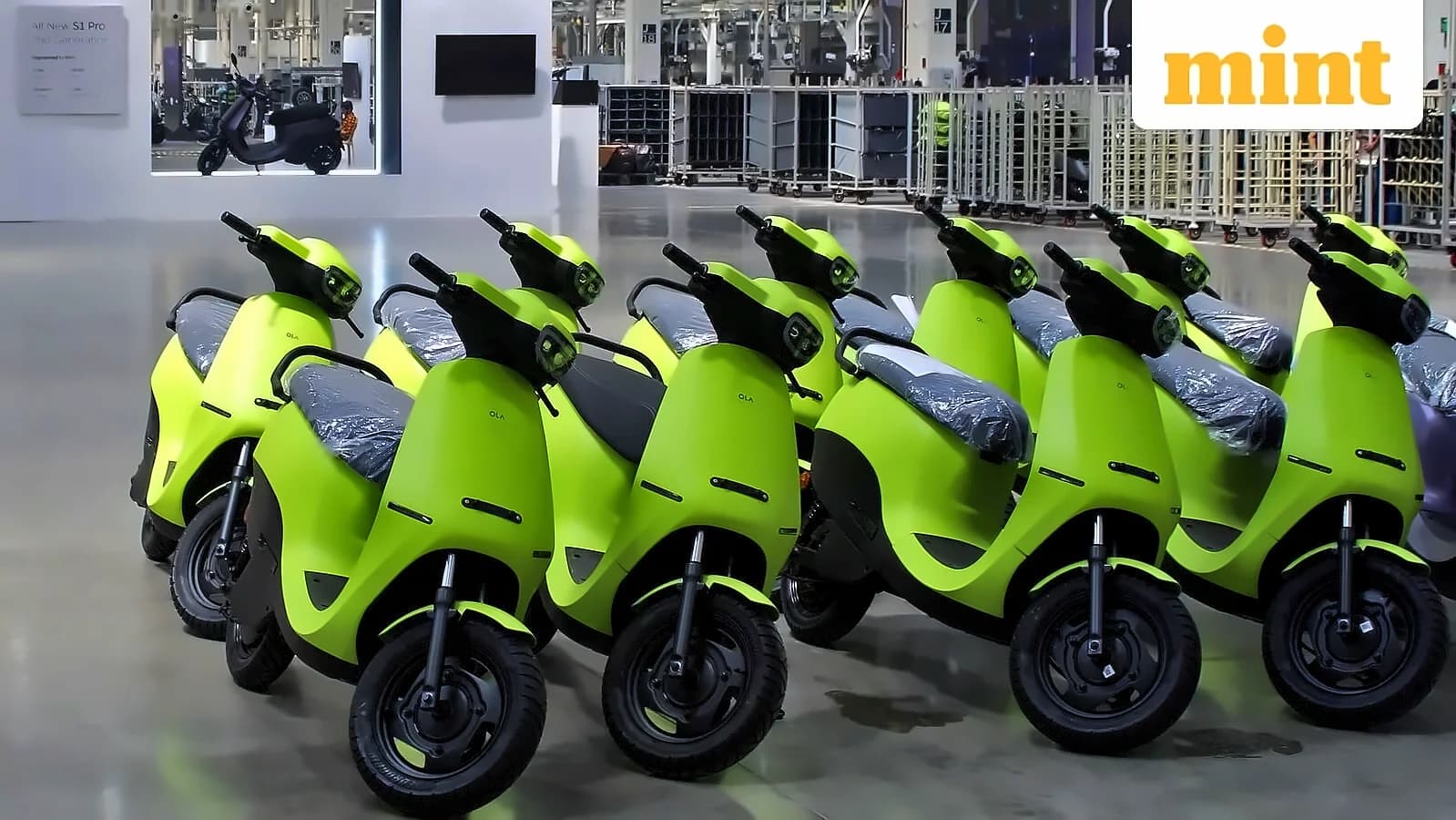
Ola Electric Mobility reported a consolidated net loss of ₹500 crore for Q4FY26, representing a 42.5% contraction from ₹870 crore in the corresponding quarter of the previous financial year. According to the latest exchange filing, the company's revenue from operations declined 56.6% to ₹265 crore compared to ₹611 crore in Q4FY25. The company's total income during the quarter declined 58.2% to ₹304 crore from ₹728 crore in the corresponding quarter last year. Sequentially, the Bhavish Aggarwal-led firm's net loss widened 2.7% from ₹487 crore in the December quarter, while revenue fell 43.6% from ₹470 crore, signalling that demand recovery in the electric scooter market remains uneven.
The management identified service as the primary constraint on demand throughout FY26 but reported that it has now "materially stabilized". As reported by CNBC TV18, average service turnaround time (TAT) was reduced by 88% from October 2025 to March 2026, and the service backlog was cut significantly. The company also reported an EBITDA loss of ₹281 crore for the quarter, improved from ₹690 crore in the year-ago period. According to the shareholder letter, April registrations are up 20% month-on-month to 12,166 units, even as the broader electric two-wheeler industry saw a decline of 22%. The company expects Q1 FY27 orders to range between 40,000 and 45,000 units as it attempts to regain market share and stabilise growth.
The company implemented significant cost rationalization measures during FY26, with total expenses during the March quarter standing at ₹546 crore, down 58.2% from ₹1,306 crore year ago and 26.3% lower than ₹741 crore in Q3 FY26. Employee benefit expenses came in at ₹58 crore, while other expenses stood at ₹325 crore. The company's consolidated gross margin expanded sharply to 38.5% in Q4 FY26 from 13.7% a year ago and 34.3% in the December quarter, driven by vertical integration, platform efficiencies and lower operating costs. Ola Electric expects operating expenses to decline further towards ₹350 crore per quarter over the next few quarters as the full impact of FY26 cost measures begins to reflect in the business. The company maintains that it has "margin buffer" to remain aggressive on pricing despite potential moderation in Q1 and Q2FY27 due to commodity inflation.
Despite the challenging revenue environment, Ola Electric achieved positive operating cash flow for the first time in Q4FY26, with consolidated cash flow from operations at ₹91 crore. According to CNBC TV18, this improvement was supported by PLI inflows, stronger gross margins, lower operating expenses and tighter working capital discipline. The Auto business generated cash flow from operations of ₹213 crore and free cash flow of ₹173 crore in Q4FY26, while the Cell business remained in investment mode as the company ramped up Gigafactory operations. The company also reported free cash flow improved to negative ₹131 crore during the quarter. Warranty costs dropped sharply to ₹59 crore in FY26 from ₹555 crore in FY25, reflecting improved operational efficiency.
For FY26, the Bengaluru-based company reported revenue from operations of ₹2,253 crore, down 50.1% from ₹4,514 crore in FY25. Annual net loss narrowed 19.5% to ₹1,833 crore from ₹2,276 crore a year ago, while total expenses declined to ₹3,245 crore from ₹6,253 crore. The company delivered 20,256 units during Q4 FY26, while full-year deliveries stood at 1,73,794 units. Ola Electric continues to evaluate its liquidity position and is pursuing additional fundraising through a proposed qualified institutional placement (QIP). The company's Gigafactory is entering its next phase, with a focus on ramping commercial manufacturing toward 6 GWh in FY27. The long-term goal is to utilize the Gigafactory as a platform for both mobility and energy storage, while AI is now a core operating layer handling approximately 2 lakh connected calls per day across sales, service, and operations.