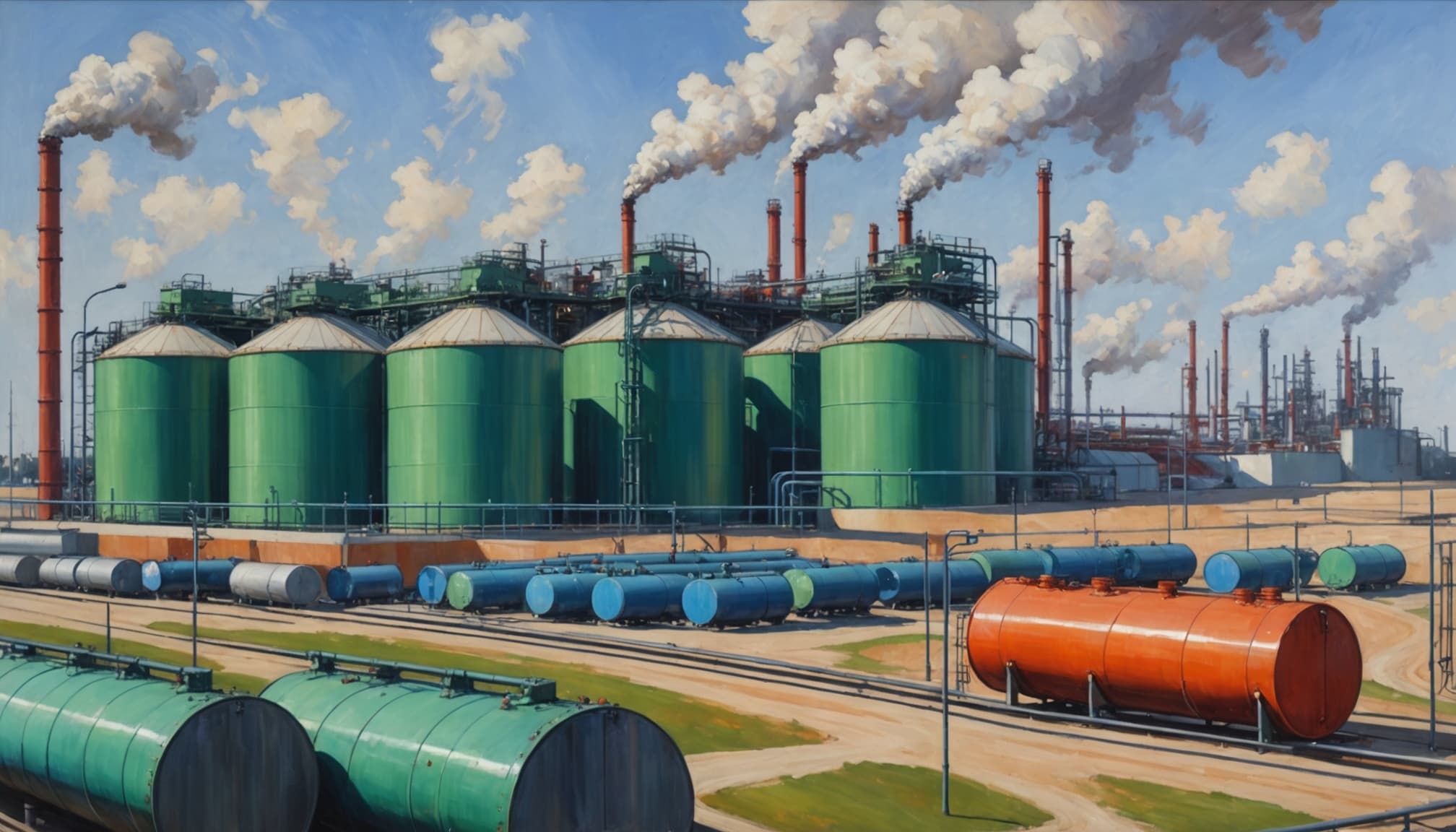
State-owned Oil India expects its ₹28,000 crore Numaligarh refinery expansion project to be operational by early 2027, according to company officials. As reported by ANI, the expansion will triple refining capacity to 9 million tonnes from the current levels. According to company chairman and managing director Rath, pre-commissioning activities are already underway at the site, with crude oil taken in on December 31, 2025. The mother units are currently under pre-commissioning, with the entire expansion project foreseen for commissioning in early 2027. Rath confirmed that the refinery expansion will increase Numaligarh Refinery's capacity from 3 MTPA to 9 MTPA, representing a significant enhancement in the company's processing capabilities.
The company is simultaneously establishing a 1,635-1,640-km pipeline from Paradip to Numaligarh, which is likely to be commissioned by October-November 2026, as reported by ANI. This pipeline will serve as the feedstock carrier from the offshore oil terminal at Paradip, through which the company plans to import around 5.5 MT to 6 MT of crude oil. The crude will be imported through the single point mooring (SPM) offshore oil terminal off the coast of Paradip. The pipeline will transport imported crude oil from Indian Oil Corporation Ltd's (IOCL) offshore oil terminal at Paradip to the expanded refinery, as confirmed by Rath. The company has established a collaborative framework with BPCL for crude oil sourcing, with discussions already started under a memorandum of understanding.
Recently, OIL commissioned the Numaligarh-Siliguri product pipeline with a capacity of 1.72 MT, which has now been upgraded to 5.5 MT capacity, according to Business Standard. With this upgrade, the company is now ready to evacuate products after the expansion project completion. Around 5.5 MT of products will be transported to Siliguri, while the remaining 2.5 MT will be transported through road, rail and inland water transport networks. The products from the Numaligarh expansion project will largely cater to eastern and north-eastern India, with petrol and diesel accounting for the bulk of the output. On upstream operations, Rath confirmed that the company is continuing to expand exploration and production activities to enhance domestic hydrocarbon output, with three offshore drilling activities currently ongoing in Andaman and Nicobar, Kerala-Konkan basin and KG Basin.
Commenting on the recent sharp drop in global crude oil prices to $68 per barrel, Rath indicated that the global oil market is probably set for a realignment as the recent inventory drawdown starts reversing, as reported by Business Standard. Speaking at the same event, Alok Tripathi, joint secretary, Ministry of Petroleum and Natural Gas, announced that the government is developing an integrated 'Sampoorn Gobardhan' scheme for the compressed biogas sector, which will address key challenges relating to assured offtake, pricing certainty, long-term policy visibility, feedstock management and by-product utilisation while serving as the central pillar of the future CBG ecosystem. Rath emphasized that compressed biogas (CBG) can strengthen India's energy security and support the country's gas-based economy, with India targeting 15 million metric tonnes of compressed biogas production, supported by policy engagement between the Centre and states. Rath said India has multiple feedstocks because of its geographic diversity, with municipal solid waste and agricultural residue supporting the growth of the CBG ecosystem, and states expected to develop their own CBG policies.