The artificial intelligence trade has suffered a brutal reckoning, with $13.2 trillion wiped off AI stocks from their 2026 highs. According to data compiled by GSC Commodity Intelligence, 68 AI and major technology stocks have collectively surrendered this staggering destruction of paper wealth. The correction reached a climax on 5 November when the Nasdaq 100 plunged 6.4%, erasing approximately $2.5 trillion in market capitalization in a single trading session. This represents nearly $385 billion disappearing every hour of trading, with the damage extending far beyond one disastrous day.
Higher memory prices have pushed up the cost of new computers, making refurbished devices a more affordable option for businesses, students, and individual buyers. As reported by The Financial Express, a fall in memory prices could narrow this gap and make new computers more competitive again. IT distributors could also feel the impact, as lower component prices may reduce selling prices and slow revenue growth. This is particularly relevant for distributors that have benefited from higher product realisations over the past few quarters. The correction has been severe, with memory stocks declining an average 60% and Goldman Sachs' memory-exposed basket falling 51% from its June peak - its deepest drawdown since ChatGPT launched in November 2022.
The scale of the technology correction is extraordinary across the AI ecosystem. From their 2026 peaks, Alphabet has surrendered approximately $1.62 trillion in market value, while Nvidia lost $1.49 trillion. Other major players include Broadcom down $965 billion and TSMC declining $700 billion. The sector-wide impact is even more alarming, with memory stocks declining 60%, AI power stocks falling 53%, data-centre stocks down 50%, semiconductor stocks dropping 43%, and AI software stocks declining 36%. This represents a fundamental shift in investor sentiment toward AI-related investments.
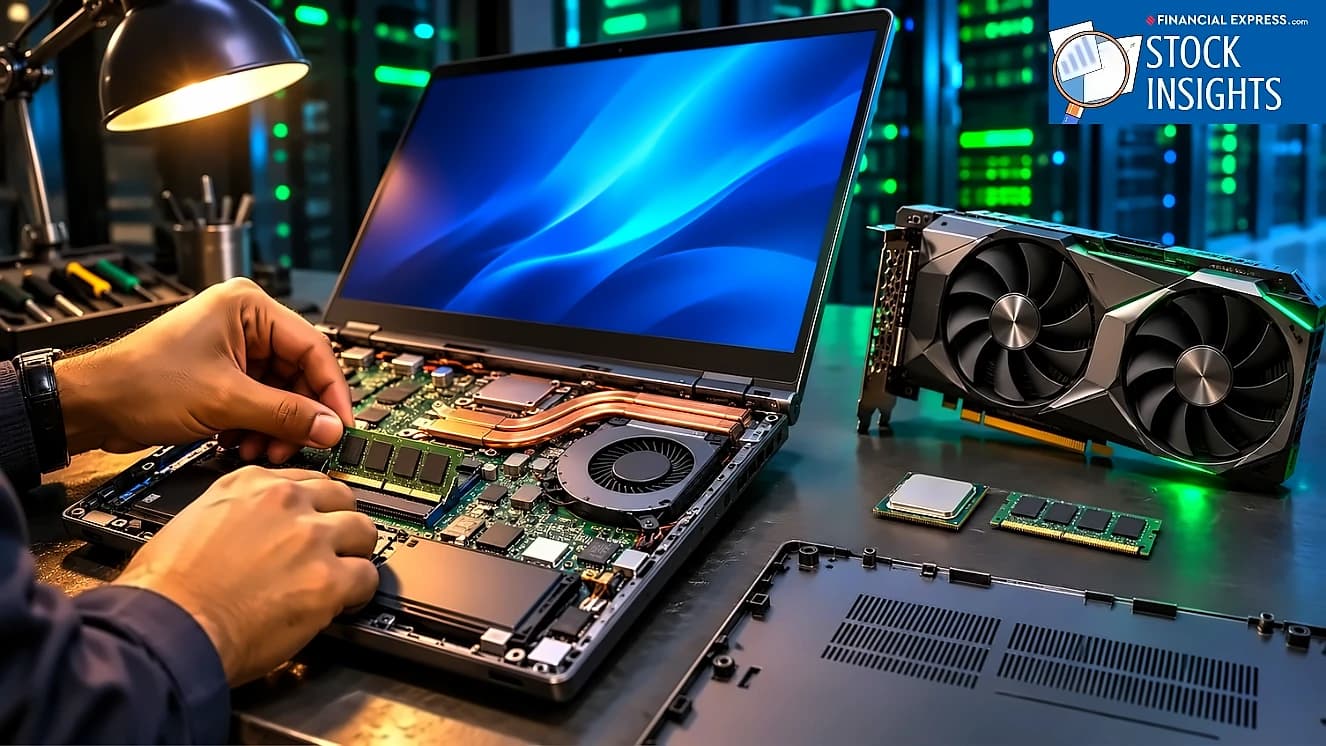
GNG Electronics operates in the Information and Communication Technology refurbishment sector under the brand name 'Electronics Bazaar'. According to The Financial Express, laptops are the core product, contributing 78% to 80% of revenue, with the remainder from desktops and other IT equipment. The company prices its refurbished devices at approximately 30% to 35% of the retail cost of equivalent new computers, creating a significant price arbitrage opportunity. In Q2FY27, the company reported strong revenue growth with revenue surging 42% year-on-year to ₹624.8 crore, while net profit surged 72.5% to ₹56.4 crore.
Rashi Peripherals is transitioning into a broader technology solutions provider with three business engines: technology distribution, system integration and managed services, and embedded and semiconductor solutions. As reported by The Financial Express, the company operates as a national distribution partner for 89 international technology brands and serves 728+ locations across India. In Q2FY27, revenue grew 48.8% year-on-year to ₹6,185.1 crore, with net profit more than doubling to ₹130.7 crore. The company's semiconductor joint venture with Japan's Restar Corporation is projected to grow revenue 3x to 4x over the prior year.
The correction has raised uncomfortable questions about the future of AI investments versus traditional assets. According to GSC Commodity Intelligence, Gold has reclaimed $4,000 and renewed investment demand for precious metals is strengthening the bullish case. Wall Street now faces an increasingly uncomfortable question: What if the next great bull market belongs not to artificial intelligence, but to hard assets? The Nasdaq 100 has experienced three corrections during 2026, raising comparisons with the turbulence surrounding the dot-com era. Both GNG Electronics and Rashi Peripherals face different risks and opportunities as refurbished devices, IT distribution, and semiconductor demand evolve, with their premium valuations potentially contracting if global AI stocks continue correcting.