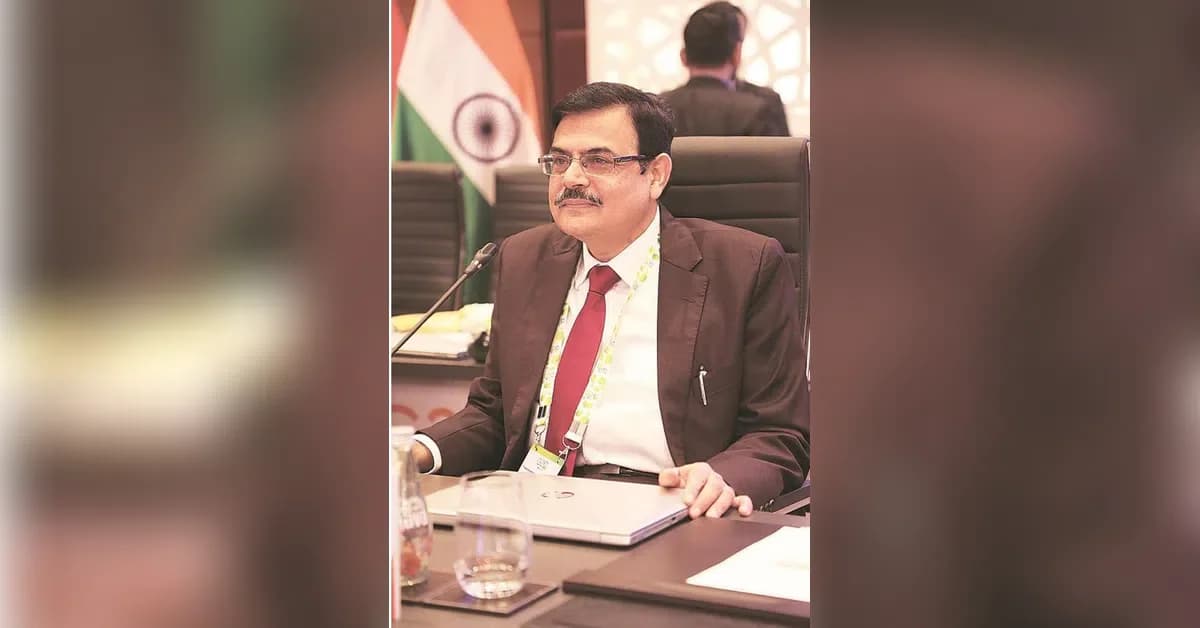
The National Financial Reporting Authority (NFRA) has officially confirmed it has begun its investigation into the revenue misstatements case at Rajesh Exports, with Chairman Nitin Gupta confirming 'We are working on it. We have started our process' during a conference organised by Ficci on Tuesday. As reported by Zee News, Gupta spoke on the sidelines of the conference in Mumbai, stating 'We have started our process' while declining to specify any timeline for completion. The investigation follows Sebi's action against gold refiner Rajesh Exports for discrepancies in financial statements over a long period, to the tune of ₹15.15 lakh crore. In June, Sebi had referred the matter to NFRA for appropriate action against the company's statutory auditors. Gupta emphasized that 'It has to be done in a systematic manner and we are doing that' given the multiple years involved and multiple auditors involved in the case.
Securities and Exchange Board of India (Sebi) has barred Rajesh Mehta, chairman of Rajesh Exports, from trading company shares following the ongoing investigation. The regulator's action comes after a forensic probe uncovered alleged revenue inflation and fund diversion over four years, with Sebi finding the company presented a misleading financial picture. As reported by The Economic Times, Sebi has ordered a fresh audit and referred auditors' conduct for action, indicating the scope of the investigation has expanded beyond the initial revenue misstatement findings.
The investigation has expanded with new complaints alleging insider trading by Samir Agarwal, former zonal head of eastern India at IndusInd Bank, according to The Economic Times. The complaints also include manipulation of financial records, evergreening of microfinance loans, suppression of audit findings and attempts by senior management and board members to conceal irregularities. These additional allegations suggest the scope of the financial irregularities extends beyond revenue misstatements to include broader corporate governance failures and potential criminal activities.
Addressing broader governance issues, Gupta emphasized the need for genuine board independence in India's promoter-driven companies. According to his statements, 'In India, because we are promoter-driven, the dominant ownership structure is the ownership of the management, the formal structure of independence can exist in full, and yet substantive challenge can quietly fail to occur because social norms, information dependence and the practical realities of board composition may work against it.' He stressed that 'What we have to look for is the real independence, and the real independence is not on paper, but it is in practice'. In his address at the conference on Agile Governance: Navigating AI & Regulatory Landscape, Gupta warned against 'mistaking AI's fluency for accuracy', stating 'The same system that can flag an anomaly can also manufacture a plausible-sounding but entirely hallucinated explanation for it'. He urged boards and audit committees to 'build the internal courage and internal mechanisms to challenge management, including challenging the deployment of AI' and resist the temptation to let efficiency substitute for professional judgment.
Gupta highlighted the growing influence of artificial intelligence on corporate decision-making and its implications for governance. He warned that 'AI has made the need for such a culture even more urgent as these systems are capable of producing confident, fluent and plausible outputs that could be mistaken for correct conclusions'. The NFRA chief emphasized that 'AI has influenced corporate decision-making, a critical look at an issue may be essential'. Highlighting the role of AI in finance and auditing, Gupta said 'every material judgment in financial reporting must continue to remain with humans'. He urged boards and audit committees to ask critical questions before approving AI deployment, including data usage, model ownership, validation processes, and cybersecurity controls. The restructuring comes as NFRA launches four specialized divisions for monitoring, oversight, investigation, and disciplinary actions, following a Delhi High Court directive. Additionally, Gupta noted that NFRA can put guardrails in place to check any malpractices and has already requested the Ministry of Corporate Affairs (MCA) to make changes to the auditing standards, which are under the ministry's consideration.