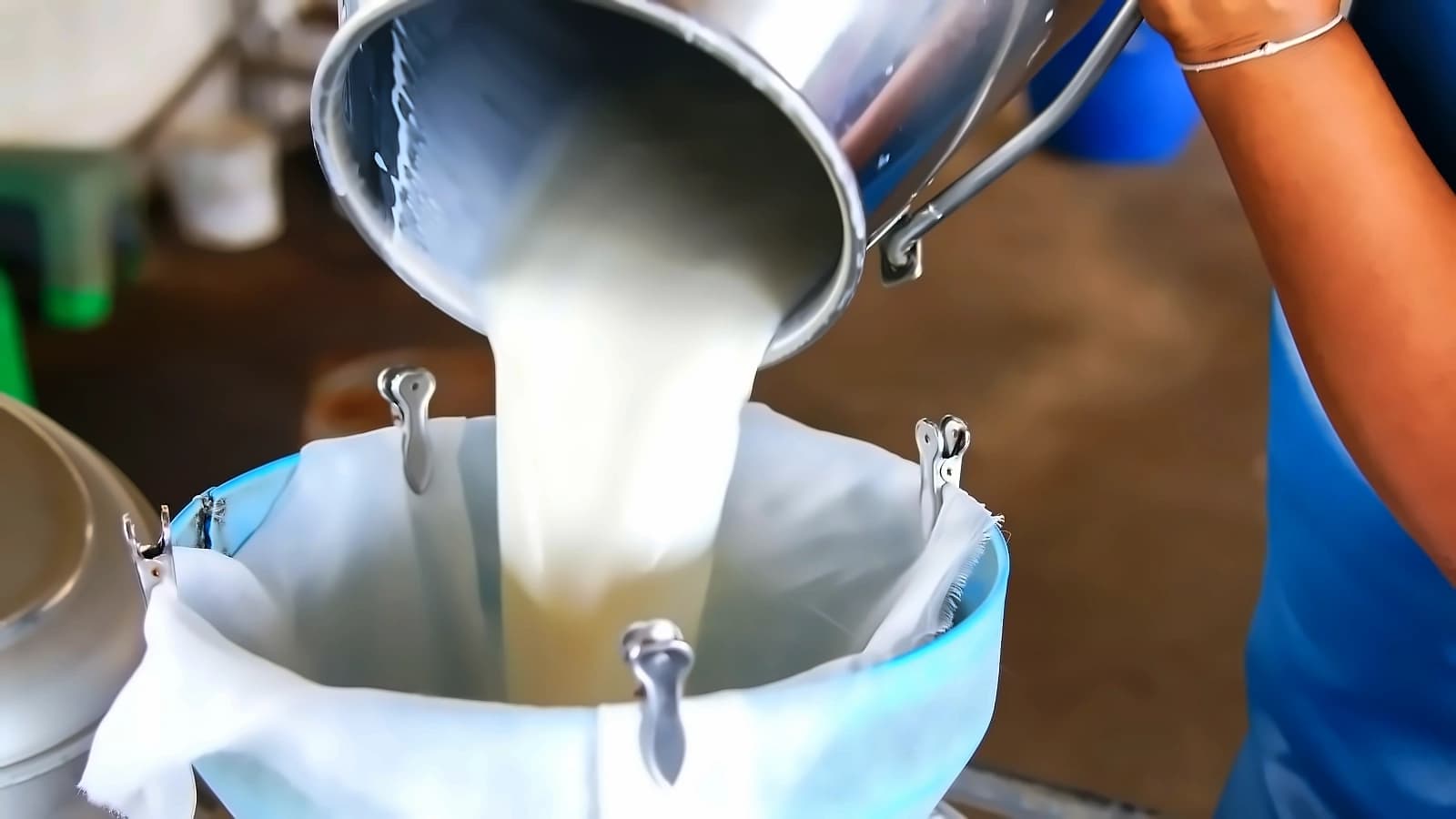
Milk prices are expected to remain elevated during the upcoming October-February flush season, with experts citing multiple factors including uneven rains, costly feed and fodder, and stronger demand for dairy products that are squeezing supplies. According to Business Standard, cattle feed costs have risen 15-20% in September 2026 compared to the same period last year, with all components including maize, de-oiled rice bran cake, soya-related ingredients, and other grains becoming more expensive. Milk prices have already increased significantly - cow milk is currently around ₹42 per litre, roughly 30% higher than last year, while buffalo milk procurement prices have risen in almost the same proportion. As reported by Business Standard, there have been four retail price hikes between May and August, roughly one hike each month - an unusual frequency for the industry.
The price increases are attributed to a combination of supply-side pressures affecting raw material costs simultaneously. According to Business Standard, monsoon conditions have been below-par across the country, with some places like Bihar experiencing floods while others have received below-normal rainfall. Maharashtra, where I am based, has also not received adequate rainfall in most areas, said Rahul Kumar, chief operating officer of Parag Milk Foods. The government's decision to raise the ethanol blending requirement under the E20 program has added to the cost of raw materials such as maize and de-oiled rice bran (DORB) — both used in animal feed. A weak monsoon has compounded the problem, cutting into green fodder and water supply for dairy farming.
Milk production has been significantly impacted by adverse weather conditions and rising input costs. According to Business Standard, milk production is likely to be lower than anticipated due to the below-par monsoon this year, as monsoon conditions determine fodder and water availability. Milk itself has become scarcer and costlier due to reduced production volumes, with cow milk prices rising close to 13-14% year-on-year and buffalo milk growing harder to source. Additionally, protein costs have surged, almost tripling in the last two years, 18 months or so. The industry official noted that in the milk industry, almost 86-87% of the price paid by consumers is directly passed on to farmers as procurement costs.
The price increases are significantly impacting consumer inflation metrics. According to Business Standard, consumer price inflation in milk (which includes milk products as well as liquid milk) has risen from 3.06% in January 2026 to 4.81% in August 2026, with the overall weight of 7.28 in the inflation index. Retail inflation in just the liquid milk category has risen from 2.89% in January 2026 to 3.91% in August 2026, with liquid milk having a weight of around 5.25 in the inflation index. The increase extends beyond liquid milk to prices of products such as cheese, curd, and even yogurt, with the industry expecting another price increase around the upcoming festive period, potentially ₹1-2 per litre.
The dairy industry is experiencing significant transformation driven by regulatory changes and consumer preferences. According to Business Standard, some experts pointed out that rising demand for milk products such as paneer and cheese due to the ban on analogue paneer will also put pressure on domestic liquid milk prices. The nationwide crackdown on analogue paneer has started in Maharashtra, where the Food Safety and Standards Authority of India (FSSAI) and other authorities took action, with Uttar Pradesh and other states also imposing restrictions. Additionally, rising international prices due to demand for proteins, particularly whey protein, are impacting domestic rates. Parag Milk Foods announced plans to invest around ₹100 crore to expand its paneer manufacturing capacity by 60 metric tonnes per day, while domestic butter prices are currently around ₹540 per kg, about 20% more than in the same period last year.