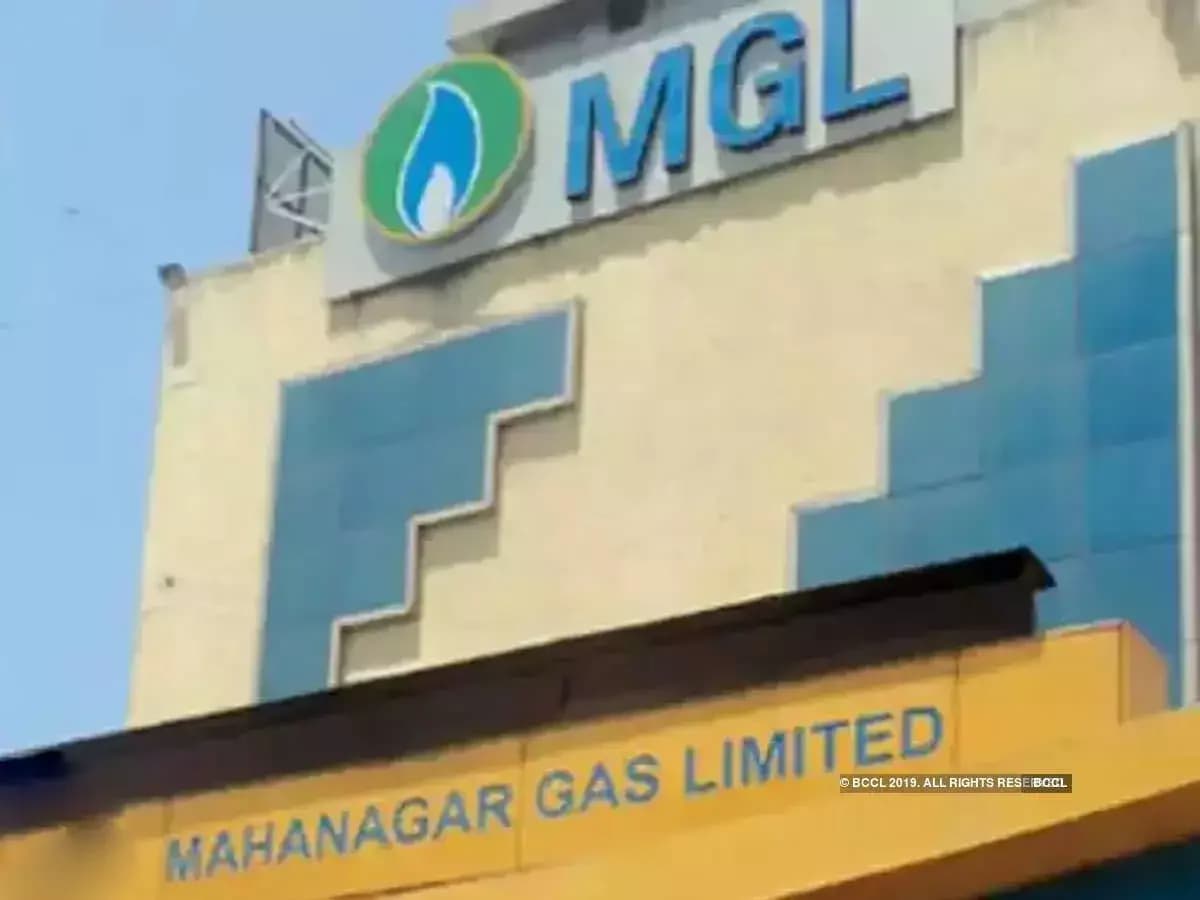

Mahanagar Gas (MGL) shares have rallied 23% over the past three months, driven by expectations of higher sales volume and increased customer acquisition helped by the government's push to accelerate the adoption of piped natural gas (PNG) amid global supply chain disruptions. According to reports from The Economic Times, the company aims to increase the PNG customer base by 20% from the current 20 lakh users in the near term, which will likely boost PNG consumption by 12%. Despite this sharp run-up, the stock trades at a P/E multiple of 13.7, a modest premium to its historical valuation of 12.5.
In late March, the central government mandated that households with access to piped gas infrastructure must transition from LPG to PNG within three months. As reported by The Economic Times, this mandate is expected to accelerate MGL's volume growth to double digits from the current single-digit pace, with the company reporting 8.3% volume growth for FY26. The company aims to add between four-five lakh PNG customers in the near term, with overall volume growth expected to be driven by the PNG segment despite its core compressed natural gas (CNG) business accounting for 72% of revenue in FY26.
MGL has provided a capex guidance of ₹1,200 crores for FY27 to expand the network, as reported by The Economic Times. However, the company faces execution risks as pipeline laying on public roads is expected to experience a temporary slowdown during monsoon months. Additionally, a shortage of labour, plumbers, contractors and material may also affect execution, with all city gas distribution companies competing for the same pool of skilled workers during this expansion phase.
According to brokerages, MGL's stock valuation looks attractive given future earnings growth. As reported by The Economic Times, Motilal Oswal Financial Services expects 9% overall annual volume growth over FY26-28. The broking firm stated in a report that "at around 10.8x FY28E P/E, valuations appear attractive offering scope for re-rating as margin pressures ease." The company is willing to sacrifice near-term profits to fast-track infrastructure deployment and drive volume growth, maximising market penetration while prices of alternative fuels like petrol, diesel, and LPG remain volatile.