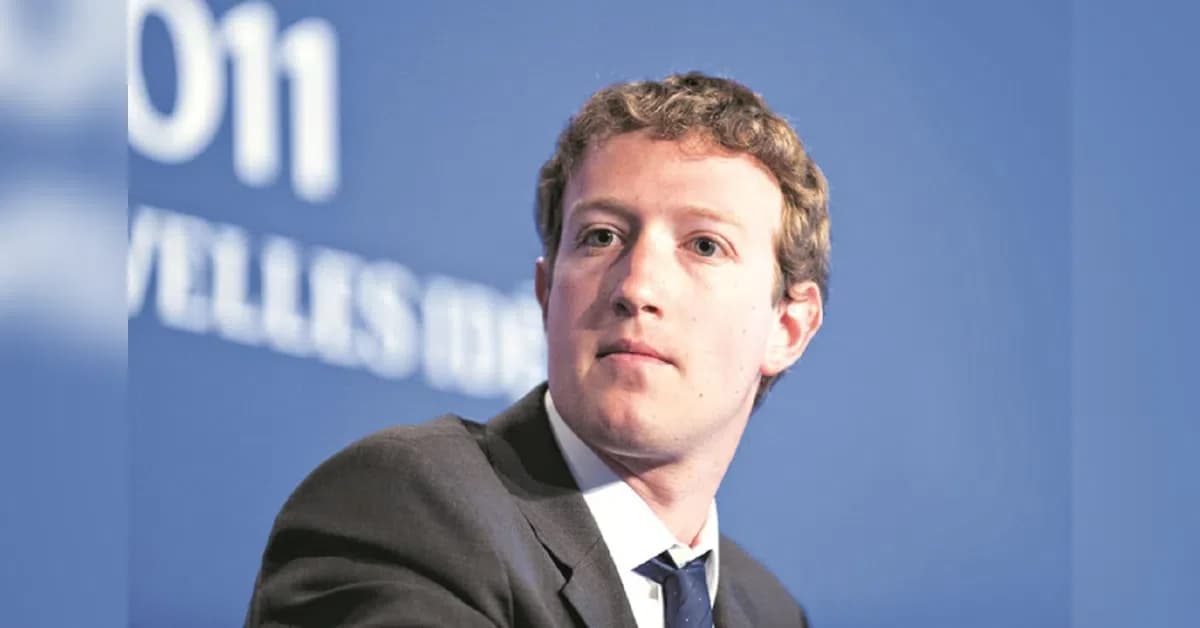
Meta CEO Mark Zuckerberg has acknowledged the company made mistakes during its AI workforce transformation, confirming in an internal memo that the broad AI reorganization was 'disruptive' for many employees. In the memo issued on Friday, Zuckerberg described the rapid advances in AI technology and the challenges brought on by the boom in the sector. 'Given the complexity of these changes, we've made mistakes and will almost certainly make more,' Zuckerberg stated, adding that he is focused on providing as much stability as possible in terms of organization changes going forward. 'I don't want to overpromise because the world is changing in ways that are out of our control,' he said, reiterating his commitment to transparency about the ongoing transformation. 'By creating important new roles for people, this also allowed us to shrink the size of teams knowing that if we make mistakes in some places, then we could transfer some people back,' Zuckerberg explained, marking the first time he has publicly acknowledged that the AI pivot is causing real damage inside the company and representing a significant shift from his previous stance of unapologetically telling workers that success is 'not a given'. The comments come as Meta has already been investing heavily in AI and reorganising teams to support its long-term strategy, with the company spending billions of dollars on AI infrastructure and development as competition in the sector intensifies.
The layoffs have created a crisis for Meta employees, with the cuts expanding dramatically from the original 11,000 jobs in November to more than 30,000 over three years. As reported by Reuters, the company carried out a massive restructuring in May, laying off 10% of its workforce globally and transferring 7,000 employees to new initiatives related to AI workflows. The latest developments show that 8,000 Meta employees were laid off last month while approximately 7,000 were transitioned into new AI focused positions, with the reshuffling impacting approximately 20 percent of Meta's near-78,000 employee base. Zuckerberg has now promised Meta will not conduct any more company-wide layoffs this year, marking the first sign of a pause from any major US tech employer this year. The layoffs have been particularly devastating for employees on H-1B visas, who face a 60-day visa clock that becomes a waking nightmare when they lose their jobs. One data science professional, Meera, faced the agonizing choice of spending her maternity leave upskilling to protect her position or simply being present with her child. 'I have chosen to dedicate my full focus to my family for the time being. I will prioritise upskilling and performance once I am back on the job,' she said, highlighting the personal toll of these corporate decisions.

The sharpest complaints center on Meta's Applied AI Engineering unit, a unit of roughly 6,500 engineers and product managers assembled since March to support Meta Superintelligence Labs. Employees reassigned to AAI had no option to transfer elsewhere within Meta - they could join or leave the company, an unusual demand for senior technical workers in Silicon Valley. Some have taken to calling themselves 'draftees', with one worker claiming most found the work 'soul crushing' and another calling it 'literally the gulag'. The unit operates with a 50-to-1 ratio of individual contributors to managers, with tasks including generating coding puzzles to test and train frontier AI models. Zuckerberg addressed these concerns, stating that Meta has taken note of concerns over the widening of manager oversight responsibilities and plans to scale back the practice. He defended the unit as critical to advancing Meta's models, framed the work as temporary, and said the company will look to move staff into new roles around Meta in the coming months, with employees able to transfer back to their original teams if staffing decisions prove to be mistakes.
The discontent at Meta runs beyond AAI, with more than 1,600 employees signing a petition against a recently launched program that monitors US workers' clicks and keystrokes to generate AI training data, up from about 1,000 signatures in May. Meta scaled the program back on June 2, allowing employees to pause data collection for up to 30 minutes and request specific exemptions. At a company-wide Instagram meeting this week, Meta chief product officer Chris Cox described the past few months as 'brutal,' comparing the experience to running a marathon in the middle of a hailstorm. Cox urged leadership to 'get in touch with the company again' and cautioned against treating AI as either savior or threat. The internal pressure has shifted Zuckerberg's stance significantly, with the change from his May 18th memo where he unapologetically told workers that success is 'not a given' to the Friday, June 12 memo where he owned his missteps and promised steadiness. The comments come as Meta has already been investing heavily in AI and reorganising teams to support its long-term strategy, with the company spending billions of dollars on AI infrastructure and development as competition in the sector intensifies.
Zuckerberg has pledged to provide greater stability as possible in terms of organization changes going forward, as reported by Zee News. The company is implementing several initiatives to support employees, including increased investment in team-building initiatives through higher budgets for offsites and corporate events. Meta plans to organize a large-scale hackathon in July to strengthen cross-team collaboration and development on its latest models. Zuckerberg informed employees about these plans in his internal memo, emphasizing the company's commitment to finding new roles for employees reassigned to train AI models. The announcement comes as major companies including Uber, Meta, Cloudflare, Intuit, PayPal, Cisco, Quora and Coinbase implemented mass layoffs this year, highlighting the broader tech industry restructuring. Several tech industry leaders have warned that most white-collar roles that rely on computers could be automated within the next 12 to 18 months, making Meta's commitment to employee retention and retraining particularly significant for the industry.