Maruti Suzuki has implemented comprehensive travel restrictions alongside its work-from-home policy, responding to Prime Minister Narendra Modi's austerity appeal. The automaker has directed employees to avoid overseas travel unless such trips are considered essential for business requirements, with virtual meetings preferred and domestic travel restricted wherever possible. According to the company's latest announcement, this represents a significant expansion of their initial work-from-home mandate to include systematic travel curbs and operational efficiency measures. The move comes approximately two weeks after PM Modi appealed corporates to revive the Covid-era playbook, urging citizens to minimise foreign travels and defer gold purchases as the country looks to shore up its foreign exchange reserves amid global headwinds.
Maruti Suzuki has implemented a 'work-from-home wherever feasible' policy for its employees, responding to Prime Minister Narendra Modi's austerity appeal. According to the company's social media announcement, this policy applies specifically to staff who are not required to be present on-site to perform their duties. The automaker stated that it has placed 'immense importance' in PM Modi's clarion call for austerity measures, emphasizing the need to reduce pressure arising from the current geopolitical situation. The company has also mandated that virtual meetings would be the preferred mode for official engagements, demonstrating its commitment to conducting business in the 'most productive and efficient manner' while minimizing the use of petroleum products and foreign currency expenditure. Shares of Maruti Suzuki India Ltd ended at ₹13,242.70, up by ₹72, or 0.55%, on the BSE on May 26, 2026, reflecting positive market response to the austerity measures.
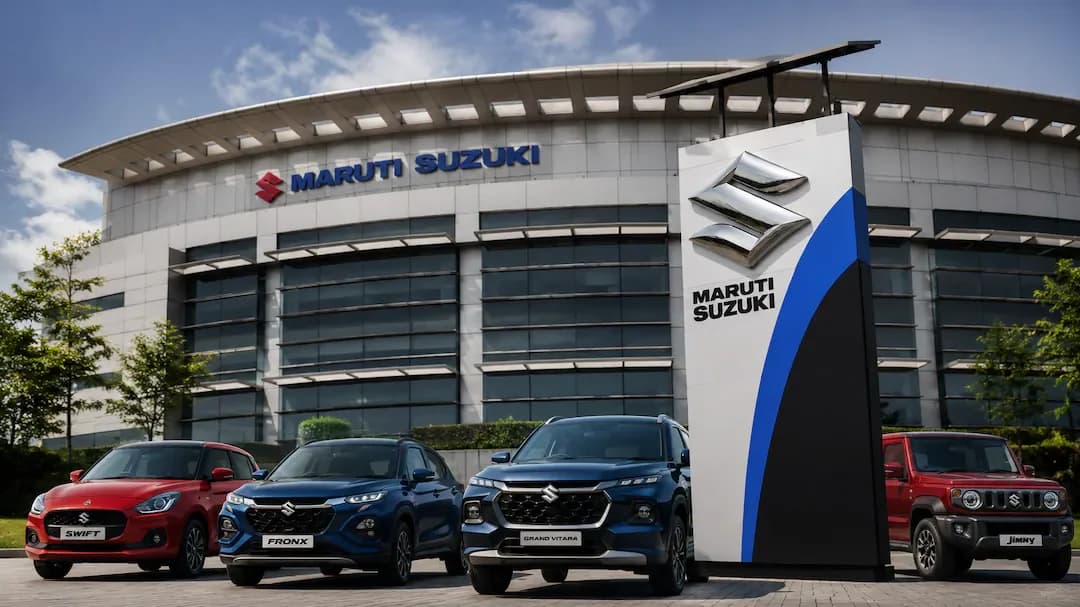
The austerity measures affect Maruti Suzuki's substantial workforce of 53,777 employees as of March 31, 2025, comprising 19,966 regular employees and 33,811 non-regular employees, according to the company's annual report. The work-from-home arrangements have been implemented for employees wherever operationally feasible to reduce commute-related fuel consumption, aligning with the company's existing remote working policy. The company views this period as an opportunity to reassess internal systems and identify areas where operational efficiency can be strengthened, stating this is 'a timely opportunity to revisit and re-examine the business processes, and make efforts to improve efficiency across all areas of operations'. According to Business Standard, the measures are designed to reduce fuel consumption linked to daily commuting and minimize the use of petroleum products and foreign currency expenditure.
The company has encouraged employees to adopt sustainable commuting methods such as carpooling and public transport where practical, while advising focus on energy conservation by optimising the use of air conditioners, fans and lighting across offices and homes. As reported by CNBC TV18, these measures are designed to reduce fuel consumption linked to daily commuting and minimize the use of petroleum products and foreign currency expenditure. The company views this period as an opportunity to reassess internal systems and identify areas where operational efficiency can be strengthened, stating this is 'a timely opportunity to revisit and re-examine the business processes, and make efforts to improve efficiency across all areas of operations'. According to Business Standard, Maruti Suzuki India is adopting austerity measures that aim to conserve fuel and reduce foreign exchange expenditure.
The company emphasized its commitment to conducting business in the 'most productive and efficient manner' while minimizing the use of petroleum products and foreign currency expenditure. According to CNBC TV18, the policy aims to 'mitigate the long-term impact of the West Asia war' and reflects the company's approach to business operations during both crisis and normal business periods. The company's statement comes at a time when rising geopolitical tensions in West Asia have increased concerns over crude oil prices and India's import bill, prompting companies to review operating costs and energy usage. PM Modi's recent comments at a public gathering in Hyderabad highlighted that prolonged conflict in West Asia and disruptions to global supply chains have sharply increased pressure on oil prices and India's import bill, prompting the need for national restraint and responsible consumption. This announcement aligns with recent corporate developments, as Hindustan Unilever Ltd. has also announced plans to scale up its electric vehicles fleet and allow employees to continue working under hybrid model, while some of the top Indian public sector undertakings, including the State Bank of India, Life Insurance Corp., Bank of Baroda and other state-run lenders have been asked by the government to increase EV usage and curtail foreign visits.