India's intra-city logistics market is experiencing explosive growth, with 40-50% CAGR according to latest market data from Redseer's Benchmarks. This rapid expansion is being driven by the convergence of quick commerce growth and the adoption of predictive analytics technologies across logistics firms. The market is expected to reach significant scale within the next two years, with industry experts warning that the cost of establishing a position in this market will be significantly higher in the near future. This growth trajectory reflects the fundamental shift in how logistics companies are approaching operational efficiency and customer service in India's rapidly evolving retail landscape.
The most dramatic shift in recent years has been the emergence of quick commerce within food delivery, where consumers who once considered 45-minute delivery acceptable are now expecting meals within 10 to 15 minutes. This demand for speed is pushing companies to rethink logistics, inventory management, and operational efficiency. Swiggy's introduction of services such as Snacc and the expansion of Bolt demonstrate the growing emphasis on ultra-fast delivery models. Likewise, Blinkit's launch of Bistro signals increasing competition in the quick-food segment. These innovations are redefining customer expectations, where speed is no longer viewed as a bonus feature but a competitive necessity. Companies that can consistently deliver meals, snacks, beverages, and breakfast items within minutes gain a substantial advantage in customer acquisition and retention.
Amazon has expanded its less-than-truckload (LTL) freight service in the United States, allowing businesses to ship freight to virtually any destination rather than limiting deliveries to Amazon-operated facilities. According to latest reports, the expanded offering is available through Amazon Supply Chain Services, the company's end-to-end logistics platform. Previously, Amazon's LTL service was primarily designed for vendors and sellers moving inventory into the company's fulfillment network. By removing this restriction, Amazon is positioning itself as a larger player in the domestic freight market and increasing competition with established LTL carriers such as Old Dominion Freight Line, XPO and FedEx Freight. The announcement drew attention across the freight sector, with investors viewing this move as another step in Amazon's expansion into transportation services traditionally dominated by these carriers.
India's logistics firms are increasingly adopting predictive analytics to transform last-mile delivery operations for small and medium enterprises (SMEs). According to latest reports, these smarter logistics tools are making courier services more efficient, reducing operational costs and creating better customer experiences. The technology uses historical and real-time data to forecast what's likely to happen next, with machine learning and data modeling identifying patterns and flagging potential issues before they escalate. For SMEs, this level of visibility can completely change how last-mile delivery operates day to day, with predictive systems continuously analyzing real-time conditions and historical performance to recommend more efficient delivery routes. The predictive analytics approach enables route optimization by continuously analyzing real-time conditions and historical performance to recommend more efficient delivery routes, avoiding high-traffic areas, redirecting drivers around accidents, and grouping deliveries more efficiently.
Quick commerce now accounts for a fast-growing share of online retail in India, touching a gross merchandise value (GMV) of $10-11 billion in 2025, as estimated by Bain & Co. According to Mint reports, brands are increasingly using logistics data to drive decision-making rather than simply monitor operations. DTDC Express CEO Abhishek Chakraborty noted that the most sought-after metrics from brands include in-stock percentages, days of inventory, delivery success rates and logistics cost as a share of revenue. The predictive analytics revolution is particularly valuable for SMEs balancing customer expectations with profitability, as it helps reduce operational inefficiencies that can quickly eat into margins. With the market growing at 40-50% CAGR, these efficiency gains are becoming increasingly critical for maintaining competitiveness.
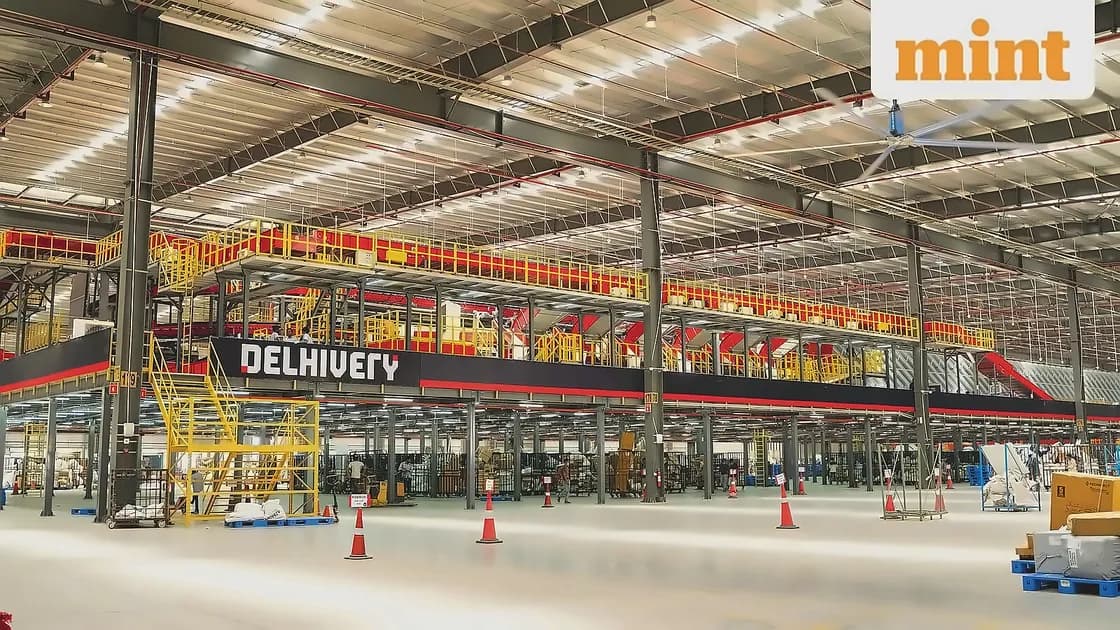
Data-driven interventions across Emiza's network have helped brands cut logistics costs by up to 20% in 2025, reduce return-to-origin rates by as much as 30%, and recover 50-60% of at-risk shipments through proactive exception management, according to Mint reports. Shiprocket's new appointment-based service has reduced transit times to key destination hubs by 24-48 hours on average and warehouse rejection rates have dropped by up to 10% for participating sellers. The predictive analytics transformation is improving customer experience through delivery transparency, with businesses providing more realistic delivery estimates based on actual operating conditions rather than generic timeframes. This proactive communication helps strengthen customer trust without needing enormous customer support teams, as delayed parcels with clear communication create far less frustration than parcels that disappear into tracking limbo.
Adoption is currently strongest in beauty and personal care, fashion, FMCG, health, and consumer electronics categories, as reported by Datum Intelligence analyst Satish Meena. According to Mint, brands are under pressure to keep pace with consumer expectations around speed and availability, without letting fulfilment costs spiral. The predictive analytics revolution is helping level the playing field for SMEs competing against much larger retailers operating sophisticated logistics networks. As e-commerce continues growing, delivery expectations will continue rising alongside it, with customers increasingly expecting same-day or next-day shipping, real-time tracking and smooth delivery experiences as standard. The build-out is still in early stages, and gaps remain, particularly around dark store inventory planning, where even logistics firms acknowledge that brands are still figuring out how to position stock efficiently across multiple locations. With the market growing at 40-50% CAGR, these gaps are becoming increasingly critical for maintaining competitiveness.