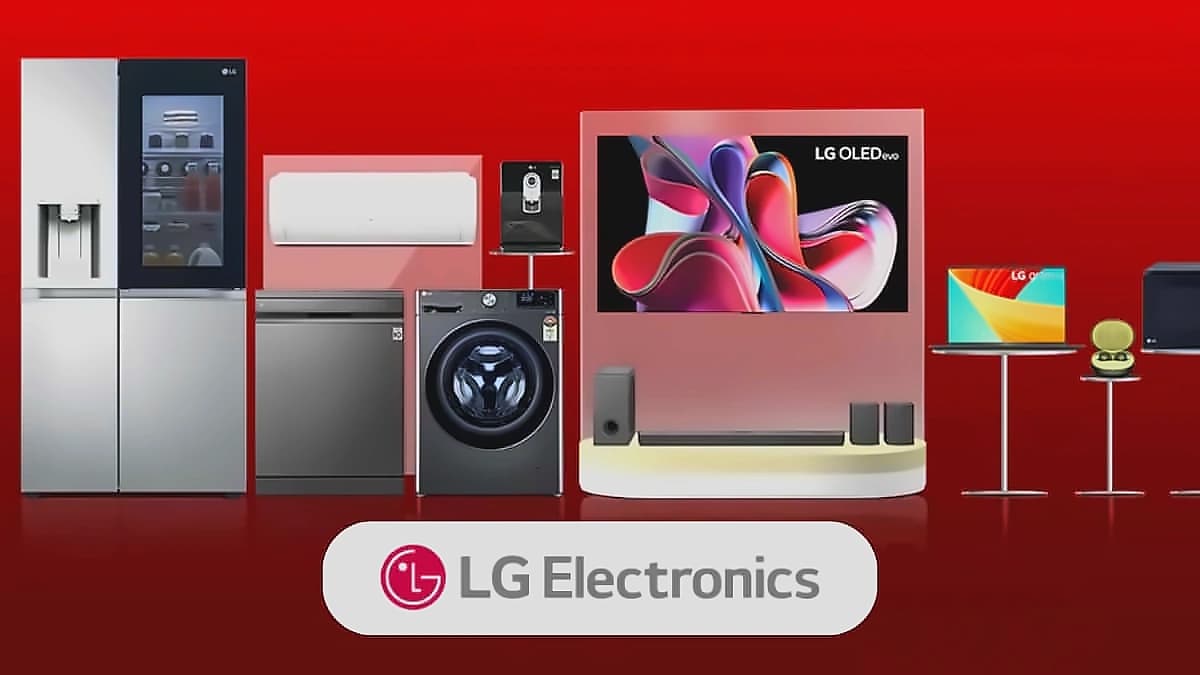
LG Electronics is undergoing a comprehensive transformation from a home appliance maker to a technology powerhouse, positioning itself as a provider of recurring services, business-to-business solutions, and emerging AI and robotics technologies. According to recent briefings with reporters in Seoul, the South Korean company is increasingly focusing on recurring services, B2B technology partnerships, and physical AI and home robotics. The company's B2B business generated approximately ₹398 billion in first-quarter sales, up 1% year-over-year and 19% sequentially, accounting for 36% of total revenue. This strategic shift aims to build stable, high-margin businesses that reduce reliance on cyclical consumer spending and establish LG as a technology platform spanning multiple sectors.
LG has redefined its position from appliance manufacturer to lifecycle partner through the development of LG Pro Builder, designed to move from transactional supply to partnership across the entire residential asset lifecycle. As Ronald Ro, vice president and head of AI Home Solution Business Development Division at LG Electronics, explained, "We recognized early that leadership in the global B2C appliance market would offer only part of what the builder market requires. Our broad portfolio and trusted brand reputation created a strong base, but the B2B builder market demands a higher level of accountability." The platform provides end-to-end responsibility structure spanning early-stage planning, installation, post-occupancy management, service and warranty integration, moving from "build well" to "operate well" philosophy. This approach addresses the evolving builder market where expectations of partnership are changing with builders managing long-term assets in more complex regulatory, financial and operational environments.
LG's ThinQ Pro platform serves as the central hub for operational management, unifying installation, operation, maintenance and warranty management into one system with real-time visibility into appliance performance across properties through dashboard-based remote monitoring. The platform enables reduced on-site visits through proactive issue detection, standardized installation and onboarding processes, accumulation of operational data for predictive maintenance, and improved management efficiency through centralized oversight. As Green Builder Media's redefined metric "Value Per Square Foot" reflects, the platform addresses total cost of ownership, sustainability, resilience, wellness and efficiency versus traditional "Price Per Square Foot" metrics. The system connects devices within a single ecosystem, enabling more effective management and supporting AI-driven solutions that improve everyday life for occupants.
LG is developing large-scale chillers and liquid cooling technologies, including coolant distribution units (CDUs), aimed at AI data centers. The company believes its long-standing expertise in motors and precision components can translate into competitive advantages in robotics. Youngjae Kim, Leader of Robotics Platform Advanced Research Task at LG, acknowledged that truly versatile household robots remain years away, with commercialization unlikely before 2030 due to safety requirements and home environment complexity. However, advances in artificial intelligence are accelerating development timelines. LG argues that decades of experience in consumer appliances provide a unique competitive advantage, with executives describing actuators as one of the most attractive opportunities within the robotics value chain, potentially accounting for 40 to 60% of a robot's cost.
India presents significant opportunities for LG's transformation strategy, with property price-to-income ratios in major metros rising from about 5.5 times to 8 times since 2021, while EMI-to-income ratios have increased from roughly one-third of income to more than half. The organised home-furnishing rental market was worth about ₹1,550 crore in 2025 and has expanded at an annual rate of 45% since 2021. LG's premium positioning has helped shield profitability from economic volatility, while the company's ability to offer built-in appliances alongside AI-enabled home technologies provides competitive advantages. The transformation reflects LG's vision of a 'Zero Labor Home' where robots support human life, leveraging decades of experience in home appliances to develop deep understanding of home environments and consumer behavior.