Indian benchmark indices witnessed a historic surge on Tuesday, February 3, 2026, with BSE Sensex jumping 4,205 points (5.14%) to 85,872 and NSE Nifty 50 gaining 1,253 points (4.99%) to 26,341. The rally was triggered by the announcement of a landmark trade agreement between India and the United States, which reduced reciprocal tariffs on Indian goods to 18% from the previous 25%. On the institutional front, Foreign Institutional Investors (FIIs) offloaded equities worth ₹1,832.46 crore on Monday, while Domestic Institutional Investors (DIIs) provided support by purchasing stocks worth ₹2,446.33 crore. The Indian Rupee also showed strength, appreciating by approximately 1% against the US Dollar, reflecting renewed investor confidence and expectations of foreign capital inflows.
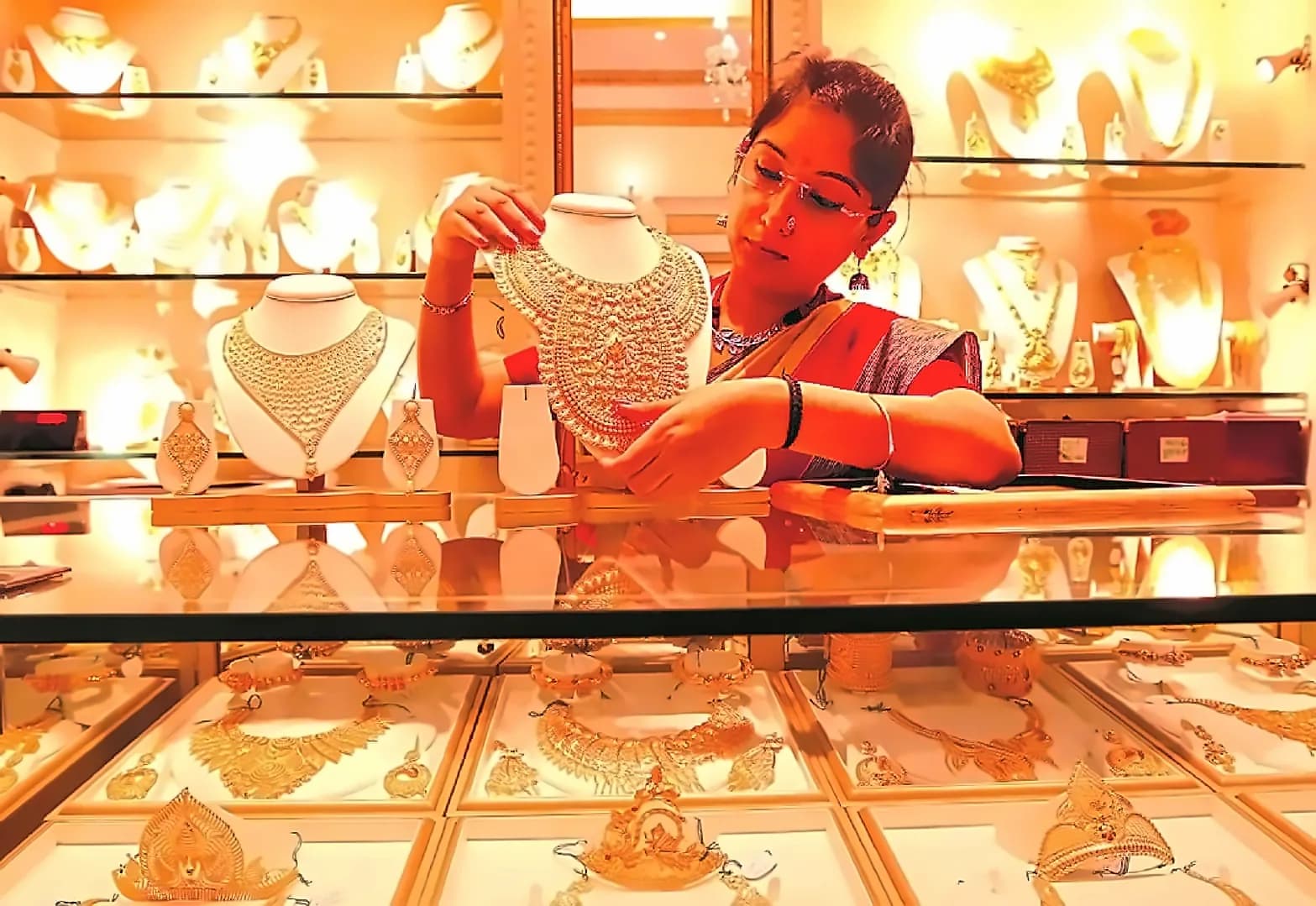
After prolonged negotiations, U.S. President Donald Trump confirmed that reciprocal tariffs on Indian goods would be reduced to 18%, representing a steep cut from the earlier 25%. As reported by Business Today, Trump stated that the U.S. will charge a reduced reciprocal tariff, lowering it from 25% to 18%. The agreement also includes India's commitment to reduce their tariffs and non-tariff barriers against the U.S. to zero. This gives a major boost to jewellery stocks such as Titan Company, Kalyan Jewellers, PC Jewellers, Tribhovandas Bhimji Zaveri, Thangamayil Jewellery, Rajesh Exports and Senco Gold, which are all major players in India's jewellery export sector. According to Zacks Investment Research, the latest U.S.-India deal slashes punitive reciprocal tariffs on Indian goods from a peak of 50%, which included an additional 25% duty imposed over India's purchases of Russian crude, to a flat 18%. The deal also includes India's promise to buy petroleum, defence goods and aircraft from the US, while partly opening up its guarded agriculture sector under the agreement.
The trade deal announcement triggered a massive rally in gems and jewellery stocks, with companies experiencing significant gains. Goldiam International shares jumped 20% to ₹357.70, hitting the upper circuit, while Rajesh Exports advanced 5%, Tribhovandas Bhimji Zaveri shares jumped 10%, Titan shares gained nearly 5%, Kalyan Jewellers India shares rallied around 8%, and Thangamayil Jewellery shares gained 6%. Other major beneficiaries included Sky Gold, Senco Gold, Titan, Shringar House of Mangalsutra, Golkunda Diamonds and Tribhovandas Bhimji Zaveri. According to Upstox, these companies came under strong buying interest as the deal provides relief from previous tariff pressures. Indian companies exported gems and jewellery products worth $9.15 billion in 2024, making it the second biggest exports to the US after electrical and electronic equipment. The U.S. first imposed tariffs on India on August 1, 2025, later doubling them to 50% effective August 27, 2025, creating significant headwinds for Indian exporters in the jewellery segment. As per Moneycontrol, several of these companies have strong exposure to US markets, deriving a major portion of their revenue from exports to the country.
The trade deal comes at a critical time for India's jewellery sector, as India counts the U.S. as its largest export market, contributing about 30% of industry sales. However, gem and jewellery exports to the United States saw a sharp decline during April-December 2025, declining 44.42% year-on-year to US$3.86 billion against US$6.95 billion in the corresponding period last year. In December 2025 alone, exports to the U.S. fell 50.44% year-on-year on tariff-related pressures and subdued discretionary demand. The U.S. first imposed tariffs on India on August 1, 2025, later doubling them to 50% effective August 27, 2025, creating significant headwinds for Indian exporters in the jewellery segment. As per Reuters, sectors such as textiles, jewellery, and shrimp were adversely impacted following the U.S. tariff hike in late August. The Federation of Indian Export Organisations (FIEO) stated that the cut in U.S. tariffs to 18% should significantly boost Indian exports, including textiles and apparel, pharmaceuticals, chemicals, footwear, jewellery, and food items like shrimp, putting them on par with Asian peers, such as Vietnam and Bangladesh. According to Moneycontrol, at 18% India's tariff rate is now lower than that of several major Asian trading partners, supporting growth in labour-intensive and export-oriented sectors such as textiles, gems and jewellery, and engineering goods.
The Indian Rupee posted its best day in seven years, ending up 1.36% to 90.2650 per dollar, marking its strongest single-session rise since December 2018. This dramatic improvement came after the rupee hit a record low of 91.9875, pressured by firms' hedging their dollar exposure and amid concerns over foreign outflows. Analysts at MUFG lowered their USD/INR forecast to 89.50 by the end of March 2026, from 91.50, and to 93 by end-2026, down from 94 previously. A trader at a foreign bank told Reuters that "price-action in the NDF market pointed to unwinding of some long (USD/INR) positions and the spot market was also influenced by likely inflows into local stocks." The deal is expected to help India achieve Trump's target of $500 billion in US goods purchases over five years, with Indian trade officials confirming this timeline. However, experts maintain caution until the deal's details become clear. Ajay Srivastava of the Global Trade and Research Initiative (GTRI) told BBC News that "The Truth Social post leaves major questions unanswered — what products are covered, what the timelines are, and whether India has really agreed to zero tariffs and zero non-tariff barriers, especially in sensitive areas like agriculture and regulated imports."