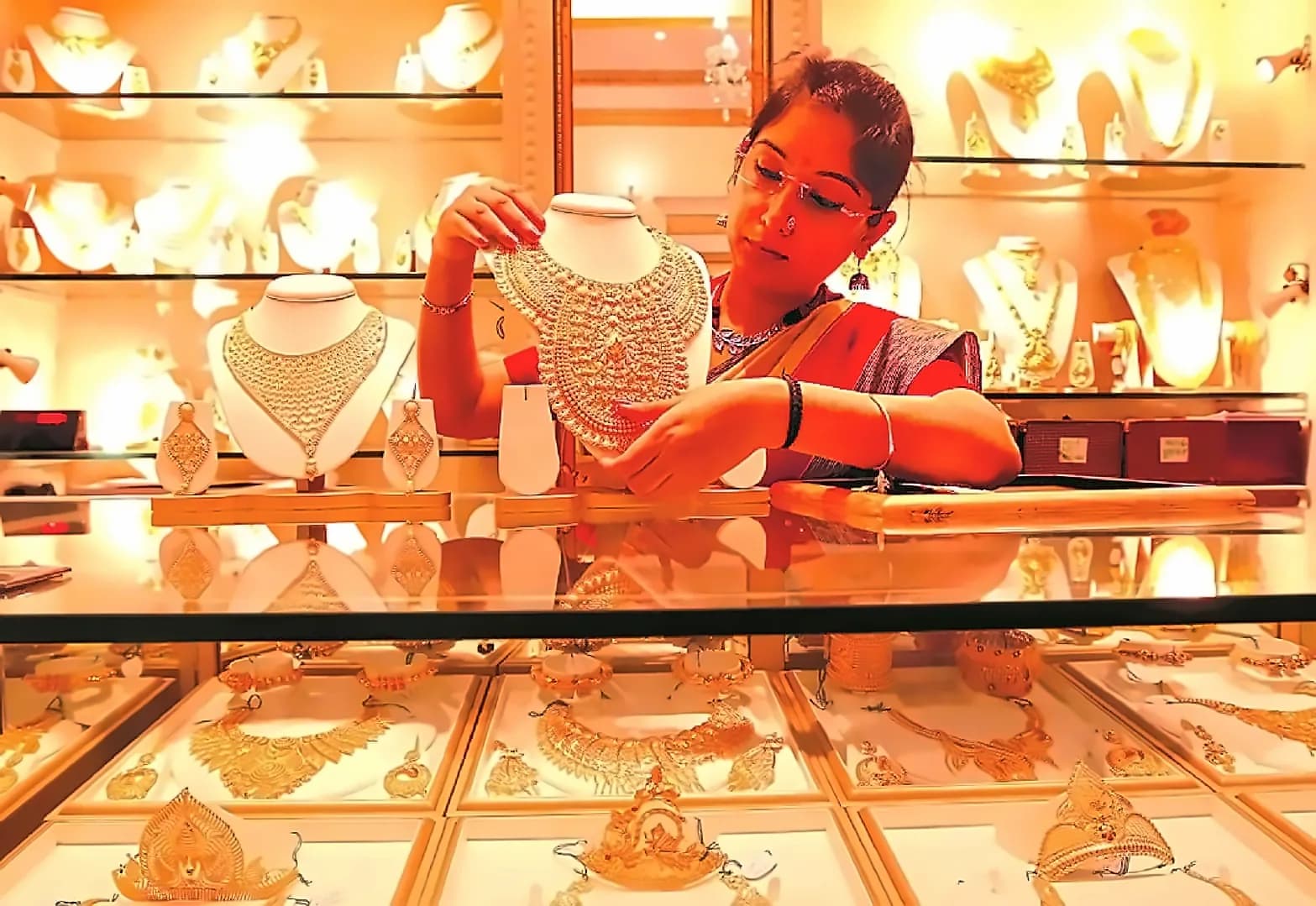
Kalyan Jewellers India Limited has announced the launch of the 'Nation First – Gold4India Initiative', a strategic framework designed to activate dormant household gold reserves and formalise gold liquidity trust. According to the company announcement, the initiative is in direct response to Hon'ble Prime Minister Shri Narendra Modi's appeal to all Indians to exercise restraint to help conserve the country's foreign exchange reserves. The company expects this comprehensive approach to target reducing imports by 5 tonnes of gold over the financial year, addressing India's significant idle gold reserves that lie in bank lockers, household vaults, and unused jewellery accumulated over decades.
The initiative comprises four strategic pillars designed to create a comprehensive gold recirculation ecosystem. The first pillar focuses on exchange-led consumption, with Kalyan Jewellers continuing its 'Nation First – Gold4India' programme that encourages customers to exchange old, outdated or broken jewellery while promoting lighter, modern 18-carat designs. The second pillar introduces 'Encash Gold' counters across showrooms, offering consumers professionally managed and transparent gold monetisation experiences with scientifically calibrated purity assessment, transparent valuation, and prompt cash disbursal. The third pillar emphasises responsible consumption patterns, with the company envisioning becoming a predominantly gold recirculation-led institution while preserving India's deep cultural relationship with gold. The fourth pillar focuses on community-driven behavioural change, leveraging Kalyan associates as local connectors who understand regional customs and community dynamics to create a broad-based community movement around gold recirculation.

India's jewellery market is experiencing a significant shift towards exchange-led consumption as the government implements policies to reduce gold import reliance. According to reports from PTI, the Centre recently increased import duties on gold and silver, a move widely seen by the industry as part of a broader strategy to reduce reliance on imports and promote circulation of existing household holdings. With gold prices already elevated, customers are increasingly expected to exchange old jewellery for new designs or use their holdings for liquidity needs such as selling or pledging, instead of making entirely fresh purchases. As per PTI, this behavioural shift is being reinforced by government efforts to conserve foreign exchange reserves and encourage recycling of idle domestic gold.
Several leading jewellery brands have intensified exchange-led campaigns to capitalize on this policy shift. Tanishq has launched its #OldGoldNewIndia initiative, offering customers full value on old gold regardless of where it was originally purchased, allowing them to upgrade to new designs without deductions. As reported by PTI, this proposition effectively enables consumers to exchange old jewellery at 100% value, making the transition to new designs more attractive. Kalyan Jewellers has rolled out its 'Nation First – Gold4India' programme, encouraging customers to exchange old, outdated or broken jewellery while promoting lighter, modern 18-carat designs aimed at improving affordability amid high prices. The company's Managing Director T.S. Kalyanaraman noted that this shift is gradually changing consumer perception of gold, from a static store of wealth to a renewable domestic asset capable of generating continuous economic value.
Industry executives believe this behavioural shift could gradually strengthen India's circular gold economy, where old jewellery becomes a key source of demand for new purchases. Anjali Jewellers Director Annargha Uuttiya Chowdhuury told PTI that higher duties are likely to encourage organised recycling and deepen the domestic circular gold ecosystem, noting that a significant portion of jewellery demand is already met through exchange and reuse of old gold. He added that formalisation of this channel could improve transparency and efficiency in the sector. Kalyan Jewellers Managing Director T.S. Kalyanaraman said a stronger domestic recirculation system could help sustain employment in the jewellery industry while supporting state GST collections through greater organised trade. Across the sector, jewellers and gold financiers are reporting stronger demand for exchange and recycling, as consumers look to unlock value from existing assets.
The exchange trend aligns with broader government efforts to conserve foreign exchange reserves and encourage recycling of idle domestic gold. Malabar Gold & Diamonds Chairman M.P. Ahammad said India holds one of the world's largest privately held gold reserves and stressed that greater recycling, reuse and monetisation of domestic gold could reduce import dependence and limit dollar outflows over the long term. Industry players note that this shift is gradually changing consumer perception of gold, from a static store of wealth to a renewable domestic asset capable of generating continuous economic value. The Centre's recent increase in import duties on gold and silver is part of a broader strategy to promote domestic gold circulation and reduce reliance on imports. Through the 'Nation First – Gold4India Initiative', Kalyan Jewellers envisions becoming a predominantly gold recirculation-led institution aiming to preserve India's deep cultural relationship with gold while strengthening economic resilience and reducing dependence on fresh imports.