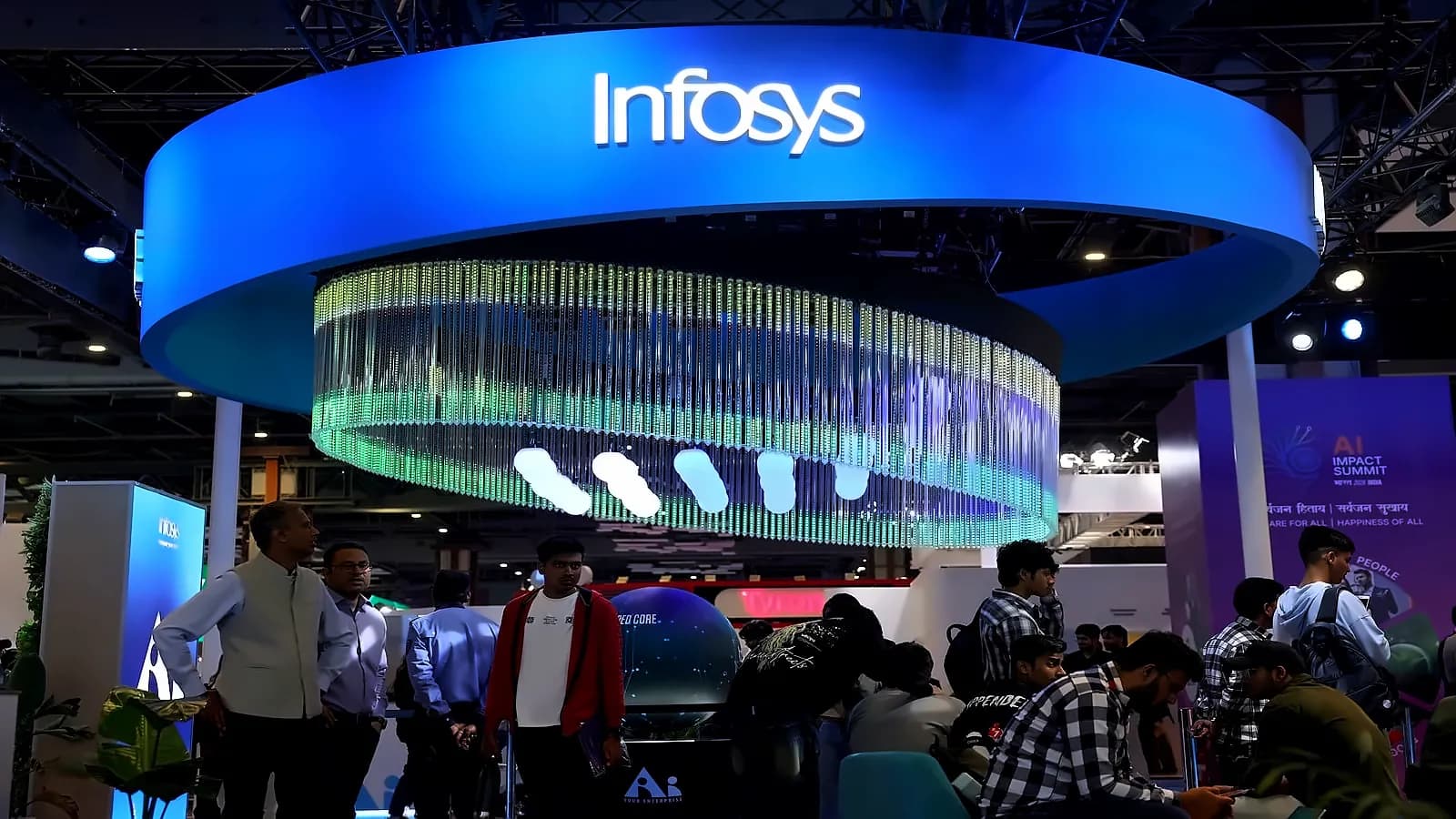
At least half of Infosys Ltd's 22 shareholders virtually present at its 45th annual general meeting on Tuesday questioned the management about declining share prices and AI-related threats. According to reports from Mint, shareholder Om Prakash Kejriwal from Kolkata stated during the Q&A session that "Do you know why it (share price) is falling? Because we are not investing in future, and so foreign investors are dumping our shares." The management declined to comment on share prices but emphasized the company's positioning for AI opportunities, with co-founder and chairman Nandan Nilekani noting "Opportunities are very large because of the many new things that are possible with AI (artificial intelligence)."
Recent research from the European Central Bank provides insights into how AI is reshaping global employment patterns, offering context for shareholder concerns about Infosys. The ECB study found that AI has barely moved total US jobs or wages through 2025, even as companies have spent billions on AI technology. The research shows that jobs AI can do well, like economists or graphic designers, shrank by more than 4% from 2019 to 2025, while hands-on jobs AI can't reach, like electricians and high school teachers, grew 13% over the same period. This data suggests that while AI is changing job requirements, it hasn't led to widespread job losses or wage compression as initially feared.
At the 45th AGM, Infosys chairman Nandan Nilekani laid out an ambitious AI growth strategy, projecting a $400 billion AI opportunity by 2030 and positioning AI as an amplifier rather than a threat to the IT services model. According to The Financial Express, Nilekani stated that "More than three years after GenAI was launched, Infosys is more relevant than ever before and well-positioned for the decade ahead." He emphasized that "The AI deployment gap in large enterprise clients is real, and closing that gap is where the work is. AI will not replace companies like ours. It will amplify those who move with purpose and adapt with speed." The company is already working with 90% of its top 200 clients on AI initiatives, with Nilekani noting that "The defining opportunity lies in integrating intelligent AI systems with mission-critical enterprise platforms."
Shares of India's second largest information technology service provider fell 3.4% on Tuesday, approaching a five-year low despite management sharing opportunities presented by AI technology. As reported by Mint, concerns around AI advancement have sent IT services firm shares on a tailspin since the start of the year, with Infosys shares falling more than 35% over the last 12 months. According to The Financial Express, the stock was trading around ₹1,052 on June 25, down sharply from its 52-week high of ₹1,728 touched on February 3, 2026, and only marginally above its 52-week low of ₹1,026 hit on June 23. Technical analysts remain cautious, with experts noting that the stock needs to reclaim the ₹1,070–1,080 zone and ₹1,110–1,120 for meaningful accumulation to occur.
Despite the positive AI narrative, technical analysts remain unconvinced that the worst is over for Infosys. As per SBI Securities, the stock needs to reclaim key moving averages and show clearer signs of base formation before fresh buying becomes attractive. The options market data shows massive open interest concentrations at ₹1,050 and ₹1,060 strikes, making these zones significant resistance areas. JM Financial notes that the put-call ratio is notably depressed at 0.47, reflecting aggressive call writing and effectively capping upside potential. The company's ₹18,000 crore buyback announcement last year has not lifted investor sentiment, with at least one shareholder expressing disappointment during the AGM. Until the stock demonstrates clearer technical recovery signals and reclaims key resistance levels, experts suggest investors may need to wait for a more definitive bottom formation.