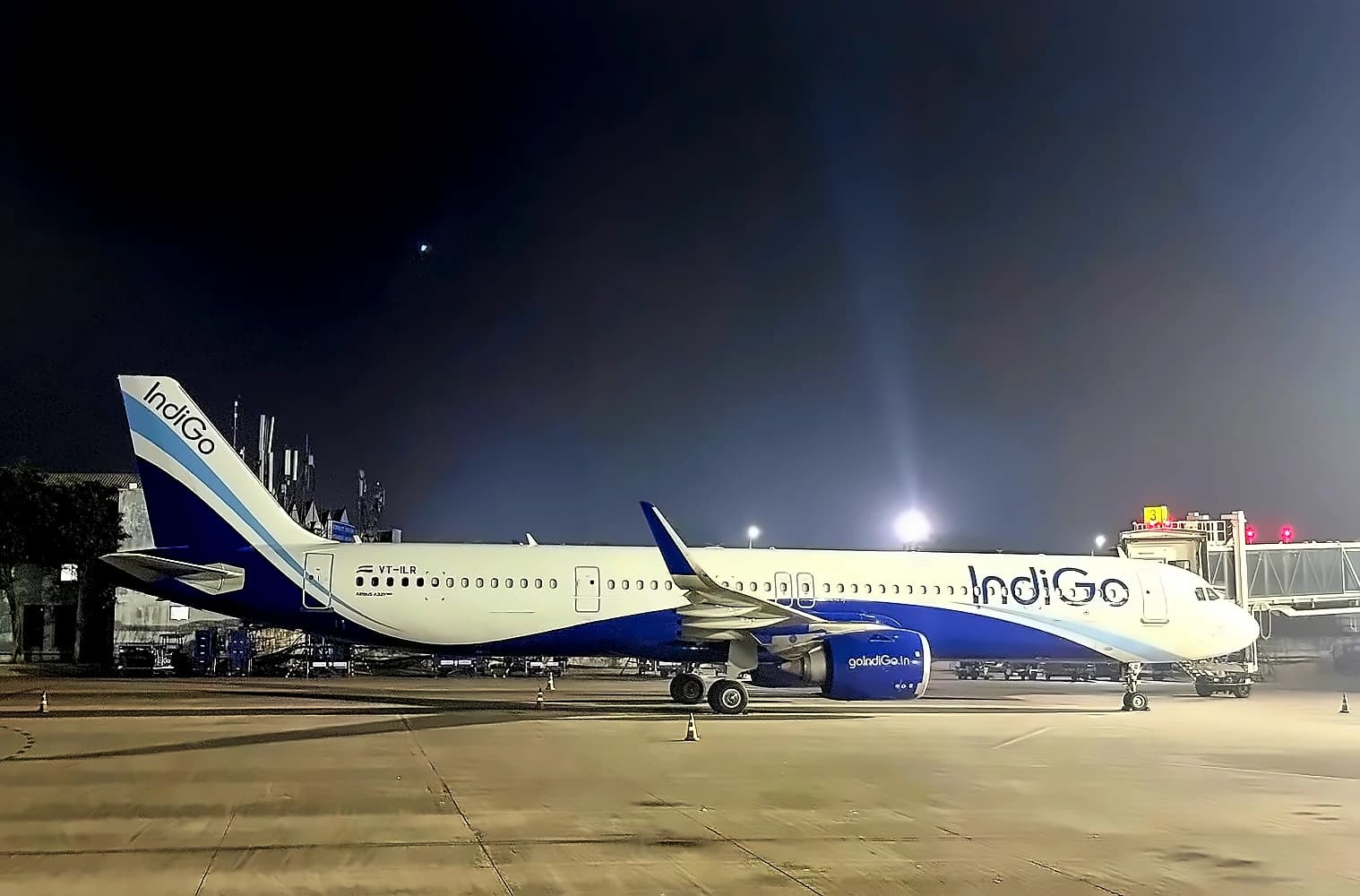
Airline stocks InterGlobe Aviation (IndiGo) and SpiceJet recovered on Tuesday, March 10, with shares soaring up to 8% following a sharp drop in crude oil prices and growing optimism that the US-Iran conflict could ease sooner than expected. As per The Times of India, IndiGo's stock climbed about 6% to reach an intraday high of ₹4,475 on the BSE, while SpiceJet rose nearly 8% to touch a day's high of ₹14.1 per share. The stock recovery comes after a sharp rally in the previous session, when Brent crude surged to nearly $120 per barrel, its highest level since July 2022, amid fears that the conflict could disrupt global oil supplies. Brent crude oil futures for delivery in May had plunged as much as 11.02% to the session's low of $88.05 per barrel, compared to the previous close of $98.96 per barrel. At the time of writing, it was trading 6.20% lower at $92.82 per barrel.
Gas company shares surged on Tuesday following Trump's remarks that the Iran war could end "very soon," easing concerns over prolonged supply constraints due to the effective closure of the Strait of Hormuz. As per The Economic Times, Petronet LNG shares jumped around 5% to trade at ₹291.5 apiece, while Gujarat Gas rose about 1.6%, GAIL (India) gained more than 2%, and Indraprastha Gas Limited was up over 1%. This comes after the stocks took a severe beating earlier last week as tensions between Iran and Israel-US escalated, with supply shortages beginning to emerge in several cities including Mumbai and Bengaluru. India imports more than 60% of its domestic LPG needs, and around 85–90% of these imports pass through the Strait of Hormuz. The country consumed 31.3 million tonnes of LPG in FY25, of which only 12.8 million tonnes were produced domestically. Earlier last week, the Indian government invoked emergency powers and directed oil refiners to ensure there is no shortage of LPG for domestic customers due to supply constraints arising from rising geopolitical tensions in West Asia.
Air New Zealand has become one of the first airlines to announce broad ticket price increases since the US-Israeli war on Iran began, raising fares by NZ$10 on domestic routes, NZ$20 on short-haul international services, and NZ$90 on long-haul flights. As per The Hindu BusinessLine, jet fuel prices, which were around $85 to $90 per barrel prior to the conflict, have increased sharply to between $150 and $200 per barrel in recent days. The airline warned that if the conflict leads to continued elevated jet fuel costs, it may need to take further pricing action and adjust its network and schedule as required. Fuel is the second-largest expense for air carriers after labour, typically accounting for a fifth to a quarter of operating expenses. Some major Asian and European airlines have oil hedging in place, but US airlines largely stopped the practice over the last two decades.
Crude oil prices have dropped significantly below $90 per barrel following US President Donald Trump's remarks that the Iran war is likely to end soon, providing relief to airline stocks that were severely impacted by the previous rally. As per The Times of India, oil prices dropped sharply on Tuesday after climbing to their highest level in more than three years in the previous session. Brent crude futures declined nearly 10% to $89.32 per barrel, while US West Texas Intermediate (WTI) crude slipped more than 9% to $86.07 per barrel. Trump told CBS News that he believes the war with Iran "is very complete" and that the United States was "very far ahead" of the four-to-five-week timeframe he had earlier projected. The President further indicated that his administration planned to lift sanctions on certain countries as part of efforts aimed at stabilising global oil markets. The Group of Seven (G7) countries said on Monday that the bloc is ready to take "necessary measures," including releasing strategic oil reserves, to support global energy supplies if required.
Air India group announced a phased expansion in fuel surcharges on both its domestic and international flights, citing the sharp rise in jet fuel prices triggered by the geopolitical tensions in the Gulf region. As per Mint, the airline cited the geopolitical reasons for implementing the surcharge expansion as the conflict continues to impact aviation operations. This marks a significant development as Air India becomes one of the first major Indian carriers to formally announce fuel-related cost adjustments amid the ongoing Middle East crisis. Aviation Turbine Fuel (ATF), which accounts for nearly 40% of an airline's operating costs, has seen significant price escalation since early March 2026 due to supply disruptions. In India, this pressure is amplified by high Excise Duty and VAT on ATF in major metro cities such as Delhi and Mumbai, magnifying the cost impact and placing substantial strain on airline operating economics. The fuel surcharges will be implemented in three phases, applying to all flights including those operated by its low-cost subsidiary Air India Express.
InterGlobe Aviation shares plunged nearly 8% intraday, making it the top loser on the benchmark index amid a sharp spike in global oil prices. As per ABP Live Business, around 1:49 PM, InterGlobe Aviation shares were trading at ₹4,223.55 apiece, down 4.11% during the session. The decline reflects mounting investor concerns over rising fuel costs and operational disruptions as the ongoing conflict in West Asia continues to affect both energy markets and global aviation routes. Higher crude prices directly translate into rising jet fuel costs, one of the most significant expenses for airlines. For low-cost carriers such as IndiGo, the impact can be particularly pronounced because maintaining competitive ticket prices leaves limited room to absorb sudden cost increases.
Indian airlines have approached Union Civil Aviation Minister Rammohan Naidu Kinjarapu seeking relief from the government as ongoing conflict in West Asia has impacted operations and driven up costs, according to a CNBC-TV18 report. Airline executives highlighted higher fuel costs, expenses due to the disruption in flight schedules and operations, and insurance as key factors driving up operational expenses. Carriers have specifically asked for relief on excise duty or goods and services tax (GST) on air turbine fuel (ATF) to offset the costs. As per the report, per flight cost is adding up as repatriation flights often run empty on one leg and there are also fewer passengers on flights to the region. Higher insurance premiums due to the war are an additional strain on finances, with executives warning that prolonged disruption could further impact their financial books and force them to increase ticket prices to combat the financial strain.
IndiGo's international network has been significantly affected, with roughly 30% of its capacity tied to overseas routes and nearly 45% of that exposure linked to Middle Eastern airspace. The airline reported cancelling more than 500 flights to Middle Eastern and select long-haul destinations — including Istanbul, Athens, Manchester, and Amsterdam — between February 28 and March 3 due to airspace restrictions. With tensions persisting, cancellations have been extended through March 4 to March 6, with approximately 130 to 140 flights being cancelled daily. The ongoing US-Israel conflict with Iran has led to large-scale airspace restrictions across the Middle East, resulting in widespread flight cancellations and rerouting. The disruption has been aggravated by the continued closure of Pakistan's airspace, forcing airlines to operate with empty seats on one leg of the journey, particularly on routes from India to West Asia. Latest data shows Indian airlines cancelled 279 international flights on Sunday amid the escalating situation.
In a statement today, Tata Group owned Air India and Air India Express announced they will operate 78 additional flights on nine routes from March 10-18 to support passengers amid the ongoing West Asia situation. This includes Delhi-New York (JFK), Delhi-London (Heathrow), Mumbai-London (Heathrow), Delhi-Frankfurt, Delhi-Paris (CDG), Delhi-Amsterdam, Delhi-Zurich, Delhi-Malé and Delhi-Colombo. Air India and Air India Express plan to operate a total of 32 additional non-scheduled flights to the UAE today for repatriation of stranded Indians, subject to slot availability and regulatory approvals. Air India will operate one round-trip each from Delhi and Mumbai to Jeddah, while Air India Express will operate one round-trip each from Hyderabad, Bengaluru, and Kozhikode. Indian carriers — Air India, Air India Express, Akasa, IndiGo and SpiceJet — plan to operate 50 flights to Abu Dhabi, Dubai, Fujairah, Jeddah, Muscat and Ras Al Khaimah airports today, subject to operational feasibility and prevailing conditions. As of March 7, a total of 51 inbound flights operated by Indian carriers arrived in India from West Asia carrying 8,175 passengers.