The Union Cabinet has approved a ₹10,000 crore Aviation Turbine Fuel (ATF) price stabilisation scheme aimed at capping ATF prices and shielding airlines from volatility linked to geopolitical tensions. Under the voluntary scheme, participating airlines will pay a fixed free-on-board (FOB) benchmark price of ₹86.32 per litre, plus airport charges, oil company margins and applicable taxes, resulting in an effective selling price of ₹115 per litre in Delhi, ₹114.5 in Mumbai and ₹139 in Chennai. Airlines that do not opt for the scheme will pay market-linked prices currently around ₹142 per litre, similar to international carriers. The government will provide an interest-free advance to oil marketing companies to cover the difference when global benchmark prices rise above the base rate, while when prices fall, the differential will be recovered and returned to the Consolidated Fund of India. ATF typically accounts for about 40% of airline operating expenses and can rise to as much as 60% during periods of sharp volatility.
The International Air Transport Association (IATA) has endorsed India's ATF price stabilisation fund, calling it a 'very good solution' to address the problem of higher jet fuel costs facing domestic airlines. According to IATA Director Energy Transition Hemant Mistry, the fund represents 'a very good output from the government' that will help address rate uncertainties faced by airlines. The IATA represents over 370 airlines, including Air India, IndiGo, Air India Express and SpiceJet, accounting for around 85% of global air traffic. Mistry warned that if the current jet fuel situation continues, there would have to be 'more demand destruction' - a reduction in flights amid rising operational costs. Sheldon Hee, Regional Vice President Asia Pacific at IATA, stated that any government support for the industry is welcome, noting the different dynamics ensuring connectivity between cities in India.
According to an exchange filing, InterGlobe Aviation (IndiGo) has announced the temporary suspension of operations to six international destinations starting from July 2026. The affected routes include Langkawi in Malaysia, Krabi in southern Thailand, Ho Chi Minh in Vietnam, Hong Kong, Siem Reap in Cambodia, and Shanghai in China. As reported by the company, Siem Reap operations will be suspended from July 3, 2026, while the remaining five countries will see suspension from July 1, 2026. The flight suspension will continue until September 30, 2026, after which the airline plans to resume bookings for all impacted services starting October 1, 2026. Despite these suspensions, IndiGo will continue operating over 1,800 weekly international flights during this period, maintaining the majority of its international operations despite this realignment.
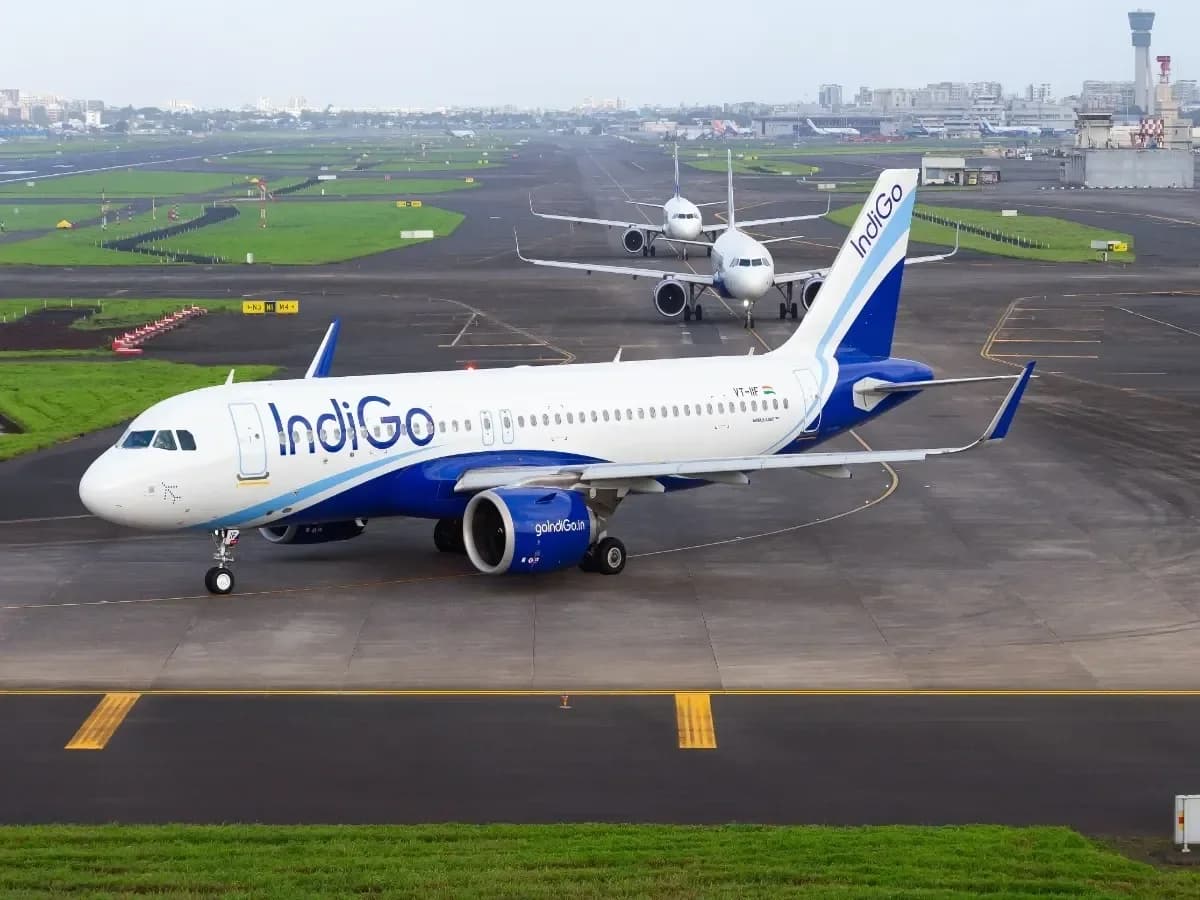
According to the latest financial results, InterGlobe Aviation reported a consolidated net loss of ₹2,536.9 crore in Q4 FY26, a significant deterioration from the net profit of ₹3,067.5 crore posted in Q4 FY25. However, revenue from operations showed resilience with a 1.29% increase to ₹22,438.4 crore in Q4 March 2026. The airline, which operates 441 aircraft and provides scheduled services to 97 domestic and 45 international destinations as of March 31, 2026, continues to face challenging market conditions. The stock price has responded positively, with the scrip rising 0.26% to currently trade at ₹4,514.70 on the BSE following the announcement.
According to aviation analysts, the ATF stabilisation scheme is more likely to moderate fare spikes rather than reduce ticket prices broadly. As Equirus Securities analyst Jainam Shah told Business Standard, "The primary impact is likely to be the moderation of fare spikes rather than a broad-based reduction in ticket prices." However, Civil Aviation Ministry Director Rohit Raj stated that the most important benefit for passengers is that it will help moderate sudden increases in airfares that often result from sharp spikes in fuel prices. Vipul Saxena, an aviation expert, suggested the government should explicitly ask airlines to cap fares to ensure passenger benefits are passed on, noting that airlines may increase ticket prices through higher cargo charges. The scheme is voluntary and limited to Indian airlines, with participating carriers required to sign agreements with OMCs and buy ATF exclusively from public sector OMCs for up to three years.
Alongside the international route suspensions, IndiGo has announced discontinuation of direct services to Manchester, United Kingdom, on August 31 and will return one leased Boeing 787-9 Dreamliner aircraft to Norse Atlantic Airways. The airline will inform affected passengers of schedule changes through proper communication channels. IndiGo, India's largest airline, remains prepared to reinstate suspended services earlier than October 1 if market conditions improve, positioning flexibility as the airline navigates ongoing fuel price volatility and airspace constraints. With surging jet fuel prices as well as relatively lower demand, IndiGo, Air India and Air India Express have temporarily curtailed their networks, according to IATA officials.