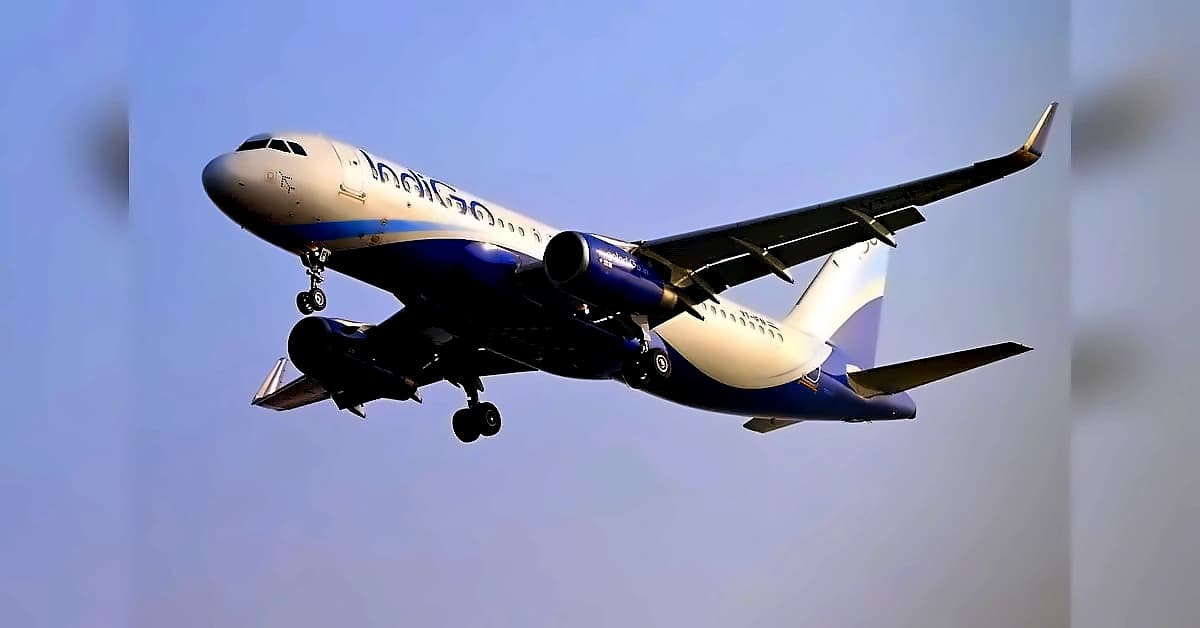
IndiGo Managing Director Rahul Bhatia announced that the airline has taken "all the necessary steps" to learn from the operational disruption experienced during the first week of December 2025. Between December 2 and December 12, IndiGo cancelled more than 4,500 flights, disrupting travel for over one million passengers during the peak winter holiday and wedding season. The crisis also rattled investors, with shares of InterGlobe Aviation falling around 15% over a few trading sessions, wiping out an estimated ₹35,000 crore to ₹40,000 crore in market capitalisation. Bhatia acknowledged that "the Indian aviation industry operates against a backdrop of considerable geopolitical and macroeconomic uncertainty," with fuel remaining one of the largest cost components and volatility in global energy markets creating significant operating uncertainty. Speaking to Mint, Bhatia explained that "everybody thinks the December event was solely because of FDTL, and I think that's somewhat a misplaced view. I think several other elements came together, and it was like a perfect storm that basically destabilized the operation."
Following the operational disruption, Pieter Elbers resigned as CEO on March 10 citing personal reasons after leading the airline since September 2022. As reported by Business Standard, Bhatia assumed interim charge while the board initiated a successor search. On March 31, IndiGo appointed Willie Walsh, former CEO of British Airways, as its new chief executive, who is scheduled to take over after completing his tenure as director general of the International Air Transport Association on July 31. The government has now granted security clearance to former British Airways CEO Willie Walsh to take over this role, which is likely to happen next Monday. Speaking to Mint, Bhatia emphasized that "Willie is operationally very strong; so, we clearly want him to bring that to bear at the company and look at what we can do to continue to improve our resilience as an operation."
Beyond premium travel, Bhatia reiterated the airline's belief that aviation plays a critical role in India's economic development. The airline has already begun laying the foundation for its premium service transition, introducing IndiGoStretch, its business-class style offering on select domestic routes, marking one of the biggest product changes in the airline's history. During FY26, IndiGo expanded IndiGoStretch, introduced UpFront seating and enhanced onboard offerings as it seeks to improve customer experience and diversify revenue streams. The carrier has started inducting leased wide-body aircraft ahead of the arrival of Airbus A350s, which will enable aggressive expansion into long-haul international markets where premium cabins generate significantly higher yields than short-haul domestic operations. As Bhatia noted to Mint, "So, when we mutate the model, you still have to maintain cost leadership. If we bring in a stretch programme, the stretch product itself has to have cost leadership; and if it does, hopefully, you'll find customers."
According to Bhatia's annual report message, the next decade will represent the most significant phase of international expansion in IndiGo's history. With over 65% domestic market share, IndiGo now aims to become passengers' preferred airline through premium services, technology and international growth. The airline is investing in fleet, technology, infrastructure, digital capabilities, and talent to build a truly global aviation network originating from India. Bhatia explained to Mint that "the next stage of evolution has to be that we can carry Indians from here, through a hub or hubs, to the world — and bring the Indian diaspora from around the world back to India." He emphasized that "I truly believe that Indians flying out of India and returning to India should fly with Indian carriers. They must fly Indian carriers." The airline is working on strengthening India's aviation infrastructure so that the world's fastest growing aviation market country becomes self-reliant, with a key milestone being the development of our world-class MRO facility at Kempegowda International Airport, Bengaluru, expected to be operational in 2028.
IndiGo reported its third-largest annual loss of ₹2,394 crore in FY26, while revenue from operations increased 5% year-on-year to ₹84,962 crore. The airline's success over the past two decades has largely been built on low fares, operational efficiency and rapid network expansion, helping it become India's dominant carrier with an unmatched domestic network. However, with market leadership firmly established, the airline is now looking beyond scale. Rather than measuring success only by market share, IndiGo wants to strengthen customer loyalty and attract higher-value travellers by improving the overall flying experience, focusing on becoming passengers' preferred carrier through premium products, better customer experience, and long-haul international expansion. With a fleet of 441 aircraft and nearly 1,000 still on order, including wide bodies, IndiGo is the domestic market leader with over 65% share and also the largest airline in terms of flying people in and out of India. As of March 31, 2026, IndiGo operated a fleet of 441 aircraft, served 142 destinations and operated more than 2,150 daily flights, carrying a record 123 million passengers during the year.