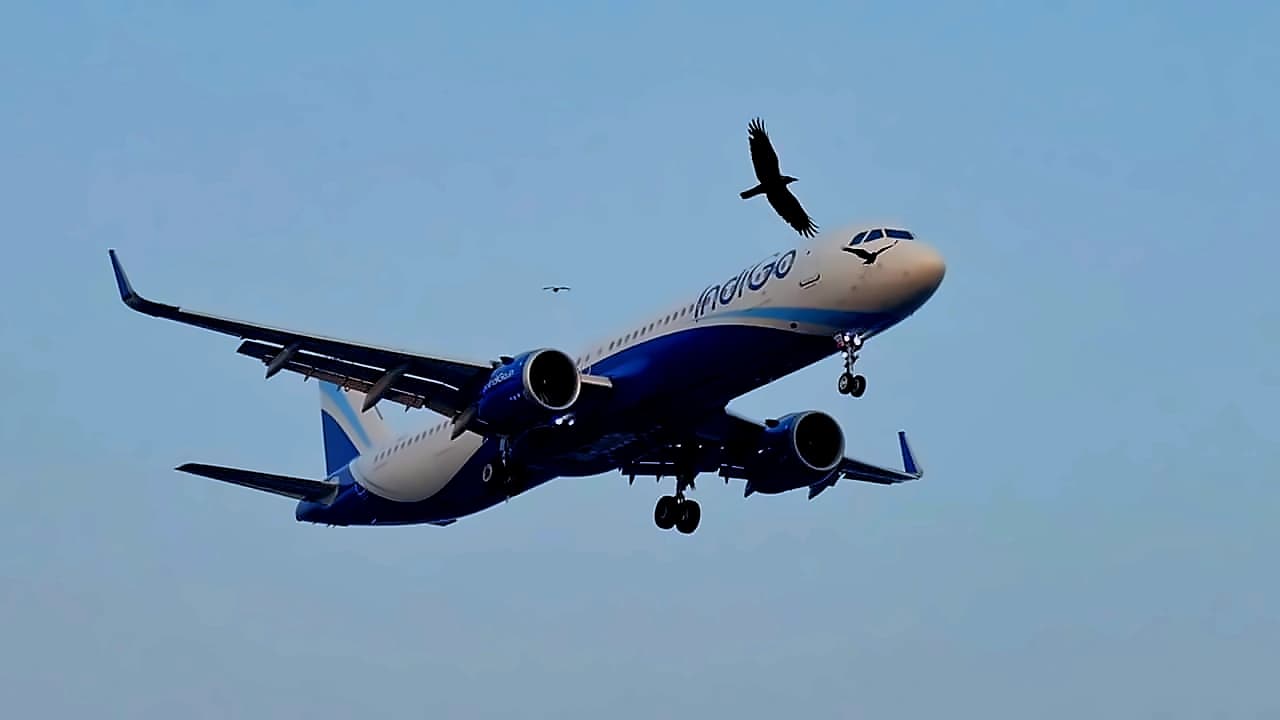
InterGlobe Aviation announced on Tuesday that IndiGo will temporarily discontinue flight operations to and from Manchester, United Kingdom, with effect from August 31, 2026, citing rising operational and cost pressures. The airline cited continuing international airspace constraints that have led to significantly longer flight durations, contributing to a challenging operating environment. Following the decision, IndiGo plans to return one of the six Boeing 787-9 Dreamliner aircraft taken on damp or wet lease from Norse Atlantic Airways. The airline had leased these six Boeing 787-9 aircraft in early 2025 to expand its presence in the European market ahead of inducting its own Airbus A350 aircraft. All remaining long-haul flights will continue to operate as planned, with IndiGo stating that geopolitical developments in the Middle East, higher aviation turbine fuel costs, severe airspace constraints and foreign exchange volatility have increased operating costs beyond earlier estimates. IndiGo will notify affected customers in advance and assist them with all possible options, including alternate travel arrangements or refunds, where applicable.
InterGlobe Aviation shares surged over 5% in early trade on Monday, making it the top gainer in the Nifty 50, despite reporting a net loss of ₹2,536 crore for the fourth quarter of FY26, compared with a net profit of ₹3,067 crore in the corresponding period last year. The positive market response reflects investor confidence in the airline's long-term prospects despite near-term operational challenges. Following IndiGo's fourth-quarter results, 80% of the 26 analysts tracking the stock have a 'Buy' recommendation on it, while about 7% have a 'Sell' rating, as reported by CNBC TV18. The scrip was trading 5.16% higher on the BSE, hitting a high of ₹4,633.45 per share, while the benchmark BSE Sensex was up 0.26% at 9:25 AM, demonstrating strong investor sentiment. Investec retained its 'Sell' rating and ₹4,050 target price, being the only brokerage with a bearish stance, citing FY26 impact by capacity constraints, Middle East-related disruptions, elevated aviation fuel costs and rupee depreciation, and expecting earnings pressure to continue in the first half of FY27. Shares of Interglobe Aviation Ltd ended at ₹4,478.70, down by ₹26.90, or 0.60%, on the BSE following the Manchester operations announcement.
InterGlobe Aviation has informed stock exchanges that a meeting of its Board of Directors will be held on May 29 to consider and approve the audited standalone and consolidated financial results for the quarter and financial year ended March 31, 2026, as reported by NDTV Profit. Results will be available around 4 p.m. Friday at the company's website and on the exchange website (www.nseindia.com / www.bseindia.com). The airline stated that the trading window for dealing in the company's securities remains closed in accordance with the SEBI (Prohibition of Insider Trading) Regulations, 2015, and the company's internal code on prevention of insider trading. The trading window will reopen 48 hours after the declaration of the financial results. The company will conduct a conference call at 5:00 p.m. on May 29, 2026 to discuss the performance with investors and analysts.
InterGlobe Aviation swung to a consolidated net loss of ₹2,536 crore for the March quarter, down from a profit of ₹3,067 crore last year, according to the latest results. Total income in the fourth quarter of the 2025-26 fiscal rose marginally by 1.3% year-on-year to ₹22,438 crore from ₹22,151.90 crore in the same period a year ago, as reported by Business Standard. Total expenses jumped 30.1% year-on-year to ₹25,932.5 crore during the quarter, highlighting the significant impact of operational challenges. Earnings Before Interest, Taxes, Depreciation, and Amortization (EBITDA) declined sharply by 87% to ₹810 crore from ₹6,089 crore a year ago, with EBITDA margin standing at 3.6% versus 27.5% in the corresponding quarter last year. Earnings Before Interest, Taxes, Depreciation, Amortization, and Rent (EBITDAR) adjusted for forex stood at ₹6,396 crore, compared to ₹5,953 crore in Q4FY25, while EBITDAR margin came in at 28.5% against 26.9% a year ago, though EBITDAR margin improved to 28.7% from 26.9% in the corresponding quarter of the previous financial year. The headline loss was largely driven by a sharp foreign exchange hit of around ₹4,880 crore following 5% depreciation in the rupee against the US dollar during the quarter, as reported by Moneycontrol. Profit after tax, excluding forex losses and exceptional items, stood at ₹1,920.6 crore compared to ₹2,981.1 crore a year ago, showing a 36% decline, with profitability further affected by a one-time charge of around ₹250 crore related to the implementation of changes under the labour code during Q4FY26. However, on an adjusted basis, the airline reported EBITDA of around ₹5,630 crore excluding forex impact, demonstrating the underlying operational strength despite external challenges.
Despite IndiGo's weak Q4 results, brokerages largely focused on improving pricing trends, expected recovery in grounded aircraft availability, international expansion opportunities and the airline's dominant market position, as reported by Moneycontrol. Most analysts said that foreign exchange losses, geopolitical disruptions and temporary operational challenges have masked an otherwise intact long-term growth story. The brokerage targets imply potential upside of 15-27 percent in IndiGo's shares from Friday's closing price of ₹4,420, with Motilal Oswal Financial Services (MOSL) the most bullish at ₹5,600 per share and Nuvama maintaining a Buy rating with a target price of ₹5,054 per share. Goldman Sachs maintained a Buy rating with a target price of ₹5,200 per share, noting that the quarterly loss was lower than expected due to better cost performance and a slight revenue beat, while Jefferies retained its Buy rating but cut its target price to ₹5,380 from earlier levels, describing the January-March quarter as weak but broadly in line with expectations. Bank of America, Kotak Institutional Equities and other major brokerages also retained Buy ratings with target prices ranging between ₹5,100 and ₹5,600 per share. JM Financial maintained its Add rating with a target price of ₹5,000, noting that capacity growth remained subdued due to the Middle East conflict, while Elara Capital maintained its Buy rating and target price of ₹6,020, arguing that the stock's roughly 25% decline over the past six months has created an attractive opportunity. Kotak Institutional Equities retained a Buy rating with a target price of ₹5,400, noting that the reported loss was lower than expected despite a large mark-to-market foreign exchange loss, while grounded aircraft continue to weigh on profitability but pricing trends suggest the industry is testing demand elasticity. Prabhudas Lilladher has now recommended a 'Hold' rating with a target price of ₹4,724, citing multiple headwinds from capacity bottlenecks, FX volatility and rising crude prices, with the stock valued at 9x FY28E EBITDAR.
ICICI Securities has maintained Buy rating on Interglobe Aviation Ltd. with an unchanged target price of ₹5,210 based on 25x (unchanged) FY28E earnings per share of ₹208 (post-full tax), as reported by NDTV Profit. The brokerage notes that IndiGo's FY26 result has underlined that demand remains strong, despite a host of challenges spanning internal, external disruptions and cost escalations throughout the year, which reinforces the positive thesis on the company. This reinforces the theory of a structural supply deficit which allows the airline to register healthy yields time to time. However, FY27 will likely remain a high-cost year, especially H1, resulting in ~12% YoY reduction in FY27E PBT before other income. Notably, very strong growth in other income (a CAGR of 47% over the last three years, including hedging gains) has structurally improved the resilience of IndiGo's financials, serving as one of its key moats. While ICICI Securities' FY28E profit remains unchanged, the brokerage has upgraded IndiGo's FY27 estimates based on lower crude oil price assumptions and better revenue per available seat kilometre, driven by healthy demand commentary.
For Q4 FY26, IndiGo reported a 3.4% increase in capacity to 43.6 billion ASKs on a consolidated basis, despite disruptions arising from the ongoing Middle East conflict, as reported by Business Standard. Passenger numbers declined marginally by 1.1% to 31.6 million during the quarter, while yield fell by 2.2% to ₹5.20 and load factor decreased by 1.7% points to 85.8% compared to the same period last year. Revenue for the quarter rose 1.3% year-on-year to ₹22,438 crore, while capacity increased 3.4% to 43.6 billion available seat kilometres. The airline ended FY26 with a fleet of 441 aircraft and a cash balance of ₹51,651 crore, as reported by Moneycontrol. EBITDAR excluding the forex impact of ₹6,435.4 crore in Q4 FY26, registering the de-growth of 6.21% compared with ₹6,861.8 crore in Q4 FY25, with EBITDAR margin excluding the forex impact standing at 28.7% in Q4 FY26 as against 31% in Q4 FY25. The number of grounded aircraft remains in the 40s but is likely to decline to the 30s by year-end, which could provide a meaningful boost to both capacity and costs, as reported by JM Financial. April remained a difficult month because of the disruptions, although demand trends improved in May, according to CFO Gaurav Negi. The airline expects capacity growth of around 3-4% in the first quarter of FY27 compared to the same period last year, with the company adopting a measured approach towards capacity deployment due to elevated fuel prices and seasonally softer demand from mid-June onwards. Looking ahead, IndiGo has guided for capacity growth of 3% to 4% year-on-year in the first quarter of FY27 and expects passenger revenue per available seat kilometre (PRASK) to improve by a mid-teen percentage compared to Q1FY26, as reported by CNBC TV18. The focus will be on improving efficiency by phasing out expensive damp-leased aircraft and reducing the use of older fuel-intensive planes. Motilal Oswal expects revenue and EBITDAR to clock a CAGR of 13% and 46% respectively over FY26-28, with Pratt & Whitney aircraft-on-ground cases remaining in the 40s and expected to reduce to the 30s by the end of FY27.
For FY26, IndiGo reported revenue from operations of ₹84,961.90 crore, up from ₹80,802.90 crore in FY25, despite facing significant operational challenges. Despite the increase in revenue, the airline posted a net loss of ₹2,391.90 crore for the year, compared with a profit of ₹7,258.40 crore in the previous financial year, as reported by CNBC TV18. Excluding the impact of foreign exchange and exceptional items, IndiGo delivered a profit of ₹7,500 crore for the full financial year FY26, demonstrating the underlying operational strength of the business. IndiGo's domestic market share stood at 63.3% in March 2026, maintaining its position as India's largest low-cost airline, as reported by Business Standard. During the year ended March 2026, IndiGo expanded its operations with capacity increasing by 9.5% YoY and total income growing by 6.4% to ₹89,513.4 crore, as reported by Business Standard. The airline carried 123 million passengers during FY26 and ended the year with more than 69,000 employees. IndiGo had a fleet of 441 aircraft and provided scheduled services to 97 domestic and 45 international destinations as of March 31, 2026, positioning itself among the fastest-growing low-cost carriers globally. Despite Monday's rebound, IndiGo shares remain down more than 14.1% over the past one year, underperforming the Nifty 50's decline of about 4.4% during the same period, with the airline currently commanding a market capitalisation of around ₹1.8 lakh crore.