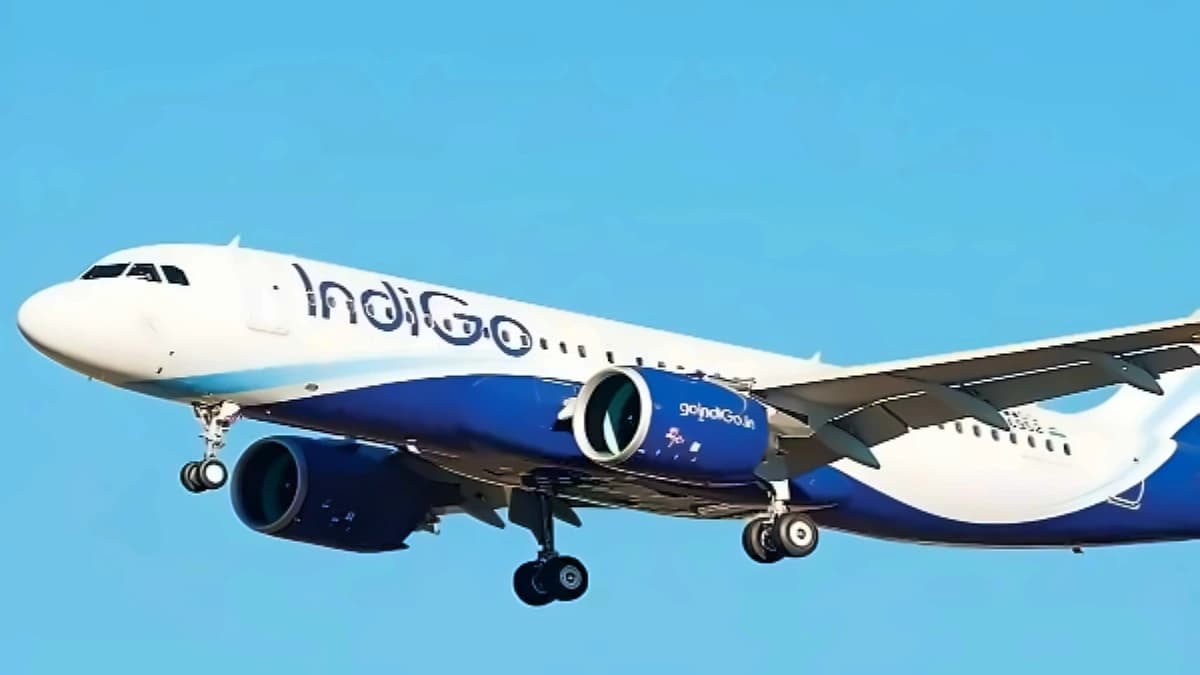
InterGlobe Aviation shares declined over 2% on Monday, trading at ₹4,374 at 9:46 am, with the stock falling as much as 2.39% during intraday trading. The decline came despite the airline unveiling ambitious long-term growth plans, as the stock underperformed the NSE Nifty 50 Index which rose 0.87%. The stock has fallen 15% so far this year and 20.50% in the last 12 months, with total traded volume at 1.17 times its 30-day average and the relative strength index at 53.79.
Despite investor concerns, IndiGo reported total income of ₹895 billion for FY26, representing a 6.4% year-on-year increase. However, the airline reported a ₹24 billion loss for FY26, though it remained profitable on an adjusted basis with profit of ₹75 billion, excluding forex and exceptional items. The reported loss kept investor concerns around earnings volatility in focus, highlighting the operational challenges facing the aviation sector amid global uncertainties. The airline ended FY26 with a fleet of 441 aircraft and carried more than 123 million passengers during the year.
Despite its ambitious FY30 targets, IndiGo is adopting a cautious approach towards capacity deployment in the near term amid softer travel demand triggered by the West Asia conflict. The airline expects capacity growth of around 3-4% in the first quarter fiscal and said it will take a "measured approach" to adding capacity as market conditions remain uncertain. The airline had to temporarily redeploy aircraft from West Asia East routes to domestic operations after geopolitical tensions disrupted travel demand. Nearly 160 daily frequencies to the West Asia and Europe were affected, though management said two-thirds of the disrupted capacity has already been restored and full restoration is expected by the end of June.
A central pillar of IndiGo's strategy is international markets, with the airline planning to increase international capacity share to 40% by FY30 from around 30% currently. This expansion will be driven by the induction of Airbus A321XLR aircraft and Airbus A350 widebody jets, with nine A321XLR aircraft expected to join the fleet this fiscal. The airline plans to expand into longer-haul markets and destinations such as Athens, Istanbul, Bali and Seoul. Beyond overseas destinations, IndiGo is positioning India as a global transit hub connecting Europe, Southeast Asia, the Middle East and Africa, believing India's geographic location offers a significant opportunity to capture connecting traffic that currently flows through hubs in the Gulf and Southeast Asia.
IndiGo is simultaneously stepping up its premium offering as part of its 2030 vision. The airline plans to expand its business-class seating capacity to more than 4,300 seats by the end of FY27, compared with over 2,800 currently. Its "Stretch" premium product rollout is also set to accelerate, with the offering expected to be available on 105 aircraft by FY27-end, up from 53 aircraft at present. The premium offering will be deployed on more aircraft, including the incoming A321XLR fleet, which will feature dedicated business-class cabins, complimentary meals and enhanced onboard services. At the same time, the airline plans to phase out damp-leased aircraft, including older Airbus A320 CEOs, A321 NEOs, Boeing 737s and Boeing 787s, to improve fuel efficiency and reduce operating costs.