US President Donald Trump signed a comprehensive memo on Thursday to drastically increase American commercial space launches, setting an ambitious target of at least 1,000 launches and re-entries annually by 2030. This represents a dramatic increase from 178 launches last year, which was already 10 times higher than 2013 levels and dominated by Elon Musk's SpaceX. The memo directs government agencies to identify federal land for new launch and re-entry sites, incentivize co-development with private partners, and expedite permitting processes. Trump also wants to return US astronauts to the moon by 2028 and establish initial Moon Base elements by 2030.
According to a peer-reviewed article in Economics Letters by economists Alessio Terzi of University of Cambridge and Francesco Nicoli of Politecnico Institute of Turin, India's satellite launch costs reached $13,302 (₹12.7 lakh) per kilogram at the end of calendar year 2025. This figure is more than four times higher than the US rate of $3,225 (₹3.1 lakh) per kg, making India the most expensive among six markets capable of satellite launches. The study examined launch costs coordinated by NewSpace India Ltd (NSIL), the commercial arm of government-run space agency Indian Space Research Organisation (ISRO), aboard a mix of ISRO's rockets.
India's high launch costs position it above the European Union, Russia, China and Japan, with Europe's rocket launch cost being the next most expensive after India at $9,897 (₹9.5 lakh) per kg. As reported by Mint, this cost difference may not be immediately significant as India's first private commercial rocket launch with Skyroot Aerospace on 18 July marks a major milestone. Skyroot Aerospace CEO Pawan Kumar Chandana told Mint that the company expects to earn at least $4 million in each launch of its first rocket Vikram-1, which would average at least $11,000 (₹10.5 lakh) per kg at peak capacity.
According to Chaitanya Giri, space fellow at think-tank Observer Research Foundation, India needs an inherent, recurring customer, typically the government, while commercial clients would be limited. The solution lies in lowering launch costs to match the EU and Japan at approximately $7,000 per kg, as reported by Mint. Giri suggests that ISRO should develop sustainability-focused technologies and transfer them to the private sector to achieve cost reduction capabilities. India's high costs result from focusing on small rocket sizes, where fixed costs are amortized over limited payloads, with the country's heaviest rocket until 2025, Launch Vehicle Mark-3 (LVM3), carrying up to 10,000 kg compared to SpaceX's Falcon-9 carrying up to 22,800 kg.
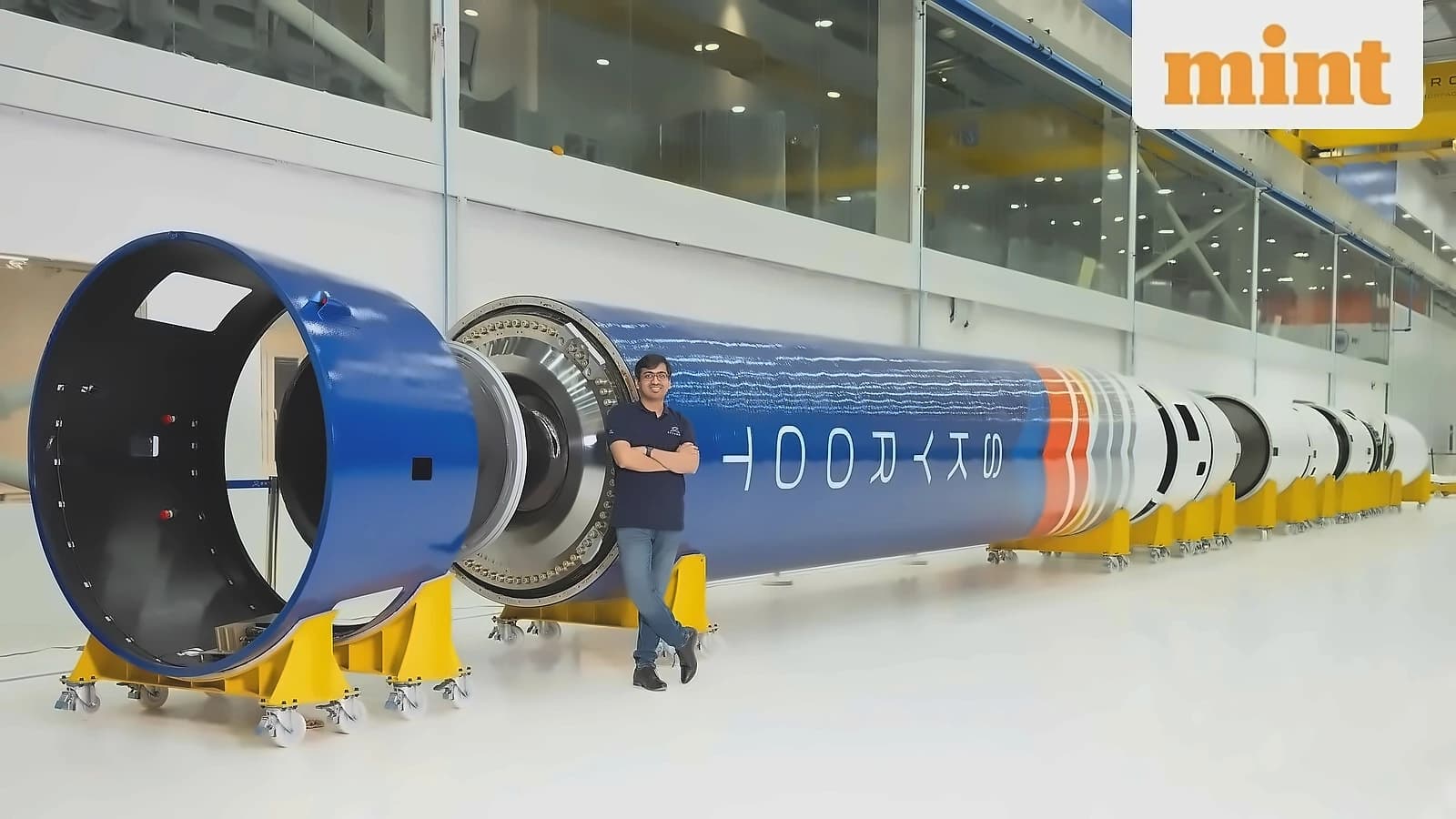
India has set a target of $3.5 billion in annual revenue from satellite launch services aboard domestic rockets by 2033, as per the 'Decadal Vision' document by the Indian National Space Promotion and Authorization Centre (In-Space). Trump's memo also directs federal agencies to consider on a case-by-case basis requests to launch commercial foreign space vehicles in the United States. The White House wants to ensure agencies refrain from conducting government space transportation activities that preclude, discourage, or compete with US commercial space transportation unless required by public safety or national security.